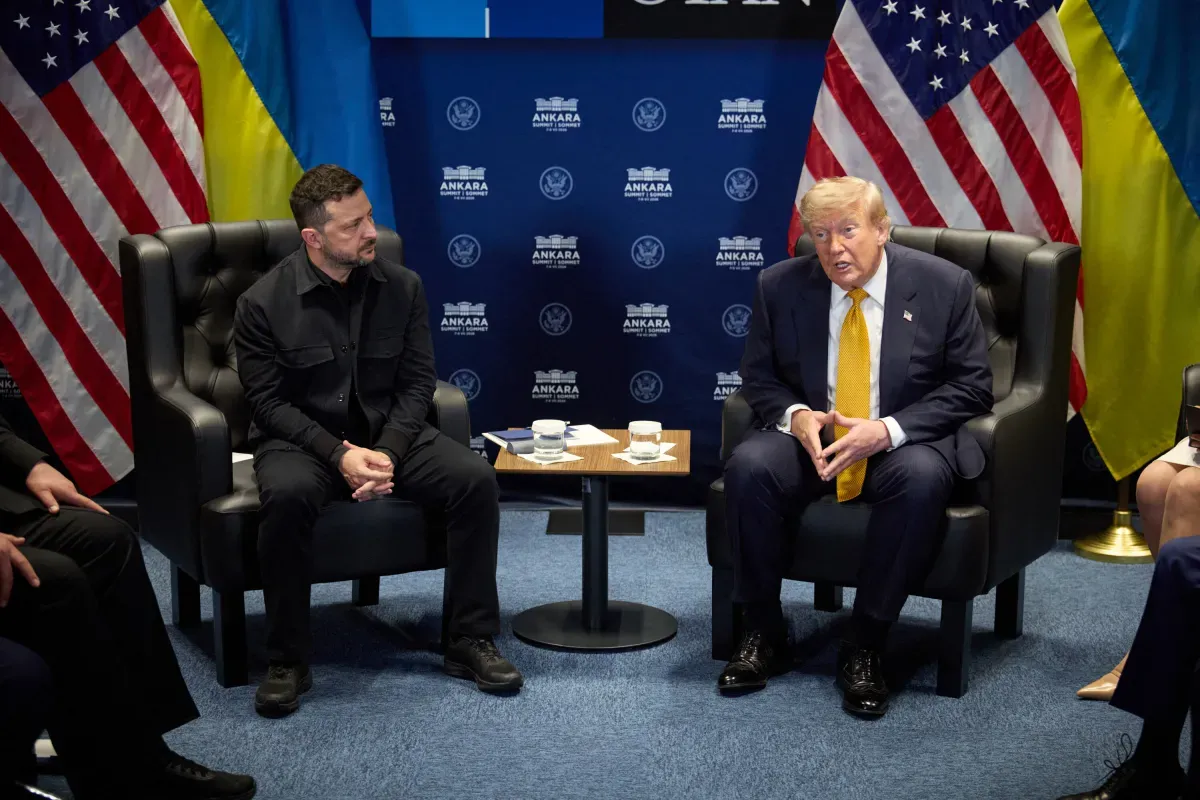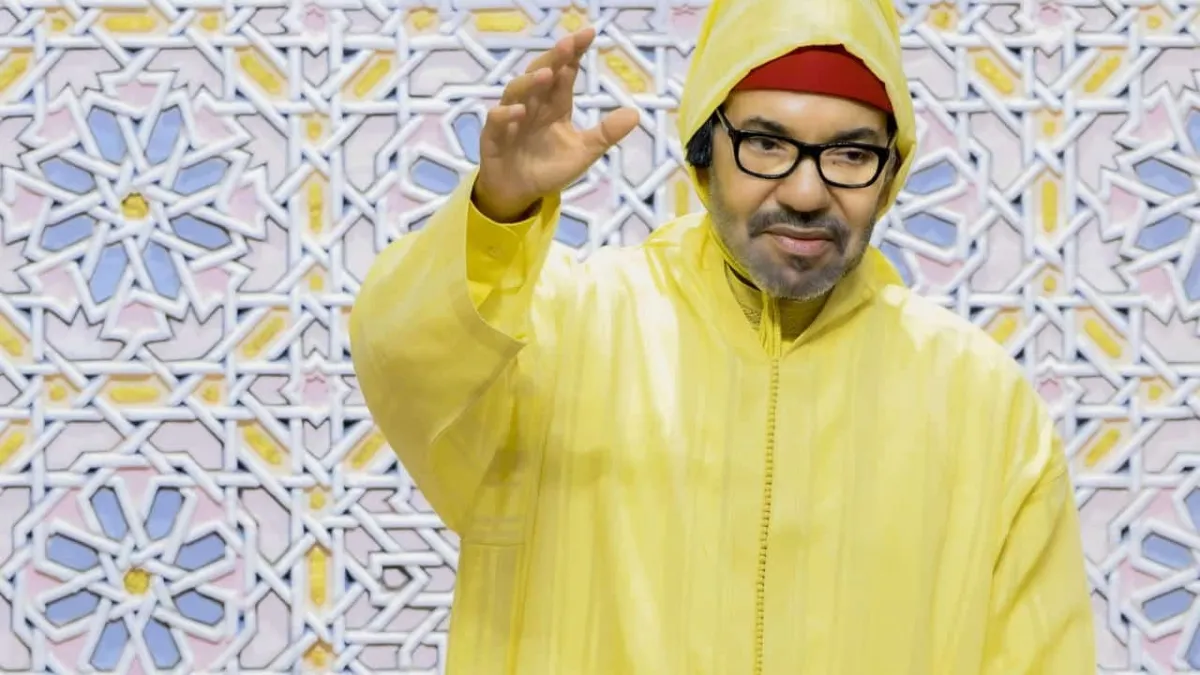

The President of Albania, Edi Rama, once told Spain's Prime Minister, Pedro Sánchez, during a visit to Albania, that neighbors are not chosen. This comment arose amidst their disagreement over Kosovo, a territory that Spain does not recognize but Albania does, as a strategy to ensure amicable relations. This anecdote is particularly relevant in the context of Spain's intricate and often fraught relationship with Morocco, a neighboring country that has historical claims over Spanish territory and plays a crucial role in regulating migration flows to the European Union, as well as combating drug trafficking and jihadist terrorism.
In light of the recent migration crisis, during which 72,000 individuals from Morocco arrived on the shores of Ceuta, Sánchez has refrained from reaching out to the opposition leader, Alberto Núñez Feijóo. If the polls prove accurate, it is Feijóo who will inherit the current diplomatic framework with the Alawite regime, a situation described as a 'poisoned candy' with many facets.
Restoring Diplomatic Relations with Europe and the United States
How would a government led by the Popular Party (PP) approach diplomatic relations with Morocco? According to sources from the party, the initial response would involve 'restoring' ties with European partners and strengthening the Atlantic alliance, a euphemism often associated with Donald Trump. They emphasize that while they do not advocate for submissiveness, they also do not wish to provoke the European Union or lead a rebellion against the United States President.
This perspective is supported by the collective response from 22 EU member states that united against Spain following the mass influx at Ceuta. They argue that there is a government that continuously undermines its allies, resulting in widespread disaffection when the logical response should have been solidarity with Spain. Italy escalated this situation by suspending the Schengen agreement with Spain, and Moncloa's recent actions have only heightened tensions without aiding in resolution. The clash with the Trump administration, although no longer unique to Spain, has painted a picture of significant isolation for the country on the international stage, which the Alawite regime has capitalized on.
In summary, various sources consulted maintain that relations with Morocco 'do not have to be poor' under a future government led by Feijóo. However, establishing a constructive relationship requires Rabat to understand that Spain is 'protected by its partners,' both European and American, despite the latter being an ally of King Mohamed VI. Once the ties with supportive nations in the geopolitical landscape are solidified, it is crucial for Spain to assert clear boundaries with Morocco, one of which is the acknowledgment of the Spanish and European status of Ceuta and Melilla, regardless of Morocco's historical claims over these cities.
Moreover, a future Feijóo administration will face other critical decisions regarding Rabat, including whether to maintain the historic shift in policy towards Western Sahara initiated by Sánchez. This change, which has not been adequately explained, is attributed by many within the PP to undisclosed interests from what they term the 'shadow president,' referring to José Luis Rodríguez Zapatero. They also speculate on possible 'blackmail' from Morocco following the Pegasus espionage scandal. Sources point to UN resolutions that do not endorse Moroccan sovereignty over the former Spanish colony, yet they recognize that any movement to reverse this stance could act as a trigger for the Alawite regime.
A significant upcoming issue is the 2030 FIFA World Cup final. It was Sánchez, alongside his former confidant Luis Rubiales, who included Morocco as a co-host of the tournament alongside Spain and Portugal. Current indications suggest that Spain may not host the inaugural match and is unlikely to hold the final, which could instead take place in Casablanca, where a stadium for 115,000 spectators is under construction. Borja Semper, the PP's Deputy Secretary for Culture and Sports, has recently sent a letter to the Minister of Culture, Milagros Tolón, stating that if the final does not occur in Madrid, there must be a discussion about 'the advisability of Spain proceeding with the World Cup celebrations.'
The PP's Cautious Stance Towards Morocco Amidst Crisis
Throughout this crisis, the PP has generally avoided harsh criticism of King Mohamed VI, with few notable exceptions. The President of Ceuta, Juan Jesús Vivas, has openly stated that Morocco 'is not a reliable partner' and that the borders of Ceuta and Melilla are under the control of a country that does not recognize Spanish sovereignty over these autonomous cities. Others, such as former Foreign Minister José Manuel García Margallo, have criticized their own party for not being more 'firm' and 'decisive' against the southern neighbor, arguing that appeasement policies are ineffective against a regime emboldened by support from the United States and Israel. Additionally, it is suggested that Feijóo should have visited Ceuta supported by all the regional presidents of the PP, who will need to accommodate over 1,000 minors currently crowded in the autonomous city.
The PP's coordinator for External Action, Idelfonso Castro, who previously served as Secretary of State for Foreign Affairs and Ambassador to Ireland, is strategically aligned with Feijóo. He is responsible for defining the party's international activity, although relations with Rabat represent a minefield for opposition engagement. For now, they believe that Morocco has also been 'exposed' during this severe crisis, which is far from resolved.
As reported by elindependiente.com.