
Contrasting Migration Patterns: From Morocco to Europe
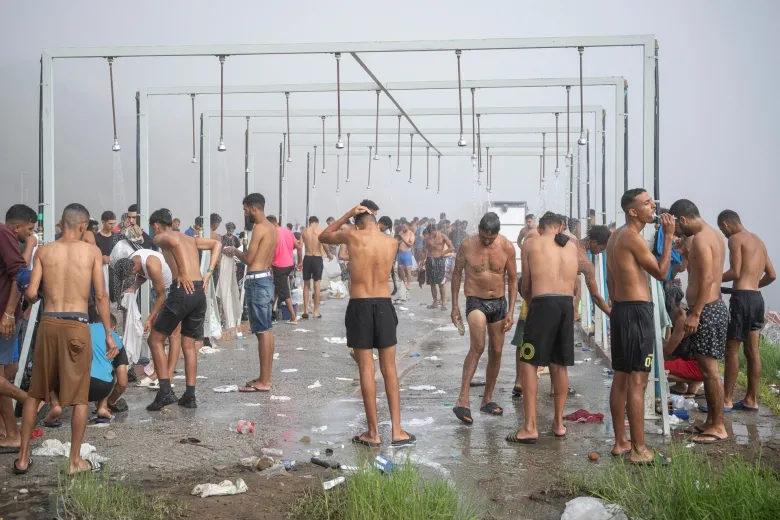
The migration landscape in Morocco is undergoing a significant transformation, marked by the stark contrast between the experiences of thousands of Moroccans seeking a better life in Europe and the influx of European retirees settling down in the North African nation. In a striking turn of events, approximately 80,000 presumed impoverished Moroccan migrants attempted to march towards the Spanish enclave of Ceuta in a single day, while around 90,000 French pensioners are presently enjoying their well-deserved retirement in Morocco, relishing the privileges that come with their European pensions. This juxtaposition illustrates a troubling yet increasingly common reality: Morocco is positioning itself as a new haven for European retirees, effectively replacing its own impoverished migrants with those seeking a more comfortable life.
The recent surge in migration attempts towards Ceuta has revealed an evolving narrative around migration. Traditionally, the image of a political refugee was rooted in the idea of fleeing from persecution based on one's beliefs, religion, or ethnicity. However, the contemporary migration dynamics reflect a shift away from this paradigm. Many who arrive in Europe today are not fleeing political oppression but are instead motivated by poverty, lack of opportunities, unemployment, social inequality, and an aspiration for a better life. Additionally, the impacts of climate change, which have been politicized in various discourses, are also subtly influencing migration patterns, leading to the emergence of what could be termed 'economic migrants' and potentially even 'climate migrants.' This blurring of lines between asylum, flight, and immigration complicates our understanding of what migration truly represents in the 21st century.
Morocco: A New Destination for European Migrants
The situation becomes even more convoluted when examining migration flows in reverse. While young Moroccans strive to reach Europe, Morocco has become an attractive destination for many Europeans, particularly retirees from France who are now settling in major Moroccan cities. With their European pensions, they can enjoy a standard of living that remains unattainable for many locals. Although both groups are classified as migrants, their circumstances are fundamentally different; one arrives with secured income and purchasing power, while the other seeks entry into better living conditions through asylum. The official stance of Morocco appears to embrace wealthy Europeans, even as it refuses to accept its own impoverished migrants back from Europe, which raises questions about the nature of solidarity in a globalized world.
This dynamic is reflected in the political implications of migration, particularly in the case of Ceuta and Melilla, which are not only external borders of the European Union but also symbols of the unresolved relationship between Spain and Morocco. Migration flows can exert political pressure and convey geopolitical interests, leading to a pressing question: What should asylum law truly accomplish? It must protect individuals who face actual persecution, yet it cannot simultaneously serve as a remedy for global poverty, social inequality, or climate change. This dilemma is exacerbated by the erosion of solidarity within the EU, despite numerous attempts at harmonization over the decades.
Thus, Europe finds itself in a conundrum: it requires immigration while simultaneously wishing to restrict it. The continent aims to address the root causes of migration yet benefits from the disparities in global wealth. European retirees in Morocco enjoy the fruits of these disparities, while young Moroccans strive to overcome them through migration. Unlike the retirees who have earned their peaceful lives through hard work, many young Moroccans seek to benefit from European solidarity without having contributed to it. This creates an increasingly absurd migration reality, where the motivations and outcomes of migration are becoming ever more complex and intertwined.
As reported by paz.de.