
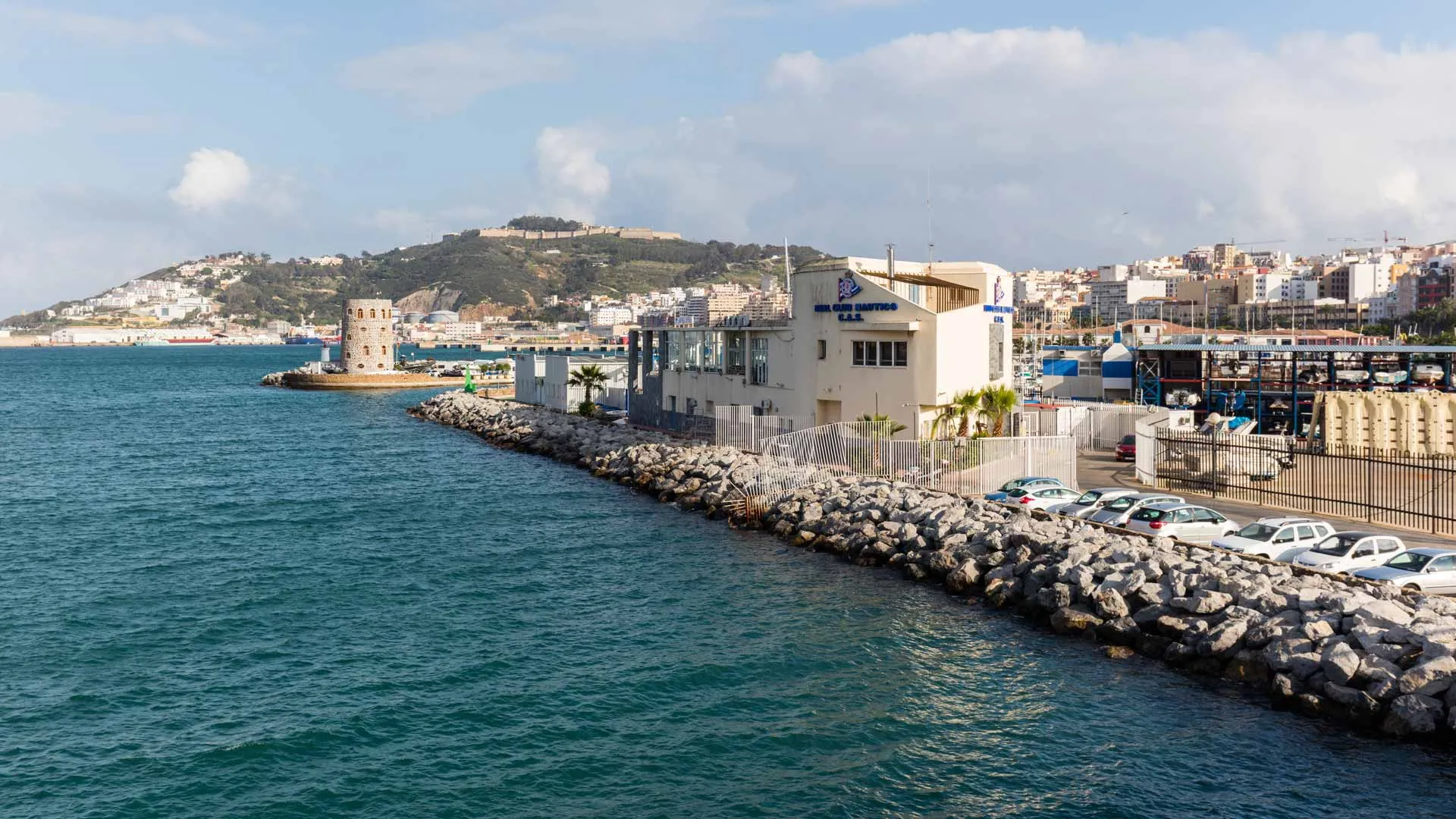

Understanding the Migration Crisis at Spain's Borders
The recent surge of migrants arriving in Ceuta, a Spanish enclave in North Africa, represents more than just another episode in the ongoing crisis at the borders of Europe; it highlights several interrelated issues that demand attention. These include the vulnerability of Europe’s borders with Morocco, the potential use of migration as a political bargaining chip, and, fundamentally, the question of sovereignty over the Spanish enclaves of Ceuta and Melilla. The latter issue brings about a rather uncomfortable comparison for Madrid, especially given Spain’s escalating criticism of Israel under the leadership of Pedro Sánchez and the Spanish Socialist Workers' Party. Spain has become one of the most vocal critics of Israel's policies, frequently condemning what it labels the "illegal occupation" of Palestinian territories and settlement policies in the West Bank.
However, when it comes to the enclaves of Ceuta and Melilla, Madrid often resorts to historical arguments that are frequently downplayed in the discussions surrounding Israel. On July 30, 2026, an astonishing influx of tens of thousands of people, primarily from Morocco, flooded into Ceuta within just a few hours. Estimates suggest that approximately 72,000 individuals arrived in the city in a mere 24-hour period, nearly matching Ceuta's total population. While many of these migrants returned to Morocco afterward, the tragic events included the loss of dozens of lives, predominantly due to drowning, and Ceuta was faced with the challenge of accommodating a large number of unaccompanied minors.
This raises the pressing question: how could a European Union external border, typically monitored rigorously on both sides, seem to disappear for several hours only to become manageable again shortly afterward? The circumstances surrounding this incident remain unresolved.
Legal and Political Implications of Migration Policies
Just weeks prior to this crisis, Spain's Supreme Court made a significant ruling regarding migrants attempting to reach Ceuta or Melilla by sea. The court did not declare that illegal entry into Spain via the sea was suddenly legal; rather, it ruled that individuals intercepted at sea could not be subjected to the immediate rejection procedures applied to certain land border crossings. Instead, these individuals are entitled to the regular repatriation process, complete with appropriate legal guarantees. This distinction is legally significant, yet the rapid dissemination of information on social media painted a different picture. In Morocco, reports quickly circulated suggesting that the maritime route to Ceuta now offered a means to evade immediate rejection, which appears to have contributed to the mass movement.
Additionally, reports emerged that the Sánchez government had initiated a comprehensive regularization process for foreigners without legal residency status, potentially affecting hundreds of thousands of individuals. However, this measure does not apply to recent arrivals; to benefit from it, migrants must prove they were in Spain before January 1, 2026. Thus, it would be misleading to assert that the regularization process opened legal pathways for those migrants who arrived in Ceuta in July.
More critically, the psychological impact of such policy changes must be considered, as there can be a significant gap between the precise content of legislation and its perception hundreds or thousands of kilometers away. A particularly pressing question arises: how were tens of thousands able to reach one of the most tightly controlled border areas in Morocco without being intercepted by Moroccan authorities? Currently, there is no publicly available evidence to suggest that Rabat orchestrated this migration wave, making such claims unwarranted.
The rapidity with which Morocco restored control post-crisis underscores a crucial point: cooperation with Morocco is essential for safeguarding this European border. Moreover, there is a precedent for this situation. In May 2021, thousands of people had previously reached Ceuta from Morocco during a severe diplomatic crisis between Rabat and Madrid, which had arisen following Spain's provision of medical treatment to Brahim Ghali, the leader of the Polisario Front, which Morocco opposes.
The European Parliament issued a notably strong statement at that time, condemning Morocco's use of border control and migration as political leverage against an EU member state. This notion that migration can serve as a tool of foreign policy is not merely a theoretical construct; it has been explicitly recognized by a European institution.
Ceuta embodies a reality that is seldom articulated so clearly. The protection of the Spanish border does not solely rely on Spanish police, fences, and surveillance technology; it also hinges on Morocco's willingness to prevent departures. When Rabat cooperates, the border remains secure, but when this collaboration wanes, Spain faces its vulnerabilities head-on. Consequently, Morocco possesses an exceptionally potent bargaining chip. Rabat does not need to militarily challenge Spanish rule over Ceuta or Melilla; it suffices to demonstrate what could transpire if Morocco ceases to restrain individuals attempting to reach the European Union. This intersection of migration crises and territorial disputes underscores the complexities involved.
For Spain, the response is clear: Ceuta and Melilla are Spanish territories. Melilla has been under Spanish control since 1497, while Ceuta was captured by Portugal in 1415 and later came under Spanish control, a fact acknowledged by Portugal in the 17th century. Madrid emphasizes that its presence in these regions predates Morocco's independence in 1956 by several centuries. This argument is not without merit.
At its core, Spain asserts that centuries of sovereignty cannot simply be dismissed as a modern colonial occupation. However, this argument becomes politically intriguing when juxtaposed with Spain's stance towards Israel. Under Pedro Sánchez, Spain has adopted one of the most critical positions towards the Israeli government within Europe. In May 2024, Madrid officially recognized the "State of Palestine" and consistently condemns Israeli settlements in the West Bank as part of an illegal occupation of Palestinian territories.
Yet, it is crucial to recognize that Spain also acknowledges Israel's right to exist and has condemned the massacre perpetrated by Hamas on October 7, 2023. The issue at stake is not whether Spain has the right to criticize Israeli policies, but rather the arguments employed to justify these critiques. If historical continuity is a significant element in Spain's defense of Ceuta and Melilla, it cannot be deemed insignificant when addressing Israel.
To clarify, Israel did not conquer the West Bank in June 1967 from a sovereign Palestinian state. Following the 1948/49 war, the West Bank and East Jerusalem fell under Jordanian control. On April 24, 1950, Jordan formally united both banks of the Jordan River, effectively annexing the West Bank. This annexation received minimal international recognition and was contested by several Arab states. Thus, for nearly 19 years, the West Bank was governed by Jordan, with no sovereign Palestinian state existing there.
Then came June 1967, when Israel captured the West Bank and East Jerusalem from Jordan during the Six-Day War. The situation that arose from this conflict serves as the basis for the current international legal classification of the West Bank as occupied territory, a designation used by the United Nations and affirmed by the International Court of Justice.
However, this is not the crux of the matter. The legal status today and the historical chronology preceding it are not the same. The classification of the West Bank as occupied territory does not imply that it was sovereign land of a Palestinian state prior to 1967, which Israel subsequently dismantled. The history is far more complex.
One must delve much deeper into the past. The Jewish connection to this region did not begin with the establishment of the State of Israel; the kingdoms of Israel and Judah are part of the documented history of the ancient Near East. Jerusalem was already the political and religious center of the Kingdom of Judah centuries before the Christian era and over a millennium prior to the rise of Islam. The region underwent profound changes under Babylonian, Persian, Hellenistic, Roman, Byzantine, Arab, Crusader, Mamluk, Ottoman, and finally British rule. The Jewish population experienced conquests, destructions, displacements, and diaspora, yet their historical and religious connection to this land has never been entirely erased, nor has their presence in the region.
This certainly does not imply that ancient history alone can dictate the boundaries of the 21st century. No modern territorial conflict can be resolved by merely determining which people resided there first. However, this principle applies in both directions, highlighting the contradiction in Spain's position. When it comes to Ceuta and Melilla, Madrid urges Morocco to look back five centuries. In contrast, discussions surrounding Israel often commence only in 1967, sometimes in 1948.
History cannot be conveniently segmented into timeframes based on desired political outcomes. If five centuries of Spanish sovereignty serve as a relevant argument against Moroccan colonialism, then nearly three millennia of Jewish history in this region cannot simply be dismissed as irrelevant when colonialism is invoked in discussions about Israel.
While this does not automatically legitimize every Israeli settlement in the West Bank, nor does it delineate the borders of a future Palestinian state or erase the history and rights of the Palestinians, it does raise important questions about the portrayal of Jews merely as European outsiders who arrived in a land to which they had no prior connection. One can criticize the policies of an Israeli government without rewriting Jewish history.
Ultimately, Ceuta serves as an unexpected mirror for Spain. Madrid rejects the Moroccan argument that Ceuta and Melilla are in Africa and should therefore naturally belong to Morocco, asserting that Spanish sovereignty is a colonial relic. Spain counters with both legal and historical arguments, citing five centuries of sovereignty, a Spanish population, Spanish institutions, and political and territorial continuity. This defense is understandable; however, it also suggests that Madrid should exercise caution when employing the term colonialism elsewhere.
Israel fundamentally differs from the classical European colonial model in one significant respect: the Jewish people possess a historical, religious, cultural, and political connection to this land that predates the modern State of Israel by millennia. The legal status of the territories conquered in 1967 is certainly open to debate, as are the borders and settlements. At the same time, the right of Palestinians to a state of their own can be defended. However, to broadly characterize the Jewish presence in this region as a colonial enterprise requires ignoring a substantial part of history.
The current crisis extends far beyond the few square kilometers of Ceuta. It first illustrates Europe’s dependence on neighboring states that effectively contain migration flows before they reach European borders. It also demonstrates how swiftly migration can become a tool of foreign policy. Furthermore, it serves as a reminder that a border is never merely a line on a map; it is the result of law, war, history, and power dynamics. Spain understands this better than many other European states, possessing two cities on the African continent and defending their sovereignty with several centuries of history.
Ceuta and Melilla are not the West Bank, and the legal situations are not identical; equating the two would be artificial. However, the intellectual principle remains. One cannot invoke history to support one’s own sovereignty while simultaneously deciding that history begins in 1967 when it complicates the position of another.
Thus, Ceuta ultimately reminds us of a simple rule: history alone does not create modern law. Yet, those who call upon history as a witness to defend their own borders find it challenging to dismiss it when it comes to the borders of others.
As reported by israelnetz.com.
