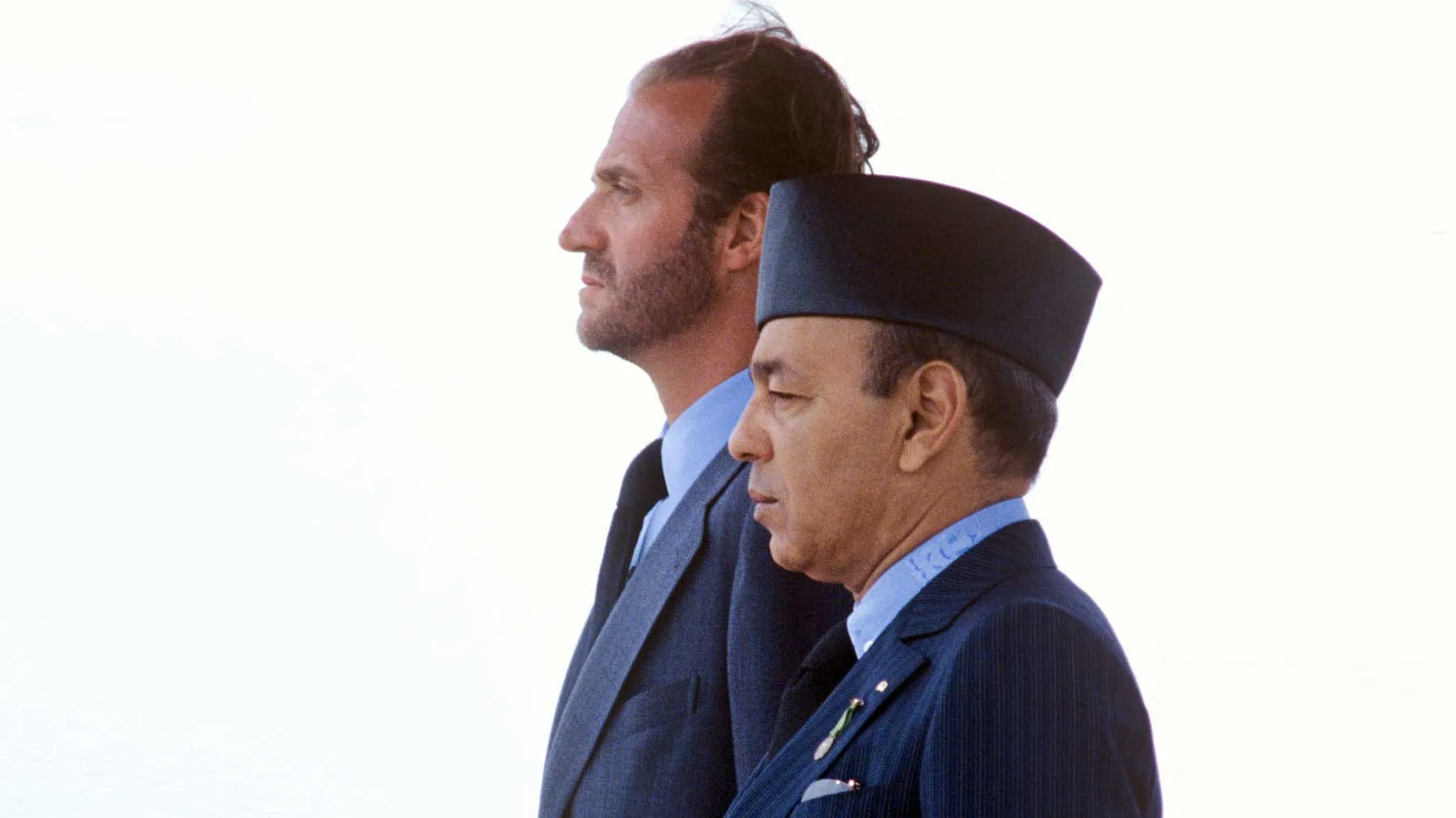

A Historical Perspective: Colonial Legacy and Territorial Disputes
Since Morocco gained independence in 1956, its relationship with Spain has transcended the mere geographical proximity of the two nations, which are separated by a strait no wider than 14 kilometers at its narrowest point. Instead, this relationship has been significantly influenced by a colonial legacy that has yet to be fully reconciled. Following its independence, Morocco gradually reclaimed territories that had fallen under Spanish control, yet the issues of Western Sahara, Ceuta, Melilla, and the nearby Mediterranean islands have remained persistent topics of contention. Declassified American documents, along with leaked "Wikileaks" cables, reveal that many of the crises that have surprised the public were, in fact, topics of discussion in closed diplomatic circles for decades.
Among the most significant documents is a secret memo dated July 30, 1956, just months after Morocco's independence. This memorandum, originating from the Central Intelligence Agency (CIA) and now archived in the U.S. Department of State, recorded statements from King Mohammed V, asserting that Morocco and its government would make every effort to reclaim sovereignty over Moroccan territories, specifically mentioning Sidi Ifni, the Gold Valley, Melilla, and Ceuta, along with a call for border adjustments with Algeria. This document is crucial as it establishes that Morocco's claims over Ceuta and Melilla are not merely a response to recent tensions with Madrid but were part of Morocco's vision for its territorial integrity from the outset of its independence.
Shifting Dynamics: From Territorial Claims to Diplomatic Negotiations
By 1957, the U.S. Department of State noted a deterioration in relations due to confrontations between the Moroccan Liberation Army and Spanish forces in Sidi Ifni. King Mohammed V instructed his ambassador in Madrid to seek negotiations that would lead to the return of the region. Following the Ifni War and the Sahara conflict, Morocco reclaimed the territory of Tarfaya in 1958, and the return of Sidi Ifni was formalized in 1969 through the Treaty of Fes, with the United Nations documenting the transfer of authority on June 30, 1969, marking the region's sovereignty under the Kingdom of Morocco.
However, the most significant challenge shifted to the Sahara. An American intelligence document from 1974 described Morocco as the most active party in claiming the "Spanish Sahara," noting that the Moroccan government regarded land regained since 1956 as merely part of the territories it sought. As the end of Franco's rule approached, the issue escalated into a serious crisis between the two nations. On October 3, 1975, CIA Director William Colby sent a memo to National Security Advisor Henry Kissinger, warning that information had reached Washington indicating that King Hassan II had decided to enter the Sahara, raising concerns about a potential "serious conflict" with Spanish forces and the possibility of Algerian involvement.
Further documents reveal that King Hassan II was clear with Kissinger about his refusal to allow for an independent state in the Sahara, stating that since Spain had previously left Morocco, it would also abandon the Sahara. He expressed Morocco's readiness to confront if necessary, while American communications aimed at avoiding war ensued. The Green March and the Madrid Agreement in November 1975 ultimately ended Spain's direct presence in the region, ushering in a new phase of conflict.
Interestingly, the reclamation of the Sahara temporarily pushed the issues of Ceuta and Melilla to the backburner, but did not eliminate them. A secret American cable sent from Rabat on August 21, 1976, which was later published by Wikileaks, indicated that Morocco's focus on the Sahara and improved relations with Spain had led to the matter of Ceuta and Melilla being deprioritized, although the ambassador noted that "the issue remains alive" and King Hassan II publicly maintained his commitment to their eventual return to Morocco.
Three years later, another document revealed the sensitivity of the issue within Spain itself. According to a declassified cable from the U.S. Embassy in Madrid, King Juan Carlos, in April 1979, acknowledged the possibility of returning Melilla to Morocco within a relatively short timeframe, although he viewed Ceuta as more complex due to its Spanish population. He suggested a formula akin to the international status that Tangier had previously enjoyed, fearing that King Hassan II might resort to a second "Green March" toward the two cities. This discussion, however, did not evolve into official Spanish policy, yet it revealed that the future of the two cities was a topic of debate even at the highest levels of the Spanish state.
In contrast, the Spanish government's position became increasingly rigid. In June 1980, Prime Minister Adolfo Suárez informed U.S. President Jimmy Carter that Madrid believed that Morocco might leverage pressure on Ceuta and Melilla to gain concessions in fishing and trade negotiations. Suárez stated that Spain would respond "with force" should such an event occur, indicating that military plans were ready, and when Carter remarked that this implied war, Suárez affirmed, "Exactly." This document highlights how intertwined the issues of land, fishing, trade, and the Sahara were to the extent that an economic dispute could escalate into military confrontation.
By the early 1990s, both countries sought to frame these issues within a context capable of containing crises, leading to the signing of the "Treaty of Friendship, Good Neighborliness, and Cooperation" in Rabat on July 4, 1991. Ironically, the preamble of the treaty acknowledged that the historical relationship between the two peoples had undergone "contradictory fluctuations," while establishing regular meetings and fostering political, economic, military, and security cooperation. This new framework was clear in practice, aiming to defer sovereignty disputes while expanding areas of mutual interest.
However, this did not prevent a severe confrontation in July 2002 when the Leila Island became a direct battleground at the beginning of King Mohammed VI's reign and Spanish Prime Minister José María Aznar's tenure. Following the entry of Moroccan elements onto the island, Spain executed a military operation to reclaim it, with the United States intervening to avoid further escalation. A formal letter from Secretary of State Colin Powell documented the agreement that restored the situation to its pre-crisis state, with military personnel and government officials withdrawing and flags being removed, while both countries committed to respecting their legal positions and resolving disputes peacefully.
The release of "Wikileaks" cables in 2010 unveiled another dimension of the relationship, particularly concerning the Sahara. The documents indicated that the Spanish socialist government, despite its publicly balanced rhetoric, had been encouraging Morocco to develop a "credible" autonomy plan since the mid-2000s. The Spanish ambassador in Rabat, Luis Planas, informed his U.S. counterpart in 2006 that Spain would assist Morocco in formulating a serious proposal, and Foreign Minister Miguel Ángel Moratinos suggested a shift from terms like "colonialism, sovereignty, and independence" to "regionalism, autonomy, and local governance," drawing inspiration from the Spanish model. Even Ceuta and Melilla resurfaced prominently in the Wikileaks cables in 2007, following King Juan Carlos's first visit to the occupied cities.
One cable explicitly stated: "The Spanish royal visit to Ceuta and Melilla backfires on Spain," recording that Morocco's strong response surprised the Zapatero government. Another cable from Rabat documented King Mohammed VI's reaffirmation of Morocco's commitment to regaining sovereignty over the two cities, alongside his call for "frank and forward-looking dialogue" to preserve relations with Spain. Following the crisis surrounding the reception of the separatist leader Ibrahim Ghali in Spain in 2021 and the subsequent influx of thousands of migrants into Ceuta, relations teetered on the brink of rupture. However, a pivotal turning point occurred in March 2022 when Pedro Sánchez announced that Spain views Morocco's autonomy initiative for the Sahara as "the most serious, realistic, and credible basis" for resolving the dispute.
Ironically, Wikileaks documents revealed that this approach had existed within Spanish diplomacy for nearly 15 years prior to its official announcement. In April 2022, the two countries established a roadmap based on continuous dialogue, avoiding unilateral actions, and preventing crises. Nonetheless, the stabilization of relations did not resolve the historical disputes between the two nations. In August 2026, Moroccan Justice Minister Abdellatif Ouahbi reiterated that Ceuta and Melilla represent a "historical and geographical right" for Morocco, advocating for the establishment of a dialogue mechanism concerning their future and "return to the homeland." In response, Madrid issued a firm rejection, asserting that the two cities are an integral part of Spanish sovereignty, territorial integrity, and the European Union, and that it would not negotiate over its sovereignty.
The last seven decades of documents reveal that the Moroccan-Spanish relationship has never been characterized by stable friendship or permanent enmity; rather, it is marked by mutual dependency amidst unresolved historical disputes. Since the late King Mohammed V, Morocco has viewed the completion of its territorial integrity as a journey that began with independence and continued with the reclaiming of Tarfaya, Sidi Ifni, and the Sahara, while Ceuta, Melilla, and the surrounding islands remain central to Morocco's historical claims. Conversely, Spain remains steadfast in its view that the two cities are a definitive part of its territory. Between these opposing stances, geography continues to impose its rules, as trade, migration, security, fisheries, counter-terrorism, investments, and energy make a complete break costly for both countries. Thus, the documents reveal a recurring pattern since the 1950s, characterized by disputes over land and sovereignty, followed by escalations, fears of crossing red lines, mediation or negotiation, and the subsequent establishment of new phases of cooperation until historical issues resurface once more.
As reported by assahifa.com.