
Understanding Voluntary Returns Amidst Police Pressure
The concept of returning voluntarily to Morocco has become a poignant reality for many migrants in Ceuta, particularly for Ayoub, a 17-year-old who pondered his decision for days. On September 19, following a night filled with intense police checks at the Tarajal settlement, he woke up determined to return home. After a quick visit to his barber friends for a haircut adjustment, particularly to his signature lock that falls perfectly over one eye, Ayoub donned the clean clothes he had managed to wash the previous day. With a scent of cologne and a smile, he walked toward the border, eager for his mother to see him looking handsome upon his return to Casablanca. This instance epitomizes what a voluntary return should look like.
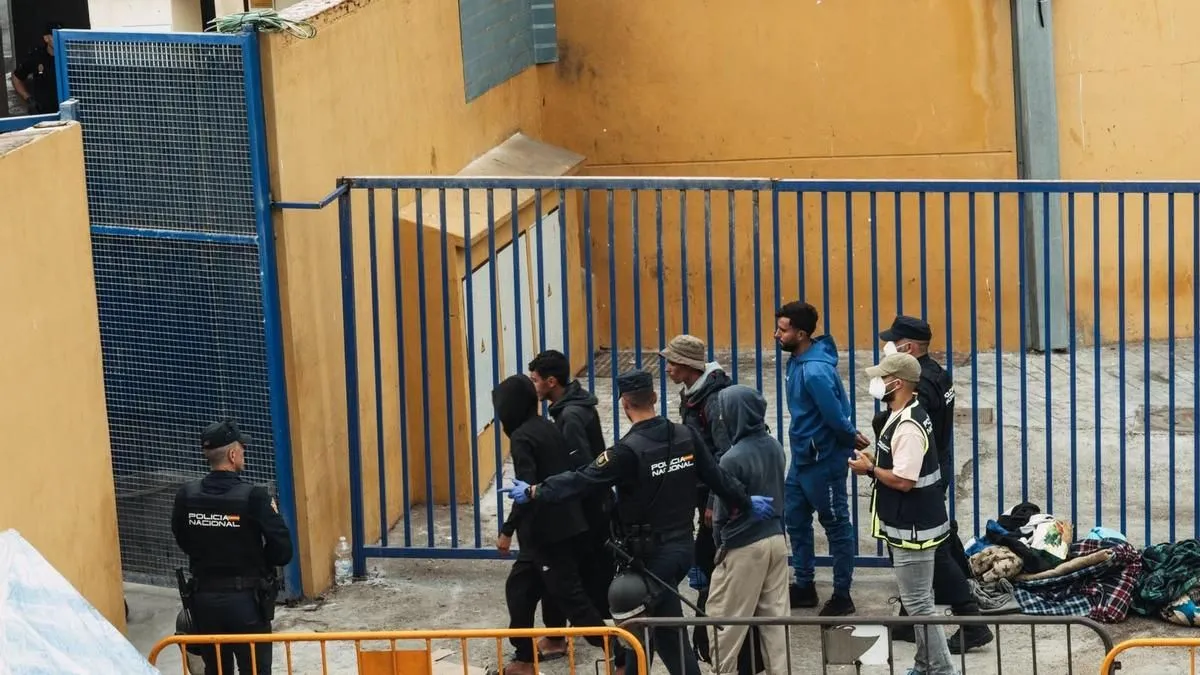
In stark contrast, Malik's experience on September 27 highlights a troubling narrative surrounding so-called voluntary returns. The National Police stormed the Benítez beach settlement early that morning, waking migrants with batons. Startled, Malik and his peers witnessed police officers violently confronting others. Detained alongside dozens of migrants, he was ushered onto a bus that was parked strategically between the Tarajal border crossing and a large gate leading to the warehouses where police conduct the identification and triage of migrants.
Upon arrival, they were grouped into six and confronted by officers in yellow vests who engaged them for a mere three minutes. The officers pressured them not to go through the identification process required by law and the European pact, instead encouraging them to take the back route to Morocco. "They told us things that were not entirely true, threatening jail time if we did not comply. The urgency and presence of riot police instilled fear, pushing us to choose quickly, and we decided to head to the border," Malik recounted in a conversation with eldiario.es.
The Fine Line Between Choice and Coercion
This supposed voluntary return, initiated under dubious police intervention and without legal assistance, starkly differs from Ayoub's decision. The Interior Ministry acknowledges the distinction between "voluntary transfers without police mediation" and those influenced by police presence just before migrants make their decisions, especially following forced eviction operations on the beaches of Ceuta. NGOs like Novact, Coordinadora de Barrios, Elin, and No Name Kitchen have expressed concern over these allegedly voluntary returns where police involvement undermines the guarantees established in legal frameworks, including legal representation. Amnesty International has also criticized these operations as “lacking transparency” and is currently investigating them.
In recent weeks, the Interior Ministry, overseen by Fernando Grande-Marlaska, has been facilitating the transfer of hundreds of people directly from the settlements being evacuated from Ceuta's beaches. On September 29 alone, approximately 400 individuals were said to have returned to Morocco "voluntarily" in a single day through similar procedures. This trend continued on October 4 and 5 from Trampolín beach, although the government has yet to provide official data on these recorded departures.
Witnesses from these operations reported that after the police evacuated the beaches, they were hurriedly convinced to return to their country before undergoing the identification process. While one individual confirmed their intention to return home after the eviction of their shelter, the remaining four Moroccan contacts disclosed experiencing or witnessing police pressure during the ordeal. Less than 24 hours after his "voluntary return," Malik found himself in a room in Tangier, not his original city, having paid off Moroccan police to avoid being taken to the desert after their bus dropped them off at the border. Despite enduring two months in a settlement in Ceuta, he expressed that leaving for Morocco was not his desire, but rather a result of police pressure during an exhausting and high-stress moment.
As Malik elaborated on his experience, he noted the police offered him a choice between two options: "It was so hurried. We were told to choose quickly, with the threat of immediate expulsion and a five-year entry ban to the EU if we went through the police station. They insisted that was our only option and that asylum was off the table. We were pressured into a decision," he explained. He described feeling blocked and frightened, recalling the police's insistence to return to Morocco before attempting to enter Ceuta again at a calmer time.
Faris, whose name has been changed, shared his traumatic experience of being struck by an officer during the police presence at Benítez beach. Having spent his youth in Spain, he was fluent in Spanish and attempted to explain to fellow migrants that the police's description of the return process was misleading. However, he was quickly silenced by an officer who forbade him from speaking. Faris managed to remain in Ceuta, knowing his rights and the possibility of applying for asylum, while many others felt compelled to leave.
Government sources confirm that following forced evictions from Ceuta's beaches, the police provide information about the triage process before migrants enter the Temporary Attention Center for Foreigners (CATE). It is at this juncture that many migrants are reportedly making their so-called voluntary decisions to return home. However, there is no assurance that the threats of immediate expulsion and entry bans are consistently applied as the police suggest, according to legal experts. The complexities surrounding migrants' rights to asylum and the circumstances leading to their returns highlight the need for clearer policies and protections for vulnerable populations.