
Christopher Nolan has chosen the majestic ksar of Ait Ben Haddou as a backdrop for some scenes in his adaptation of _The Odyssey_, a rendition that, while entertaining, strays far from the original Homeric text. This fortified citadel, located approximately 100 kilometers southeast of Marrakech, stands as one of the most picturesque sites in the Alaouite kingdom. Morocco is a nation rich with evocative imagery, including the deserts that frame _Sirat_, another controversial film that has notably polarized opinions within our country, creating a divide between detractors and enthusiasts alike. However, my intention here is not to delve into cinema or the treasures of our fascinating neighbor, but rather to explore the challenging relationships we maintain with it.
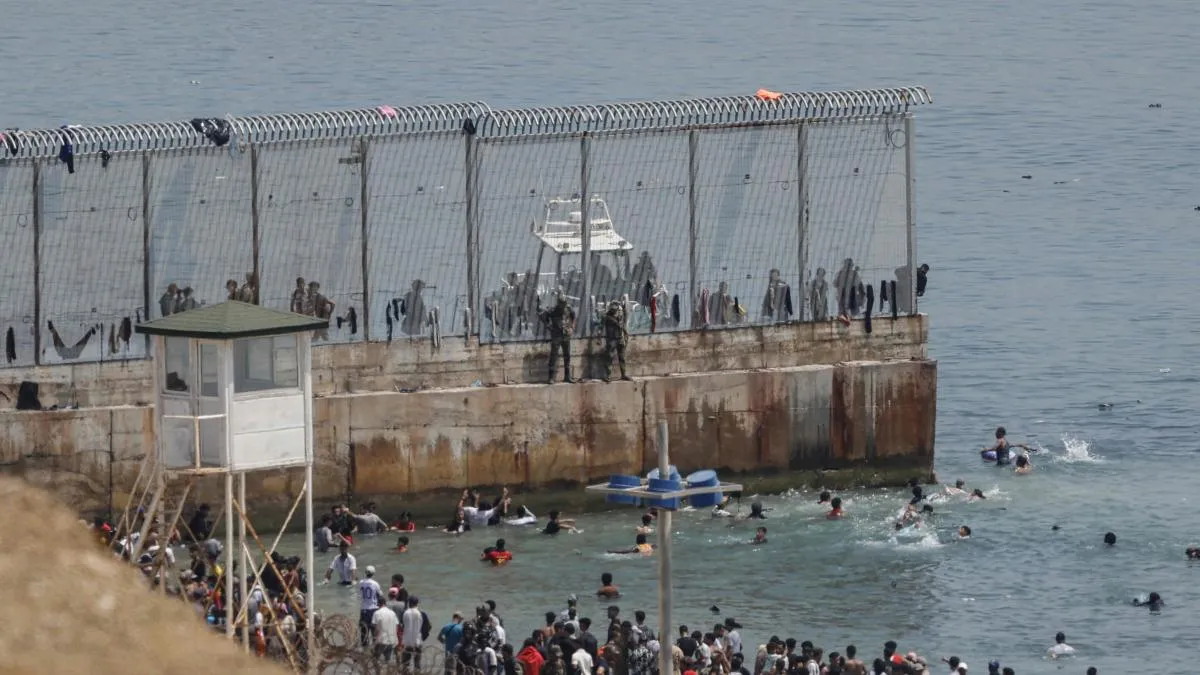
The recent migration crisis has starkly exposed the vulnerabilities present on our southern flank. Spain arguably stands as the most geographically stable country in Europe, with its borders unchanged since the Treaty of the Pyrenees in 1659. Yet, our southern boundary remains porous and intricate. Ceuta and Melilla, acquired by Portugal and Spain respectively in the 15th century, are geographically part of Africa. Just as Gibraltar poses a thorn in the side of Spanish nationalism, Morocco has persistently laid claim to these enclaves. Consequently, Morocco seizes every opportunity to highlight our weaknesses—weaknesses that, despite the right-wing's assertion of being a consequence of the socialist government's foreign policy, have deep historical roots.
In 1975, during Franco's final days, King Hassan II orchestrated a mass movement known as the Green March, compelling our military to execute a humiliating withdrawal from the Sahara, a moment that marked the onset of King Juan Carlos I's reign. Despite this, our monarchs have carefully nurtured relations with their counterparts to the south, treating them like brothers. However, a defining characteristic of our diplomatic approach toward Morocco has been a lack of firmness, a structural trait in the relationships between democracies and autocratic regimes. While democracies must respond to public opinion and justify their actions, autocracies operate with intrinsic irresponsibility. Aside from this inherent weakness, our relations with our southern neighbor have generally shown a tendency to capitulate.
Spain's Compromised Stance on Migration and Morocco's Role
Spain's posture can be observed in the context of the decolonization process of Western Sahara, where we lost much of our dignity by aligning with Morocco's autonomy plan in 2022, disregarding the Sahrawi people's input and Algeria's stance. This alignment occurred after one of the most regrettable incidents in Spanish foreign policy, which led to the resignation of Minister González Laya, with Albares stepping in to quell the ensuing turmoil. Each time the Alaouite kingdom employs its citizens to storm the only European Union border in Africa, this capitulation is reiterated.
Morocco strategically leverages its position as a migration containment stronghold, especially considering that immigration remains the most polarizing topic within our societies. In contrast to the model proposed by Meloni, which advocates for the establishment of refugee camps in third countries to manage unauthorized immigrants, Spain has opted for a model focused on origin control, entrusting management to a partner that is both its closest ally and most formidable adversary. Upon closer inspection, this approach mirrors the cynical strategy endorsed by Meloni, as Spain refrains from exerting any pressure on Morocco to fulfill its guardian duties while respecting human rights. The recent crisis reveals that the Moroccan police state has no qualms about allowing its citizens to embark on perilous journeys to send distress signals to their neighbor.
While the Spanish government rightly accuses other leaders of opportunism for exploiting the Ceuta crisis to solidify their immigration stances, it struggles to impart lessons when it delegates undesirable tasks to a shadowy and authoritarian regime, failing to exercise the necessary diligence to prevent its use as a leverage tool. Furthermore, the government has found itself compelled to regularize over a million immigrants due to deficiencies within its control systems.
As reported by lavanguardia.com.