
The Ceuta Invasion: A Complex Humanitarian Narrative
The recent invasion of Ceuta that occurred on July 30 and 31 has generated a wide array of images that starkly contrast the precarious conditions faced by military and police forces with the suffering of local citizens. In recent weeks, a narrative has emerged, seemingly promoted by various media outlets, which seeks to frame the situation as primarily a humanitarian crisis involving thousands of immigrants in pursuit of a better life. One of the latest accounts to gain attention is the testimony published by _El País_, featuring a young woman named Wafae Atid, who claims to have fled her home country of Morocco due to familial pressures and the gender inequalities perpetuated by Islam.
Atid's story presents a compelling picture of a young woman oppressed by societal norms, stating, "Women are beneath men. They crush your dreams, prevent you from going to school, and try to keep you at home. I prefer to distance myself from them." This narrative paints Atid as both a privileged young woman with a love for football and as a victim of her Third World circumstances. While she may appear tragic and sorrowful in her recounting, the stark contrast between her reality in Morocco and her apparent lifestyle elsewhere raises questions about the authenticity of her claims. Walt Whitman famously said he contained multitudes, but it remains unclear if he alluded to such contradictions.
Wafae Atid: A Life of Contradictions
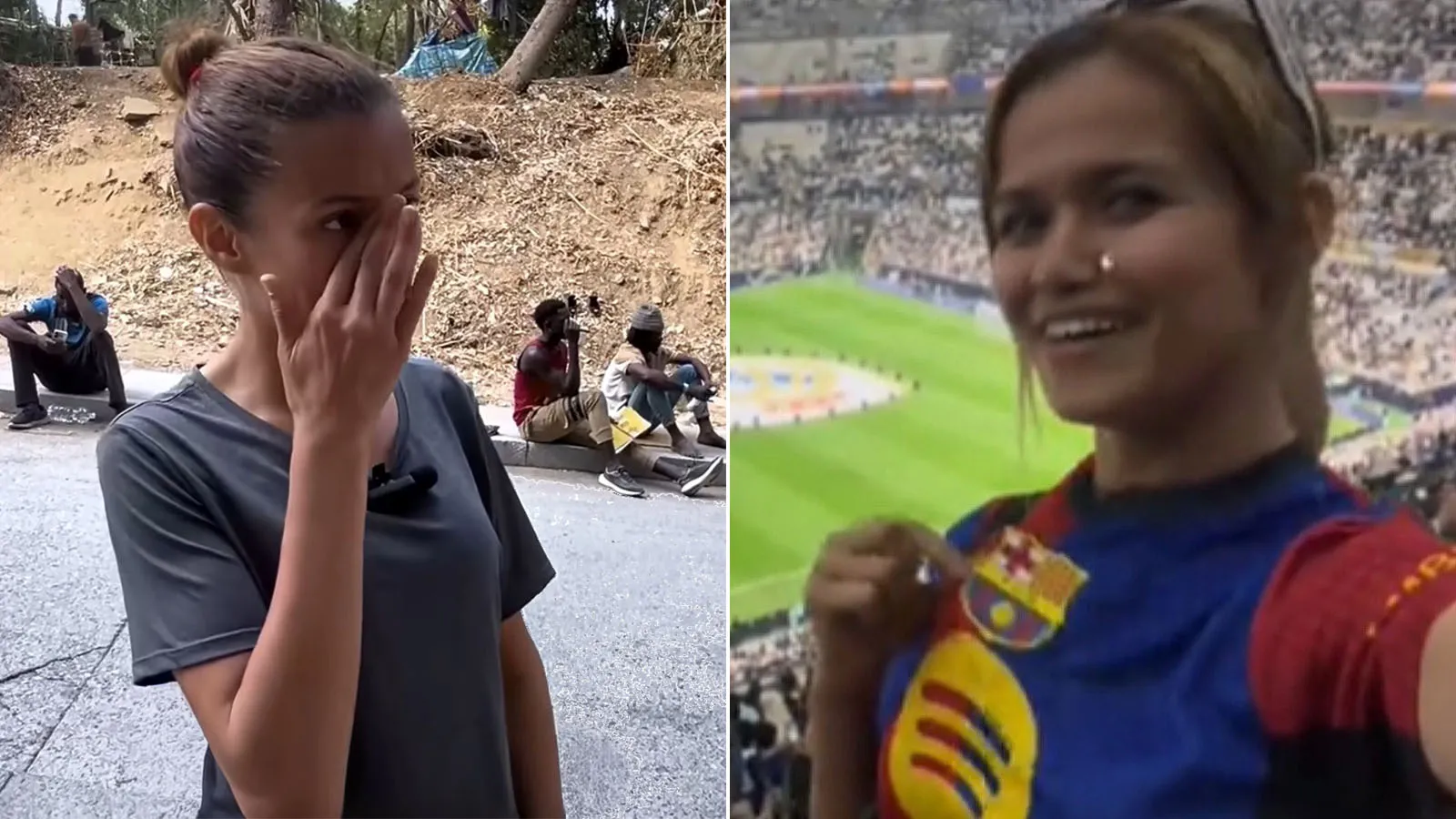
In a video shared on social media, a caption identifies Wafae Atid as a 28-year-old who swam from Morocco to Ceuta during the mass entry. She expresses aspirations of relocating to Barcelona, likely to see a FC Barcelona match, yet her choice to stop in Ceuta is puzzling. Atid claims she attended school for only five years, but a cursory search on social media reveals a different narrative. Her Instagram account showcases her travels to Dubai, while her TikTok profile is even more revealing. Interestingly, her Facebook account suggests she currently resides in Dubai, where she claims to have studied English at the American Language Center in Tangier and regularly attends parties. Notably absent from her photos is any sign of traditional Islamic attire, contrasting sharply with her assertions of oppression.
On TikTok, she can be seen dancing in limousines and posing with Moroccan national football team players, along with numerous travel snapshots. Her interests seem to extend to following the Spanish national team and her apparent fervor for FC Barcelona, as well as attending events like the Africa Cup. Responses to _El País_ on social media have been swift, with many speculating that she has even modeled for Chanel, alongside the usual mockery typical of such platforms.
Atid's attire is decidedly Western, which contradicts her claims of needing to escape a repressive religious environment. She states, "I want to leave Morocco because I do not believe in religion." Her comments about her family, who she claims are devout Muslims that removed her from school, suggest a deep familial conflict. However, her lifestyle and the distances she has traveled raise questions about the veracity of her claims of victimhood under religious oppression. These contradictions imply two critical points: Wafae Atid does not appear to be a victim of a humanitarian crisis nor someone in desperate need of asylum. Instead, the true victims in this situation may be the residents of Ceuta, who are grappling with the fallout from an invasion that threatens national integrity. Numerous reports have surfaced, highlighting the plight of Ceuta's inhabitants as their lives are disrupted by the ongoing crisis, illustrating the stark difference between actual victims and those who may be misrepresented as such.
As reported by libertaddigital.com.