
The Dual Role of the Justice Minister: A Threat to National Integrity
The office of the Minister of Justice in Spain carries with it an important responsibility that is not commonly understood by the general public: the role of Chief Notary of the Kingdom. This significant position entails the formal attestation of key state acts, thereby placing a heavy burden on the minister's integrity and truthfulness. It is particularly alarming when the Minister of Justice, a position designed to uphold the law and maintain public trust, engages in deception. Such dishonesty not only erodes the citizens' confidence in the state but also jeopardizes the minister's credibility in his capacity as Chief Notary, potentially leading to legal ambiguities that could have dire repercussions for the nation.
Allegations Against Minister Bolaños Concerning Morocco
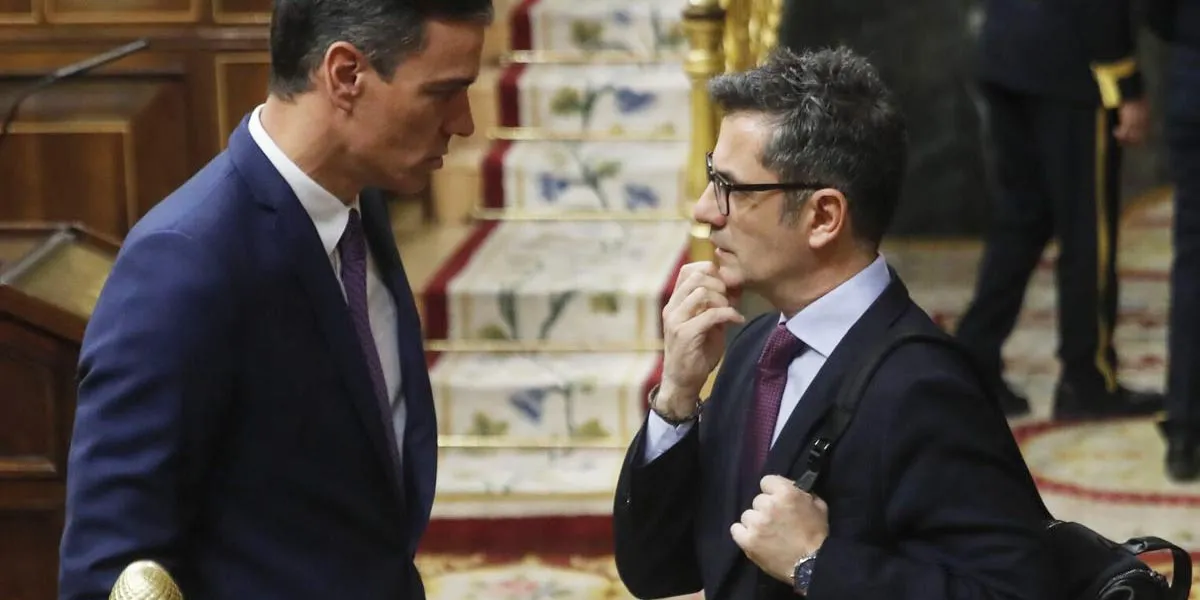
Recent remarks made by Minister Félix Bolaños in the Congress of Deputies have drawn considerable attention and criticism. He accused opposition parties, specifically the People's Party and Vox, of "disrespecting" Morocco by attributing the recent surge of migrants storming the Spanish city of Ceuta to the Moroccan government. Bolaños emphatically stated, "there is no evidence whatsoever that Morocco led or instigated the mass entry of people." Such claims raise eyebrows, especially when juxtaposed against the backdrop of Morocco's ongoing territorial claims over Ceuta and Melilla, Spanish cities that are integral parts of the nation. Despite these provocations, the Sánchez government has notably refrained from issuing any diplomatic protests against Morocco, leading many to question whether the Spanish administration is prioritizing Moroccan interests over its own national concerns.
Furthermore, the significant influx of migrants itself serves as stark evidence of Morocco's involvement in orchestrating these border challenges. The Economist's Democracy Index categorizes Morocco as a hybrid regime, suggesting that its governmental structure leans more towards authoritarianism than democracy. If the Moroccan government had genuinely intended to prevent this surge, it undoubtedly could have done so, as evidenced by its successful prevention of an assault by sub-Saharan migrants on Ceuta a mere two weeks prior. The incidents surrounding these migrant crises strongly indicate that the Moroccan government is wielding immigration as a strategic weapon against Spain, a tactic reminiscent of the May 2021 border assault that followed Spain's decision to grant medical attention to a leader of the Polisario Front.
Bolaños's pattern of denying foreign interference is not a new phenomenon. In 2024, he similarly dismissed allegations of Russian involvement in the Catalan separatist movement, asserting that there was no substantiated evidence to support such claims. This denial came despite significant evidence indicating Russian support for the 2017 Catalan coup attempt, which had been uncovered through investigations by Spanish authorities. Critics argue that such rejections of evidence are not merely oversights but rather strategic moves designed to align with the political interests of the Sánchez administration, particularly the amnesty deals with separatist factions that have emerged in recent years.
Ultimately, the troubling alliance between Bolaños and Morocco raises serious questions about the motivations behind the Sánchez government’s foreign policy. The minister's past involvement in covering up foreign threats to Spain’s sovereignty, as well as his apparent subservience to Moroccan interests, indicate a concerning trend of prioritizing political expediency over national integrity. As the intricacies of these relationships unfold, it remains to be seen whether Bolaños and Sánchez will face accountability for their actions that many perceive as compromising Spain's national interests in exchange for political gain.
As reported by outono.net.