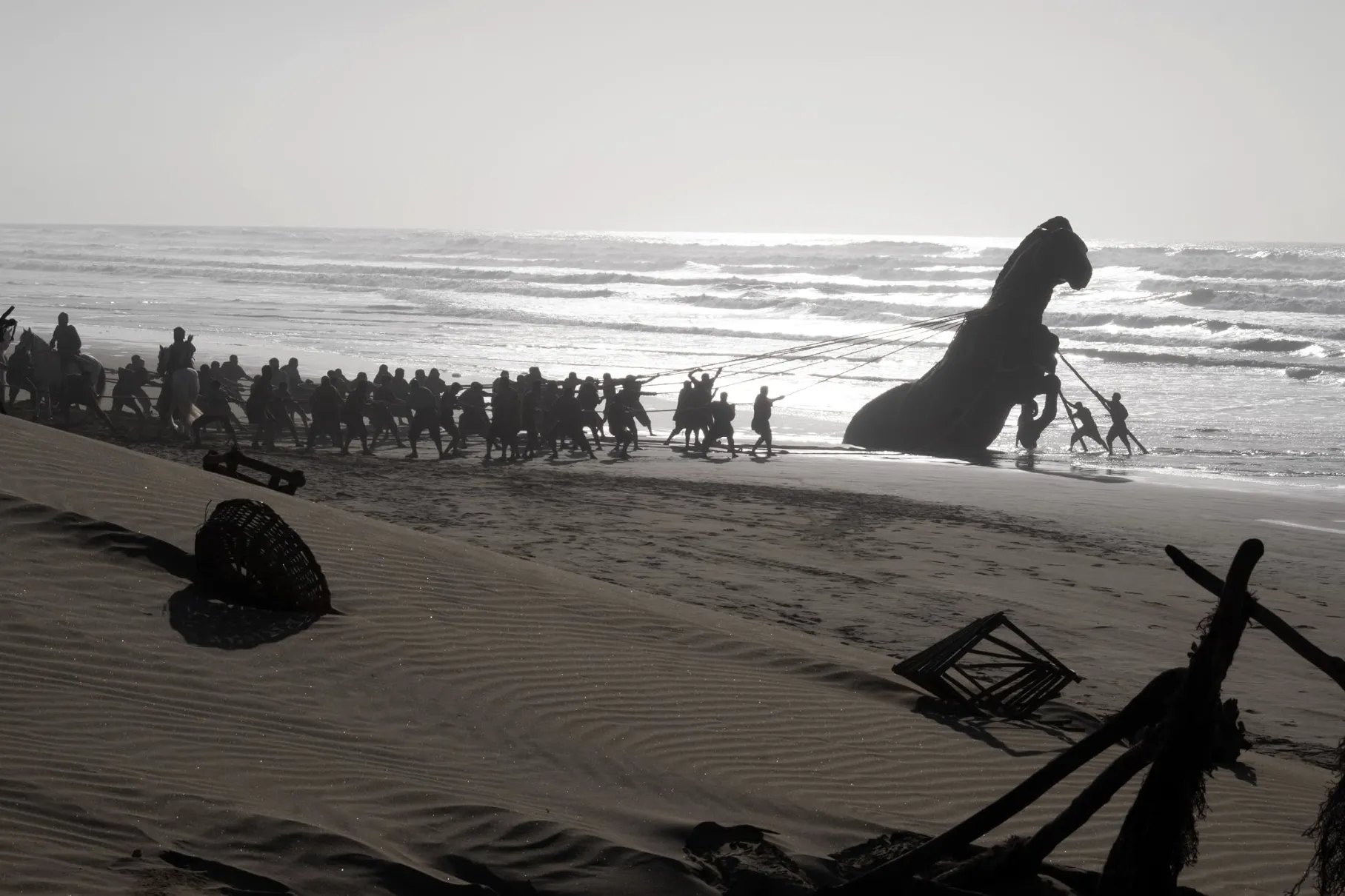
In the lead-up to its theatrical debut, Christopher Nolan's highly anticipated film, 'The Odyssey,' found itself at the center of a heated online debate, particularly after tech mogul Elon Musk criticized the film's alleged 'woke' casting choices. However, this controversy pales in comparison to the more pressing ethical concerns regarding the filmmakers' decision to shoot part of the movie in Western Sahara, Africa's last colony, which is currently under illegal occupation by Morocco. By accepting significant financial support from the Moroccan government, the filmmakers inadvertently lent credibility to an oppressive regime that continues to suppress the rights and freedoms of the Sahrawi people.
During the filming along the picturesque coastline near Dakhla, an open letter condemning the production was signed by notable figures in the film industry, including actors Javier Bardem and Pedro Almodóvar, and writer Paul Laverty. The letter emphasized that Nolan proceeded with the shoot without obtaining the consent of the Sahrawi people, the indigenous population of Western Sahara, instead relying solely on approval from the occupying Moroccan forces. Bardem, in particular, voiced his outrage by stating on social media that for the past 50 years, Morocco has systematically occupied Western Sahara, forcibly displacing the Sahrawi population while transforming areas like Dakhla into tourist attractions and film sets with the aim of erasing their cultural identity.
Western Sahara, a territory roughly the size of Britain, is classified as a 'non-self-governing territory' by the United Nations and remains on its list of regions awaiting decolonization. Retained by Spain under Francisco Franco's regime, it did not gain independence after his death in 1975. Instead, it was invaded by Morocco and Mauritania, leading to a mass exodus of the Sahrawi people, with approximately 40% fleeing to neighboring Algeria amidst a brutal bombing campaign by Moroccan forces. Today, around 173,000 Sahrawis live in refugee camps in Algeria, while those remaining under Moroccan control experience what Freedom House describes as one of the most repressive political environments globally.
'The Odyssey' marks the first significant Hollywood film to be shot in Western Sahara, a development that would have been unimaginable before 2020. That year, former President Donald Trump shifted longstanding U.S. foreign policy by recognizing Morocco's illegal claim over the territory, a decision made in exchange for Morocco's normalization of relations with Israel. Nolan's four-day shoot in Dakhla exemplifies how swiftly Hollywood has adapted to exploit the new geopolitical landscape fostered by Trump's diplomatic maneuvers, showcasing a troubling trend of 'occupation cinema' that reflects the decline of a rules-based international order.
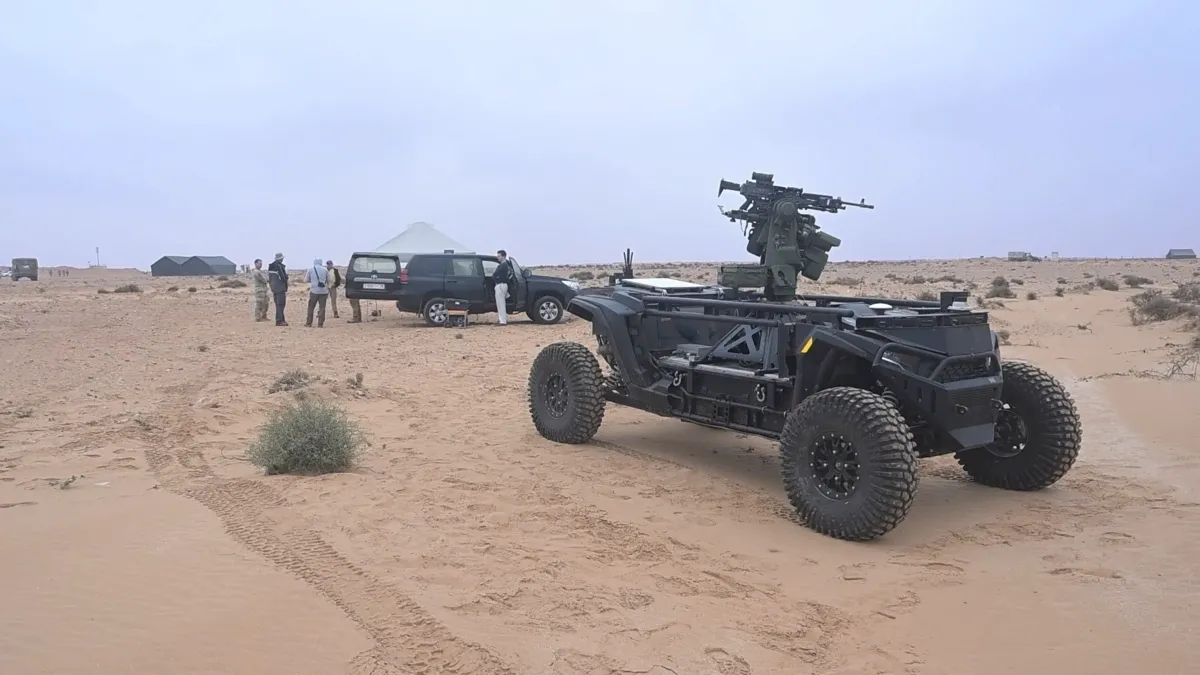
For Moroccan authorities, the filming of 'The Odyssey' represents a significant propaganda victory, with officials viewing it as the first step in establishing Dakhla as a hub for international film production. This occurs despite ongoing armed conflicts between the Moroccan military and the Sahrawi pro-independence group, the Polisario Front. Recent violent confrontations include a Moroccan drone strike that killed three Polisario fighters near the extensive sand berm separating Moroccan-controlled territory from areas governed by the Polisario.
The Moroccan government aims to solidify its grip on Western Sahara through various initiatives, including the development of Dakhla as a tourist destination and green energy center. The Atlantic Initiative is one such project, which seeks to enhance maritime access for landlocked nations in the Sahel via a new €1.3 billion port being constructed in Dakhla, scheduled to open in 2028. By positioning Dakhla as a key logistics center, Morocco hopes to integrate Western Sahara into regional trade networks, further undermining the prospects for Sahrawi independence.
Tourism plays a crucial role in normalizing Moroccan control over the region, with Dakhla being marketed as a premier destination for kitesurfing and ecotourism. High-profile visits from figures like Ivanka Trump and Jared Kushner have showcased opulent hotels and breathtaking coastlines, effectively obscuring the harsh realities of military occupation and the plight of the indigenous Sahrawi population. In 2024, Ryanair announced new direct flights connecting Spain to Dakhla and El Aaiún, further expanding the model of occupation tourism, despite EU warnings regarding the legality of such routes.
While Nolan's production exemplifies efforts to position Dakhla as an international locale, it also underscores the stark contrast faced by Sahrawi filmmakers and activists. Many have taken to social media to highlight the freedoms afforded to Hollywood productions in contrast to the repression they experience when attempting to document human rights violations or express their creativity. Notably, Sahrawi filmmaker Brahim Chagaf lamented his inability to return to his homeland freely, while human rights advocate Ghalia Djimi recounted her harrowing experience of being imprisoned for three years by Moroccan authorities.
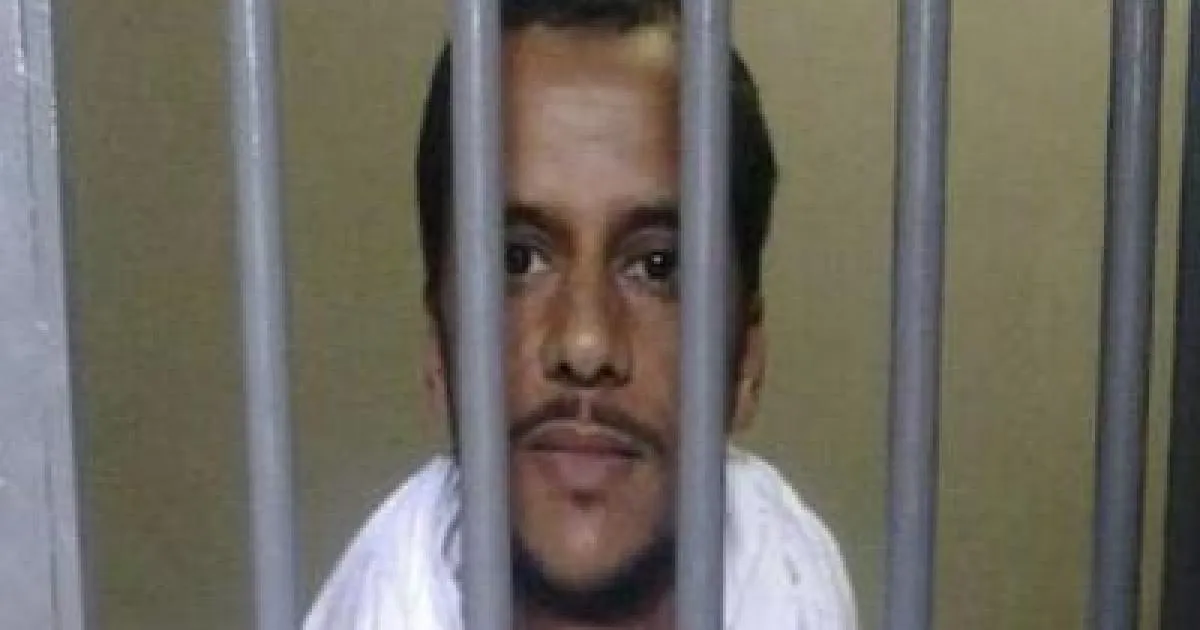
Human rights organizations have continued to document severe abuses perpetrated by Moroccan security forces, including violent repression of peaceful protests and arbitrary detentions of activists. A recent report by CODESA revealed the grim realities faced by Sahrawi civilians, emphasizing the need for international attention and action. As 'The Odyssey' prepares for its global release, one of the Gdeim Izik prisoners, Enaâma Asfari, remains on a hunger strike to protest his unjust detention, highlighting the ongoing struggles of the Sahrawi people.
María Carrión, executive director of The Western Sahara International Film Festival, encapsulated the dilemma by asserting that as Nolan walks the red carpet for the premiere, he will also be stepping on international law. She urged audiences to consider the ethical implications of supporting a film created in an occupied territory, drawing parallels to situations in Ukraine and Palestine. The European Union’s Court of Justice has consistently affirmed that Western Sahara possesses a unique status separate from Morocco, with its resources requiring consent from the Sahrawi people for exploitation. This raises critical questions about the moral responsibilities of international entities, including film studios, operating in occupied regions.
While Christopher Nolan's talent as a filmmaker is undeniable, 'The Odyssey' sets a precarious precedent in the realm of modern cinema, marking a troubling intersection between entertainment and geopolitical exploitation. Using a territory under brutal colonization as a backdrop for a Hollywood blockbuster is not merely a matter of artistic expression but a profound ethical issue that demands scrutiny and accountability.
As reported by africasacountry.com.