
The Ethical Implications of Filming in Occupied Territories
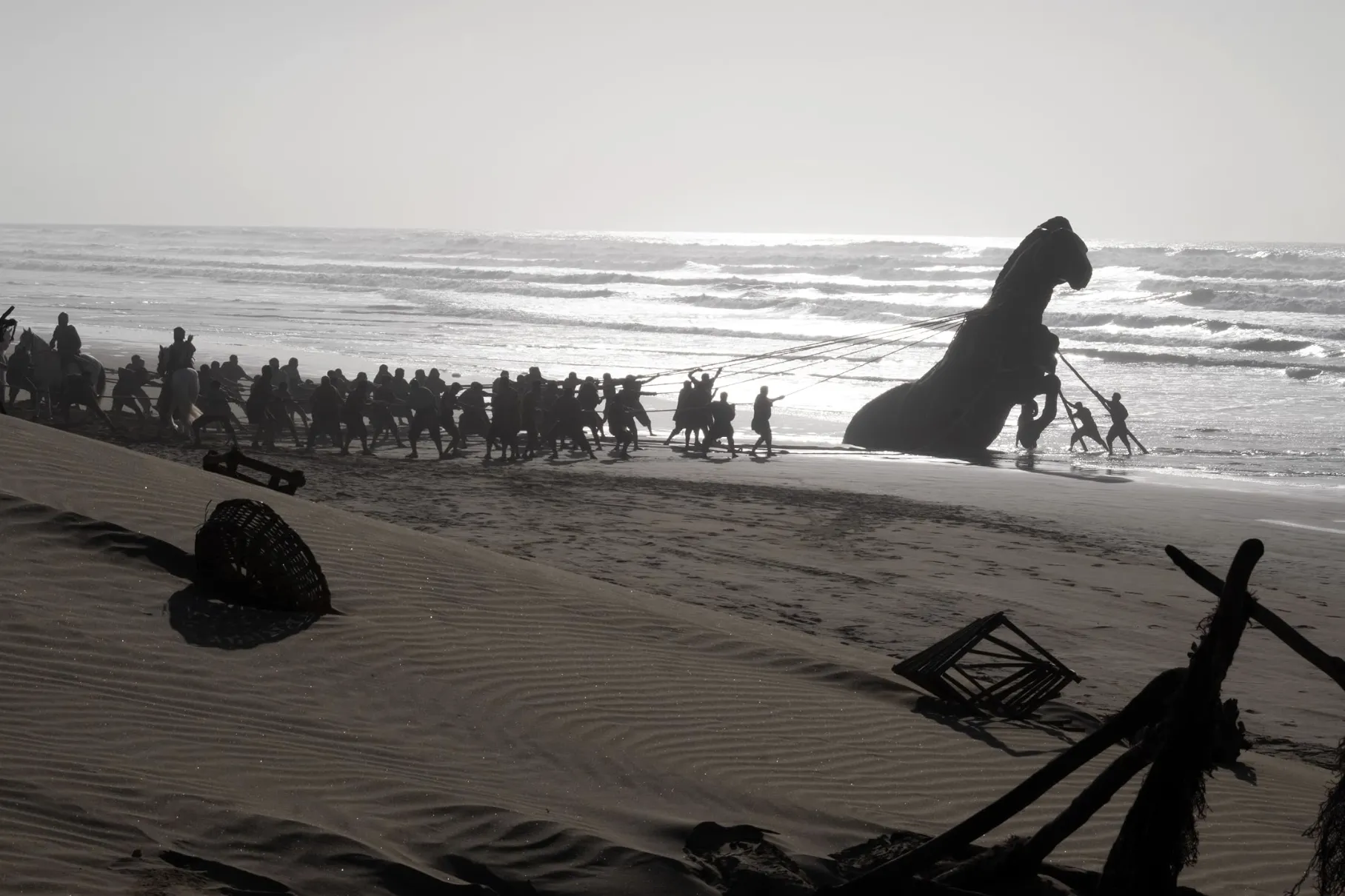
As the theatrical release of Christopher Nolan's highly anticipated film, 'The Odyssey', approaches, it has ignited a firestorm of debate online, particularly following Elon Musk's critique of the film's perceived 'woke' casting choices. However, the controversy that truly warrants attention goes far beyond this superficial discourse; it concerns the filmmakers' choice to shoot part of the film in Western Sahara, which remains Africa's last colony. By utilizing locations in this disputed territory, the filmmakers inadvertently lent legitimacy to Morocco's illegal occupation, a decision that has not gone unnoticed by the international community.
During the filming process along the scenic coast near Dakhla last summer, an open letter emerged, signed by notable figures in global cinema, including acclaimed actors Javier Bardem and Pedro Almodóvar, as well as screenwriter Paul Laverty. The letter criticized Nolan for filming without the consent of the Sahrawi people, who represent the majority ethnic group in Western Sahara, noting that the only approval obtained was from the Moroccan authorities. Bardem, in particular, was vocal about the issue, stating on his Instagram that Morocco has occupied Western Sahara for 50 years, forcibly displacing the Sahrawi population and transforming cities like Dakhla into tourist hotspots devoid of their original cultural identity.
The Historical Context of Western Sahara's Occupation
Western Sahara, a territory roughly the size of Great Britain, is classified as a 'non-self-governing territory' by the United Nations and remains on its official list of regions awaiting decolonization. Historically, the territory was under Spanish control until the dictator Francisco Franco's death in 1975, after which Morocco and Mauritania invaded, leading to a humanitarian crisis that forced approximately 40% of the Sahrawi population to flee to Algeria. Fast forward to today, about 173,000 Sahrawis are still living in refugee camps in Algeria, while those who remain under Moroccan occupation experience severe restrictions on their freedoms, as documented by organizations like Freedom House.
The significance of 'The Odyssey' being the first major Hollywood production filmed in Western Sahara cannot be overstated. This occurrence was made possible only after former President Donald Trump recognized Morocco's claim to sovereignty over the territory in 2020, a decision that marked a dramatic shift in U.S. foreign policy. Nolan's decision to film in Dakhla highlights how quickly Hollywood has adapted to the opportunities presented by such diplomatic shifts, effectively normalizing the exploitation of occupied lands. For Moroccan officials, the presence of 'The Odyssey' was not just a film shoot but a strategic move to promote Dakhla as a burgeoning center for international film production, all while the conflict between Morocco and the Sahrawi independence movement, the Polisario Front, continues to simmer. The recent deaths of three Polisario fighters in a Moroccan drone attack serve as a grim reminder of the ongoing strife in the region.
In recent years, Morocco has aimed to establish Dakhla as a premier tourist destination and green energy hub, further entrenching its control over Western Sahara. This strategy includes the construction of a €1.3 billion port facility to enhance maritime access for landlocked Sahel countries, thereby integrating Western Sahara into broader regional trade networks. Despite the ongoing military conflict, tourism initiatives are being promoted, with Dakhla being rebranded as a hotspot for kitesurfing and ecotourism. This transformation has led to high-profile visits from influential figures, such as Ivanka Trump and Jared Kushner, who were photographed enjoying the luxurious amenities of new hotels, a stark contrast to the realities faced by the indigenous Sahrawi population.
While 'The Odyssey' is framed as a cinematic endeavor, it simultaneously represents a broader campaign to normalize Morocco's control over Western Sahara. As news of the film's production spread, Sahrawi filmmakers and activists voiced their frustrations on social media, highlighting the stark disparity between Nolan's unfettered access to the region and the oppression they face in their attempts to document human rights violations or express their artistic voices. One prominent filmmaker, Brahim Chagaf, lamented the irony of being unable to return to his homeland to tell his own stories while a Hollywood director is welcomed with open arms. Human rights advocates have echoed similar sentiments, with activist Ghalia Djimi sharing her harrowing experience of being imprisoned for nearly four years due to her activism.
As 'The Odyssey' opens in theaters worldwide, it is crucial to recognize the implications of its production in occupied territory. The film's release coincides with disturbing reports of human rights abuses perpetrated by Moroccan authorities against Sahrawi activists, including violent suppression of protests and arbitrary detentions. The UN Working Group on Arbitrary Detention has classified the detention of many Sahrawi activists as illegal, raising profound ethical questions about the responsibilities of filmmakers and production companies operating in such contexts.
In conclusion, while Christopher Nolan's talent as a filmmaker is undeniable, 'The Odyssey' sets a troubling precedent by participating in what can be termed 'occupation cinema'. This film, produced in a territory subjected to a brutal colonial regime, serves as a reminder of the complexities and ethical dilemmas filmmakers face when choosing their locations. It is imperative for audiences to critically engage with this film, considering the broader implications of its production in a region marked by conflict and human rights violations.
As reported by africasacountry.com.