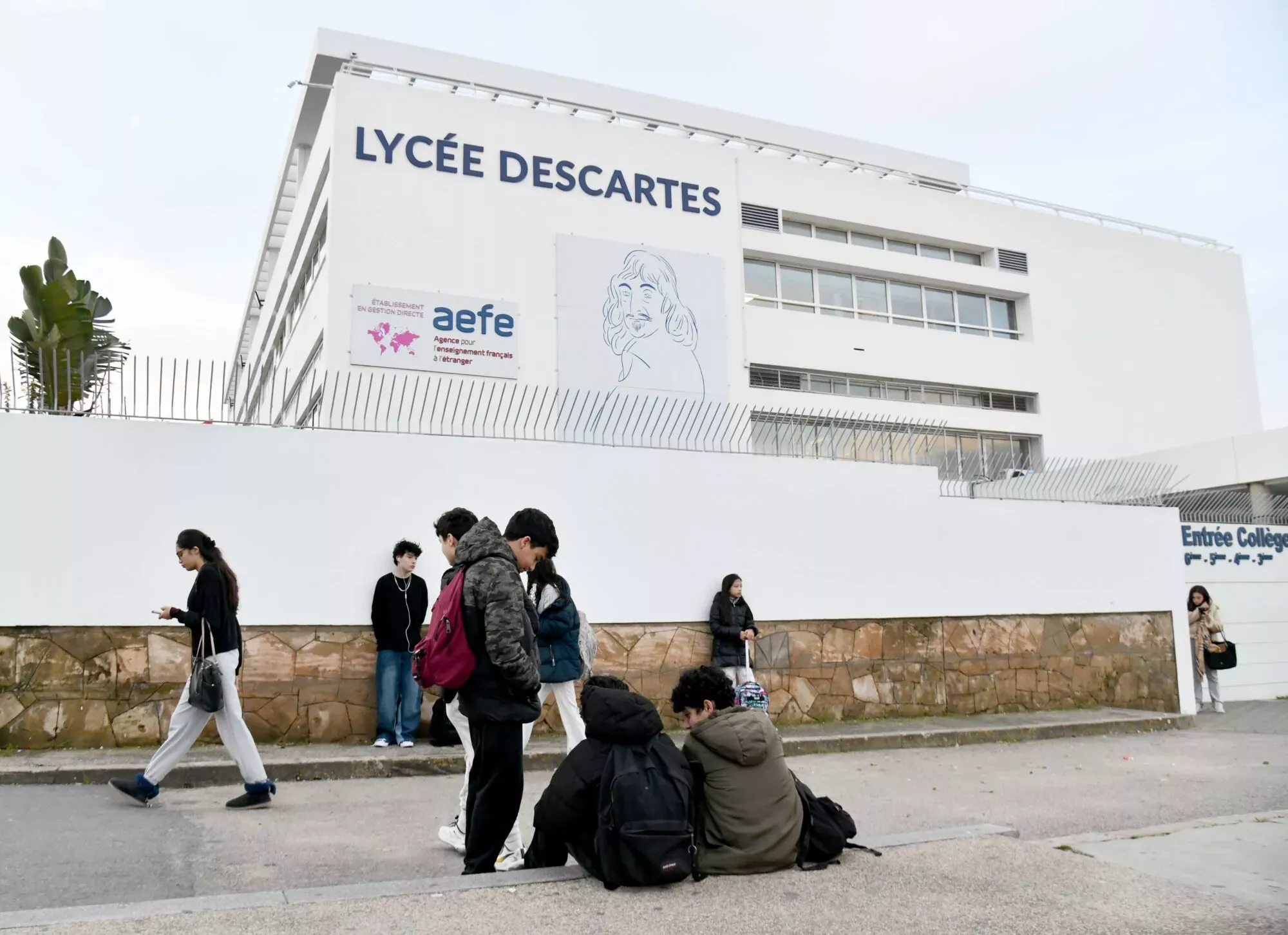

The current situation of French educational institutions in Morocco has been deeply affected by an ongoing conflict that began in December 2025 between parent associations and the Agency for French Education Abroad (AEFE). Families are contesting recent tuition fee increases, which are part of a series of successive hikes that have taken place over the years. For the 2026-2027 school year, the average increase in tuition fees has been announced at 6.6%. As expressed in protests held in Casablanca, Rabat, Tangier, and Fez, parents have made it clear that they do not appreciate being treated as mere sources of income.
However, the current crisis extends beyond mere financial concerns; it reflects a broader discontent towards this foreign educational network, which was once seen as a prestigious choice by many families. To understand the underlying factors of this ongoing crisis, we must consider both the relative decline of French education in Morocco and the evolving demographics of its student body.
A once-elite school facing ordinary challenges
Despite their elite reputation in both social standing and academic performance, French high schools in Morocco face numerous challenges that are quite commonplace in educational institutions. A survey conducted between 2023 and 2025 revealed that the daily school life is marked by disputes over grades and discipline, misunderstandings between families and staff, as well as makeshift arrangements created by teachers to maintain order in the classroom. During a parent-teacher association meeting, one mother summarized the gap between the amount paid and the service received, stating that, although they pay for a private education, it resembles a mediocre French public school with low standards, overwhelmed teachers, and overcrowded classrooms—far from what is typically expected from a premium institution.
This paradox is particularly evident in the so-called “direct management” schools of the AEFE, which, while institutionally an extension of the French public education system, are perceived by families as expensive private institutions. Although the cost of education was already a significant investment prior to the recent hikes, families accepted it as the French school was viewed as better equipped than its competitors to fulfill four parental objectives: instrumental, intellectual, expressive, and social closure. The instrumental objective was tied to the value of the French baccalaureate, historically seen as a golden ticket to higher education in France, especially in preparatory classes. The intellectual goal relied on the reputation of a “French-style” pedagogy, which aimed to impart a humanistic general culture—albeit with a largely Francocentric perspective—while favoring reflection and argumentation over the rote memorization often associated with the Moroccan educational system. The expressive aim corresponded to a promise of a school that prioritized the well-being and personal development of children through cultural, artistic, and sporting activities. Finally, the social closure objective was linked to a selective recruitment process that enabled families to keep their children within a familiar social milieu and control their associations.
However, the appeal and legitimacy of the French educational network are eroding as the expectations of parents shift. On one hand, French institutions are perceived as less capable of fulfilling the instrumental and social closure promises that constituted part of their value. On the other hand, the demographic of their student body has expanded and evolved, with families no longer assigning the same significance to the intellectual and expressive goals.
An Expanded Network and a Renewed Public
The first significant change contributing to this crisis is the considerable expansion of the French educational network. Between 2016 and 2022, the number of students increased from approximately 34,000 to 48,000, representing over a 40% rise, largely driven by the development of so-called “partner” institutions. Often located in affluent residential areas, these new schools bring French education closer to a part of its clientele. However, this quantitative growth has not merely scaled up the previous demographic; a preliminary analysis of surnames on the baccalaureate admission lists suggests a significant dilution of those that were most represented in the mid-2000s. Traditional names like Alami, Bennani, Benjelloun, and Berrada still appear in absolute terms, but their relative weight decreases as overall numbers grow.
Interviews with parents reveal a rise in “new entrants” into the system—parents on an upward social trajectory who themselves were not educated within the French system and who are less familiar with its implicit expectations or its intrinsic value. The commitment of these new parents to French education is more conditional, heavily influenced by cost evaluations and perceived benefits. A French history and geography teacher with 17 years in the network articulates this shift: “When I arrived, families were more inclined to share French culture and certain values. Now, I’m not so sure. Parents want their children to succeed; that is their non-negotiable condition.”
While the presence of socially mobile families is not a new phenomenon, previous generations often attended Moroccan public schools, which were still partially bilingual, making the French school more relatable to them. Current parents, born roughly between 1970 and 1990, often belong to the first cohorts educated during or after the Arabicization of secondary education, a process that took place from the late 1970s to 1989.
This diversification of the public is reshaping the parental objectives mentioned earlier. The instrumental goal remains important for all families, but it weighs more heavily on those whose upward social mobility hinges primarily on academic credentials and professional income rather than inherited wealth. Families that have been established within the network for a longer time have the economic and social resources that make their children’s futures less dependent on their academic performance. This heightened dependency is reflected in a meticulous examination of grades, curricula, and course content, particularly in mathematics, which is often deemed less rigorous than what is offered in Moroccan education.
For families deeply entrenched in the network, the French school may still hold cultural and identity value even when its instrumental advantages become less apparent. Yet, despite the contextualization efforts made by some educators, the architecture of the curricula and civic education remains predominantly shaped by French programs and the tenets of the French republican model. New entrants, having spent more time in the Moroccan system, tend to question these largely external prescriptions. As Adam Benyachou, a sociology doctoral candidate, notes, “The French school in Morocco is entering a legitimacy crisis not just because it offers less than before, but because it offers less at a time when it is evaluated by a public less willing than before to ascribe it intrinsic value.”
Amid this shifting landscape, the distinction between long-standing francophile families and the newer entrants resistant to the system would be an oversimplification. Parents who have previously been part of the network are also distancing themselves, with one remarking, “I may have been francophile twenty years ago, but I am less so now.” This sentiment has been fueled by the Franco-Moroccan tensions of recent years, including France's decision to restrict visas in 2021, which has led some families to feel that their attachment is not reciprocated.
This disconnection is also evident among students. According to post-baccalaureate surveys published by the Lycée Descartes in Rabat, the percentage of baccalaureates continuing their studies in France has dropped from 63% in 2016 to 42% in 2025. Factors such as the social climate in France, fears of discrimination, and preferences for English-speaking destinations or closer options like Spain are contributing to this decline.
Turning to the social closure and expressive objectives, the dynamics are contrasting. The rise in fees enhances socio-economic selection, while the replacement of the previously written selection test with a more flexible dossier-based admission process since the health crisis has contributed to feelings of increased academic heterogeneity. Conversely, the expressive objective remains resilient, as some parents choose French institutions for their perceived capability to accommodate children with special educational needs, such as dyslexia or other neurodevelopmental disorders, in contrast to Moroccan schools, which they have sometimes found less attentive to individual difficulties.
In light of this analysis, one might wonder why families continue to choose the French school despite the growing reasons to turn away. Part of the answer lies in the challenges associated with changing educational systems mid-course, as one mother explains, “I seriously considered switching systems, but I realized we are somewhat trapped. We can’t really move them back to the Moroccan system; they lack proficiency in Arabic and the scientific subjects taught in Arabic.”
What then is the future for this network? Partner institutions appear best positioned to adapt by positioning themselves more as international schools rather than solely French ones. However, they will face competition from British schools, which have been established under a bilateral agreement approved in 2019 and appeal to parents with the offer of English alongside a broader range of studies and opportunities. They will also have to contend with increasingly well-equipped Moroccan private institutions. While the prestige of French education will remain an asset, it will no longer suffice to attract families.
As reported by mobile.telquel.ma.