
The landscape of French educational institutions in Morocco has been significantly marked by an ongoing conflict that began in December 2025 between parents' associations and the Agency for French Education Abroad (AEFE). This turmoil arises from families contesting new pricing decisions that have perpetuated years of successive increases in tuition fees. For the 2026-2027 academic year, the average tuition hike is reported to reach 6.6%. Demonstrations have erupted in major cities such as Casablanca, Rabat, Tangier, and Fez, where parents have expressed their frustration with slogans like, "Families are not cash cows!" This crisis, however, extends beyond mere financial concerns; it reflects a broader dissatisfaction with the foreign educational network, which had previously held a strong legitimacy among the families that opted for it.
To grasp the roots of the current crisis, one must consider both the relative decline in the status of French education in Morocco and the evolving demographics of its student body. Although French high schools in Morocco are often seen as elite institutions, they struggle with many of the everyday challenges that characterize school life elsewhere. A survey conducted between 2023 and 2025 revealed that the school experience is rife with conflicts over grades and discipline, misunderstandings between families and staff, and improvised arrangements by teachers striving to maintain order.
During a parents' association meeting, a mother articulated the disparity between the tuition fees and the quality of education received, stating, "We are in a private school in the sense that we pay, but it’s merely a version of a standard public school in France: the level is very low, teachers are overwhelmed, classrooms are overcrowded, and there is absolutely nothing that aligns with what we expect from a private school." This paradox highlights the nature of French schools, which, while functioning as a continuation of the French public education system, are perceived by families as high-priced private institutions.
For many families, the financial investment in education was justifiable because the French school system was believed to fulfill four key parental objectives: instrumental, intellectual, expressive, and social closure. The instrumental goal pertained to the value of the French baccalaureate, seen as a direct pathway to higher education in France. The intellectual aim was linked to the reputation of French pedagogy, which promised a comprehensive humanistic education while emphasizing critical thinking and argumentation, contrasting sharply with the memorization-focused approach often associated with the Moroccan educational system. The expressive goal corresponded to the expectation of a school environment attentive to the well-being and personal development of children through cultural, artistic, and sporting activities. Lastly, the social closure objective relied on a socially selective recruitment process that allowed families to keep their children within a familiar social milieu.
However, the appeal and legitimacy of the French educational network are waning as these parental objectives shift. On one hand, French institutions are perceived as less capable of delivering on the instrumental and social closure promises that were integral to their value proposition. On the other hand, the demographic of the student body has broadened and transformed. Families are no longer uniformly ascribing the same significance to the intellectual and expressive goals.
Changing Demographics and Parental Expectations
The considerable expansion of the network from 2016 to 2022 saw student numbers rise from approximately 34,000 to 48,000—a staggering increase of over 40%, largely driven by the growth of so-called "partner schools". Often located in affluent residential areas, these new establishments bring the French educational offer closer to certain clientele. Yet, this quantitative growth has not merely replicated the previous demographic on a larger scale. A preliminary analysis of surnames among baccalaureate candidates suggests a noticeable dilution of those who were most prevalent in the mid-2000s. Family names historically overrepresented in French education, such as Alami, Bennani, and Benjelloun, persist in absolute terms, but their relative weight diminishes as overall enrollment increases.
Interviews further highlight the emergence of "new entrants" into the system—parents from upwardly mobile social backgrounds who themselves were not educated in the French system and thus lack familiarity with its implicit expectations or an intrinsic commitment to its value. The allegiance of these new parents to the French school is more conditional, increasingly dependent on the assessment of costs versus benefits. A history-geography teacher with 17 years of experience in the network noted this shift, stating, "When I arrived, there were families more invested in sharing French culture and values. Now, I'm not so sure. Parents want their children to succeed, and that is the sine qua non condition."
The presence of socially ascending families is not a new phenomenon, but previous generations often attended a Moroccan public school that was still partially bilingual, which made the French system feel more familiar. Many of today’s parents, born roughly between 1970 and 1990, belong to the first cohorts educated during or after the Arabization of secondary education, a process that took place from the late 1970s to 1989.
Assessing the Future of French Education in Morocco
This diversification of the student body undoubtedly reshapes the parental objectives mentioned earlier. The instrumental aim remains crucial for all families but weighs heavier on those whose upward social mobility relies primarily on academic credentials and professional income rather than inherited wealth. Families with established backgrounds possess economic and social resources that make their children's future less dependent on academic performance. This heightened dependence translates into a closer examination of grades, programs, and course content, especially in mathematics, often perceived as less rigorous than that of the Moroccan system.
For long-standing families within the network, the French school may also retain cultural and identity value, even as its instrumental advantages become less apparent. Nonetheless, despite efforts by some teachers to contextualize the curriculum, the structure of programs and citizenship education remains largely dictated by French standards and republican models. New entrants, who more frequently experienced schooling in the Moroccan system, tend to scrutinize these largely external prescriptions.
Ultimately, the French school in Morocco is entering a legitimacy crisis, not merely due to offering less than before, but because it is evaluated by a public less willing than in the past to ascribe intrinsic value to it. The dichotomy between long-standing francophile families and newly resistant entrants may be overly simplistic. Even parents who once attended the network are distancing themselves, as one mother remarked, "I might have been francophile twenty years ago, but I am less so now." This sentiment is echoed by concerns stemming from recent Franco-Moroccan tensions, particularly the visa restrictions imposed by France in 2021, which have left some families feeling that their attachment is not reciprocated.
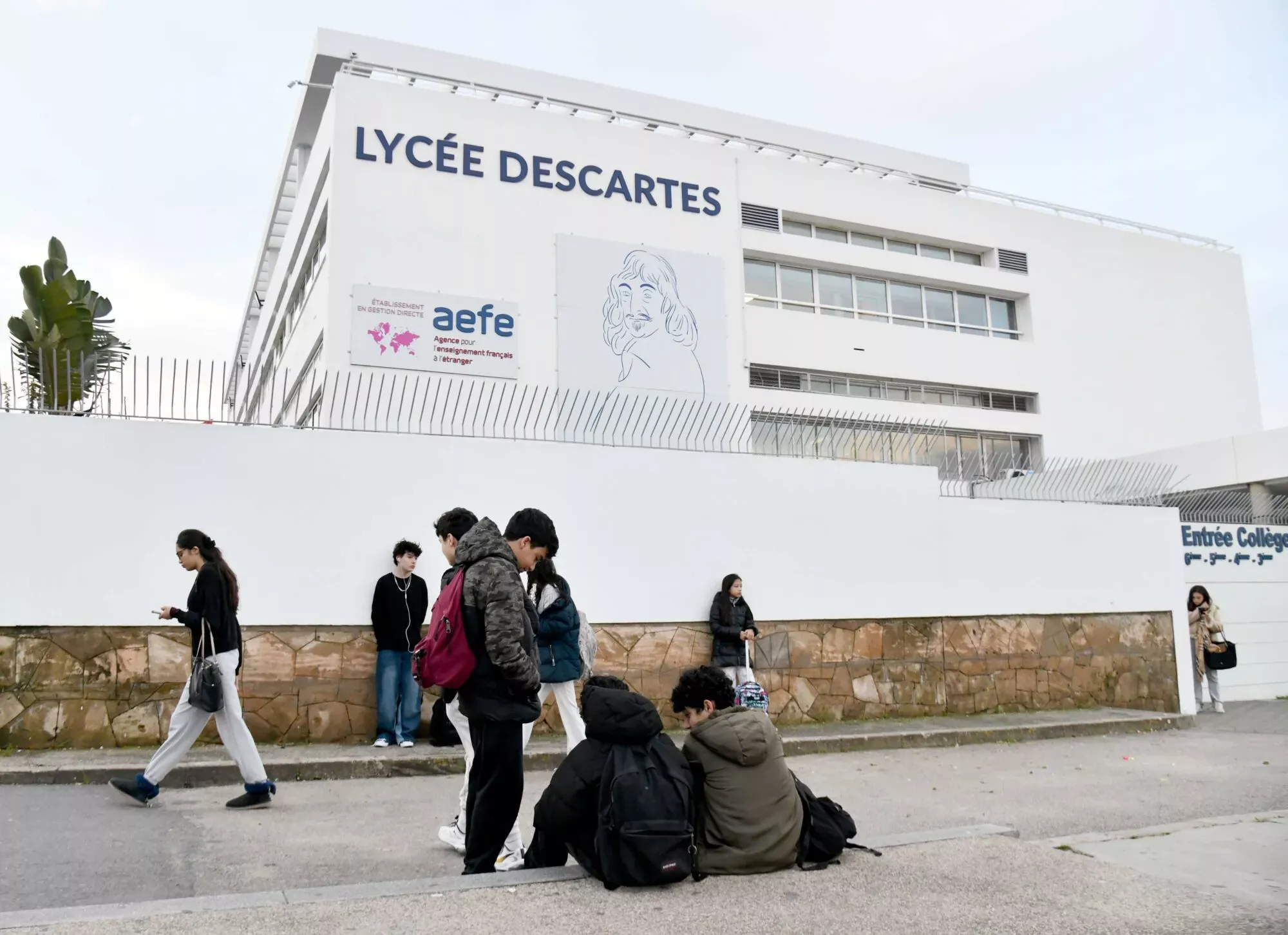
Moreover, this distance is also reflected among students. According to post-baccalaureate surveys published by the Descartes High School in Rabat, the percentage of graduates pursuing studies in France fell from 63% in 2016 to 42% in 2025. Factors influencing this shift include social climate concerns in France, fears of discrimination, and a preference for English-speaking or closer destinations like Spain.
As for the aims of social closure and expressive goals, social closure evolves in contrasting ways: rising fees reinforce selection based on wealth, while the transition from a written selection test to a more flexible application process since the health crisis fosters a perception of increased school heterogeneity. The expressive goal has fared slightly better, with some parents choosing French institutions for their perceived ability to accommodate children with special educational needs, such as dyslexia or other neurodevelopmental disorders, contrasting them with Moroccan schools they have sometimes found less attentive to individual challenges.
Considering the myriad reasons families might choose to distance themselves from French education, one might wonder why they continue to stay. A significant part of the answer lies in the challenges associated with changing educational systems mid-way through a child's schooling. As one mother explained, "I seriously considered switching systems, but I realized we are somewhat trapped. We can't really place them back in the Moroccan system; they lack proficiency in Arabic and in scientific subjects taught in Arabic." Looking ahead, the future of the network seems to favor partner institutions that might adapt by positioning themselves more as international schools rather than strictly French ones. However, they will also face competition from well-resourced Moroccan private schools and British institutions, which have gained a foothold through a bilateral agreement approved in 2019, offering broader study options and opportunities.
While the prestige of French education remains an asset, it may no longer suffice to retain its previous status.
As reported by mobile.telquel.ma.
**Adam Benyachou** is a PhD candidate in sociology at the University of Strasbourg, an associated researcher at the Jacques Berque Center (CJB) and the Center for Global Studies (CGS) in Rabat.