
The Outcry Against Systemic Failures in Morocco
The mass exodus of Moroccans towards the Spanish enclave of Ceuta has sparked widespread reactions, with many Moroccan writers deeming it a "resounding cry" against the corruption and tyranny of the ruling regime, which has exacerbated the accumulated crises within the nation. In a thought-provoking article, Moroccan author Mohamed Majdoubi highlighted that this collective migration represents one of the most severe crises facing Morocco today. He argues that this phenomenon starkly reveals the glaring contradiction between the official rhetoric surrounding security, stability, and development, and the harsh reality faced by citizens who are willing to risk their lives to escape the country. Majdoubi links illegal immigration to a host of intertwined crises, including failures in health, education, employment, and the right to a dignified life, compounded by a drastic decline in purchasing power and the rampant spread of corruption and oppression within the kingdom. Furthermore, he criticizes the tendency to blame external entities or the disenchanted victims themselves for the mass exodus from Morocco, rather than addressing the underlying issues.
Similarly, Moroccan writer Tarek Lissawi pointed out in his analysis that this crisis reflects "structural developmental imbalances," chiefly characterized by high unemployment rates, low wages, rising living costs, and a lack of justice and equal opportunity. Writer Mustafa Mnig also emphasized that the growing tide of mass migration from Morocco is linked to an economic and social reality that compels citizens to seek ways to escape unbearable circumstances. He asserted that a purely security-oriented approach will not suffice to address the motivations behind migration, particularly given the soaring youth unemployment rate, alongside escalating costs of living, inadequate public services, and a lack of transparency and accountability. Additionally, Moroccan writer Mohamed Ben Dhius connected social turmoil to the entrenchment of privilege, the intertwining of wealth and power, and conflicting interests, warning that the perpetuation of such a situation drives talent away and fosters brain drain and capital flight. The pervasive sentiment that opportunities are not always based on merit deepens distrust and fuels the desire to leave, as echoed by writer Amin Bouchaib, who noted that the root cause of mass migration is a profound crisis of confidence in institutions and the messaging directed at the youth, underscoring that this collective flight reflects deep-seated suffering amidst a loss of hope.
International Reports Highlight Government Complicity
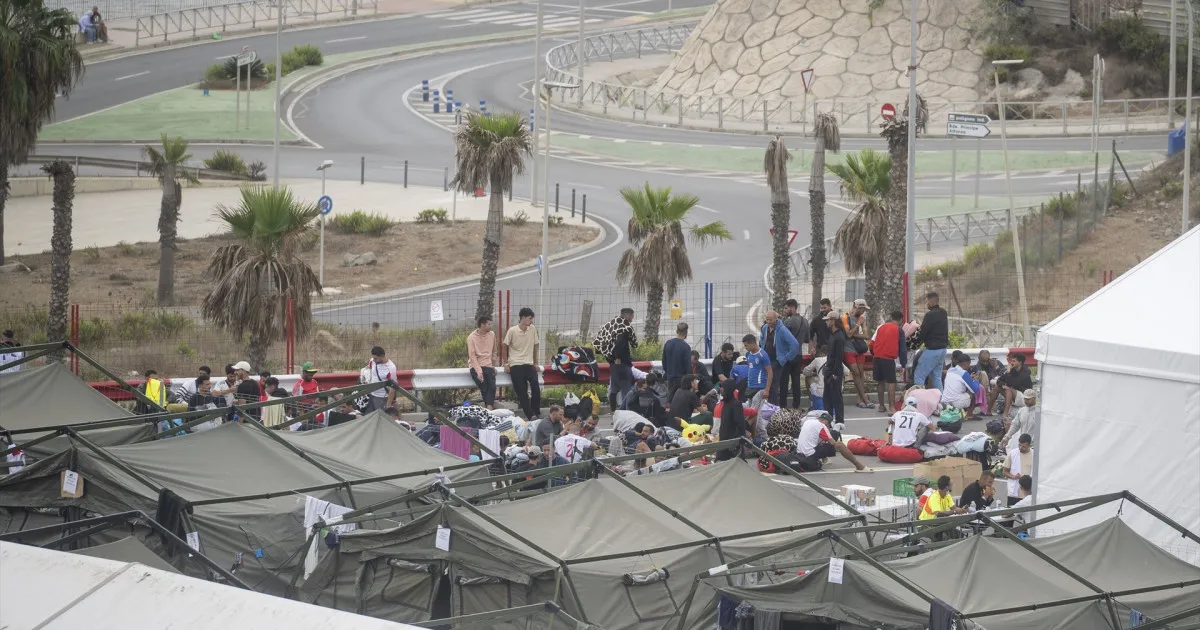
Recent international reports have shed light on the mass crossing of undocumented Moroccan migrants towards the Spanish city of Ceuta, revealing a concerning level of complacency and even complicity on the part of Moroccan authorities in managing the borders. The lax border control has led to the unprecedented influx of tens of thousands of migrants in a short period, culminating in a humanitarian crisis. In an article titled "Morocco Shows How Migration Has Become a Weapon," published by the American site "Counter Punch," author John B. Royle claimed that the massive flow into Ceuta on July 30 could not have occurred without at least some tolerance from the Moroccan government. Spanish authorities estimated that around 72,000 individuals entered the city, a staggering figure when compared to Ceuta's population, indicating that the volume of this wave highlights Moroccan negligence in border management as a critical factor in understanding the situation. Royle referenced previous instances where Morocco eased border controls in 2021, allowing approximately 8,000 people to enter Ceuta within just two days, suggesting that the deliberate loophole exposed by this crisis remains exploitable.
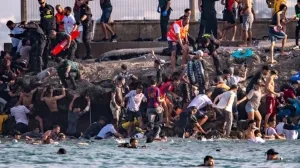
Moreover, reports from the "Guardian" have described the chaotic border crossing situation and the dire circumstances faced by Moroccans in Ceuta. The newspaper indicated that around 50,000 Moroccans managed to reach the Spanish enclave after Moroccan border controls were temporarily lifted, with the surge resulting in the tragic drowning of at least 72 individuals during their crossing attempts. This highlights the Moroccan authorities' exploitation of the issue of illegal immigration, even at the cost of young lives. The significance of these testimonies lies in their direct connection between the relaxation of Moroccan surveillance and the sudden spike in migrant numbers, demonstrating that before the changes in control measures, crossing was virtually impossible for many. Thus, the narrative shifts from mere failure to control the borders to an active complicity manifested through a significant reduction in surveillance before the surge of crossings. In a further report titled "The Ceuta Government Accuses Morocco of the Atrocity of Mass Border Crossings," the Guardian quoted Ceuta's government head, Juan Jesus Vivas, stating that the wave of crossings was either organized or at least encouraged by Morocco. The report noted that Moroccan border surveillance had been reduced to a minimum before being completely lifted in late July, facilitating the surge of tens of thousands into Ceuta. Eyewitness accounts revealed that Moroccan police were allegedly pushing individuals towards the water and instructing them to swim, underscoring the stark difference between an inability to prevent crossings and a deliberate reduction in surveillance that allowed the wave to intensify to such magnitude.
These events indicate that the Moroccan regime did not hesitate to push its youth and children into the sea, facilitating their journey towards Ceuta through a calculated reduction of border controls and a cruel exploitation of the illegal immigration issue, where the lives of Moroccans have become a bargaining chip for narrow and malevolent political agendas, indifferent to the human tragedies that may arise from such perilous ventures.
As reported by el-massa.com.