West African Migrants Transforming Moroccan Agriculture
The influx of workers from West African nations into Morocco has become a critical factor in addressing the substantial shortfall in the local agricultural workforce. These sub-Saharan laborers are effectively filling the void between the high demand for agricultural labor and the limited supply available in the fields, thus bolstering Moroccan agricultural output significantly. Since the implementation of a migration strategy initiated by King Mohammed VI in 2013, many of these migrants have shifted their perspective, viewing Morocco not just as a waypoint to Europe, but as a viable destination for their future.
Predominantly hailing from French-speaking countries such as Togo, Senegal, and Ivory Coast, these workers initially aimed to traverse the Strait to reach Europe. However, they seized the opportunity to work in Morocco's agricultural sector, which proved to be timely and beneficial. The Moroccan government has projected an impressive approximate 15% increase in agricultural value added for the year, buoyed by rainfall from September 2025 to March 2026 that exceeded the historical national average by a remarkable 56%. Despite this optimistic outlook, the agricultural sector faces challenges due to labor shortages, particularly in the Sus-Massa region, which boasts over 24,000 hectares of greenhouse crops responsible for more than 80% of Morocco's fruit and vegetable exports.
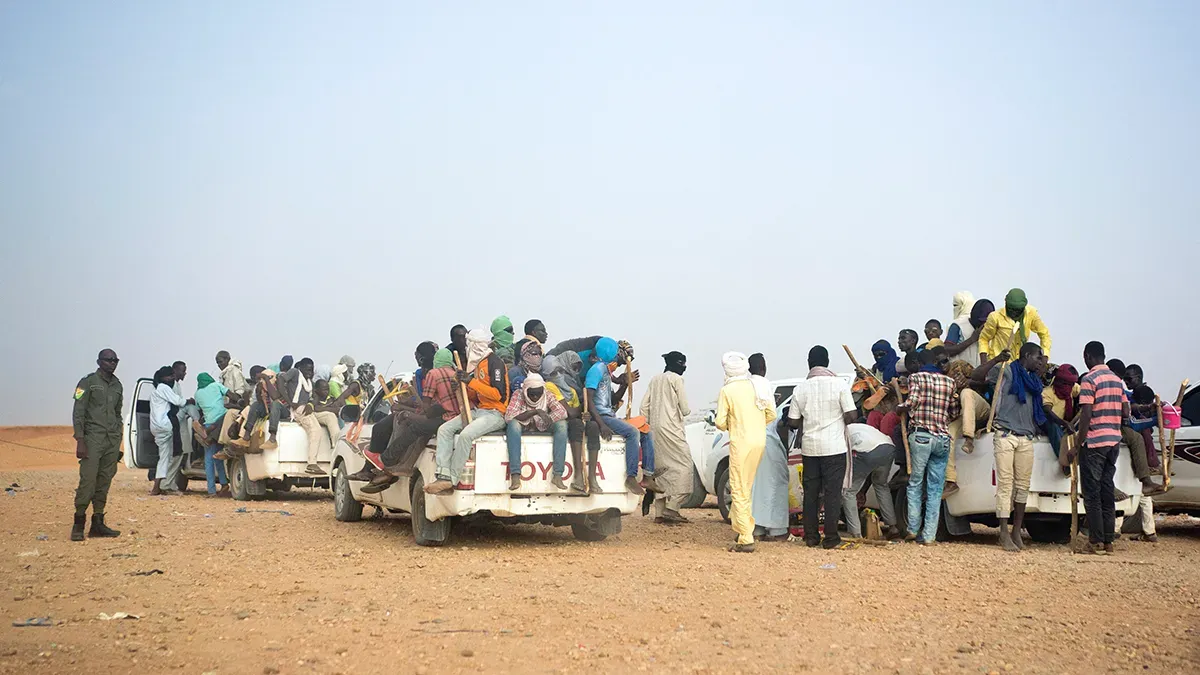
The Sus-Massa region, located just 50 kilometers south of Agadir, stands as a testament to the evolving dynamics in Moroccan agriculture, where sub-Saharan African workers are becoming indispensable. Many of these migrants are transported by lorry to work in plastic greenhouses, cultivating fresh produce destined for major supermarkets across Europe and West Africa. The shift in workforce demographics has been prompted by a prolonged drought that drove numerous young Moroccans to urban centers in search of opportunities in the burgeoning construction and service sectors, thus exacerbating the labor shortage in agriculture.
Adapting to Labor Market Changes
This migration trend has had dire consequences for subsistence farming, resulting in a staggering loss of 1.7 million agricultural jobs since 2000. Two decades ago, agricultural workers comprised half of Morocco's labor force, a stark contrast to the current landscape. Rachid Benali, the president of the Moroccan Confederation of Agriculture and Rural Development (COMADIER), articulated the challenge: once individuals acclimatize to urban life, attracting them back to rural agricultural work becomes increasingly difficult. This ongoing structural shortage of both skilled and unskilled labor poses a significant threat to the competitiveness of Morocco's agricultural sector.
Compounding the issue is the current workforce's inclination towards higher wages or a preference for piecework compensation, which has the potential to elevate daily earnings to 500 Moroccan dirhams—five times that of sub-Saharan migrants. In response to the labor crisis, some farmers have pivoted to cash crops such as strawberries, raspberries, and blueberries, which necessitate skilled labor. Consequently, it has become imperative to streamline documentation processes to enable farms to legally employ migrant workers as a short-term remedy for the labor deficit.
Farmers across the region recognize the vital role that sub-Saharan workers play in sustaining their businesses, with many asserting that without these migrants, they would be forced to either shut down operations or significantly reduce production capacity. Changes in the economic and social fabric of Morocco are evident, as aging Moroccan workers are increasingly being replaced by sub-Saharan migrants. Alioun Diallo, a 48-year-old Senegalese worker, has been employed on Moroccan farms since 2008 and has observed the demographic shifts in towns like Ait Amira, where the population has quadrupled over the last thirty years, largely due to the influx of migrant workers.
Diallo, who lives with his daughter and aspires for a better future, illustrates the personal stakes involved; he earns 100 dirhams daily and is saving to improve his living conditions while planning for a potential journey to Europe. Similarly, a 23-year-old migrant from Togo, who initially sought to reach Spain but was redirected to Souss-Massa, chose to work rather than beg on the streets. This commitment to labor reflects the integration needed within the agricultural sector, as many workers from French-speaking West Africa opt to delay their European aspirations in favor of addressing Morocco's labor shortages.
Morocco's growing economy and agricultural advancements have shifted its role in international migration patterns, transforming the nation from a mere transit country to an attractive destination for workers from West Africa. The Moroccan government has recognized the necessity of these migrants, having taken steps to formalize their status. Since 2013, over 50,000 migrants have attained legal status under King Mohammed VI’s new migration policy. According to the 2024 national census, there are 142,152 foreign-born residents, accounting for about 0.4% of the population, although a significant portion of the migrant agricultural workforce remains in the informal sector. Farmers are advocating for simplified procedures to facilitate the inclusion of more workers into the formal economy to meet the sector's needs.
Abdelaziz El Maanaoui, president of a farmers’ association in the Chtouka plains, emphasized the critical nature of sub-Saharan labor, warning that many farms would face closure or reduced production without their contributions. The demographic shift is further underscored by the fact that only one in four Moroccans currently works in agriculture, compared to one in two from previous generations, a trend accelerated by rural exodus as infrastructure investments surge ahead of the 2030 FIFA World Cup, projected to amount to approximately $19 billion over the next four years.
As reported by atalayar.com.