

Understanding the Impact of Social Media on Migration Perceptions
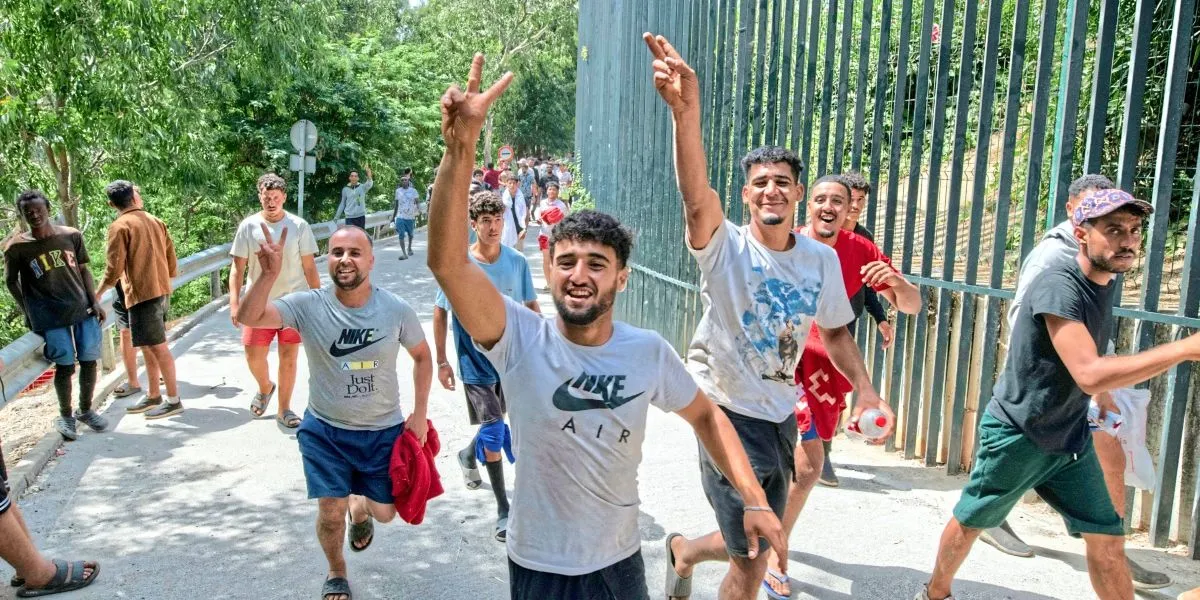
In recent weeks, a wave of jubilation swept through Moroccan migrants who believed that the pathways to Europe were wide open, thanks largely to misleading information circulating on social media platforms like TikTok and Instagram. Videos celebrating the arrival of migrants in Ceuta on August 1st painted a picture of hope and opportunity that, unfortunately, was rooted in falsehoods. This misinformation has not only misled many individuals but has also opened the door for extremist narratives to flourish across these same platforms. Right-wing influencers have taken it upon themselves to propagate damaging lies, suggesting that tens of thousands of migrants are still congregating in the Spanish enclave of Ceuta, all with the intention of crossing into Europe.
As users search for information about Ceuta on TikTok or Instagram, they are bombarded with a mixture of half-truths and outright falsehoods regarding the migration situation. The narratives being shared are not merely harmless exaggerations; they are part of a larger agenda that seeks to distort the reality of migration and foster an environment of fear and hostility. By perpetuating these false narratives, right-wing factions aim to sway public opinion and shift the discourse surrounding migration in a negative direction. This is particularly concerning as it not only affects the perception of migrants but also poses significant risks to social cohesion and safety.
It is essential to recognize how such misinformation can have real-world consequences. Misinformation can exacerbate tensions between communities, provoke xenophobia, and undermine the safety of those seeking refuge. The situation calls for a critical examination of the narratives being pushed on social media and a concerted effort to counteract these harmful ideologies with factual information and empathy.
As reported by derstandard.at.
