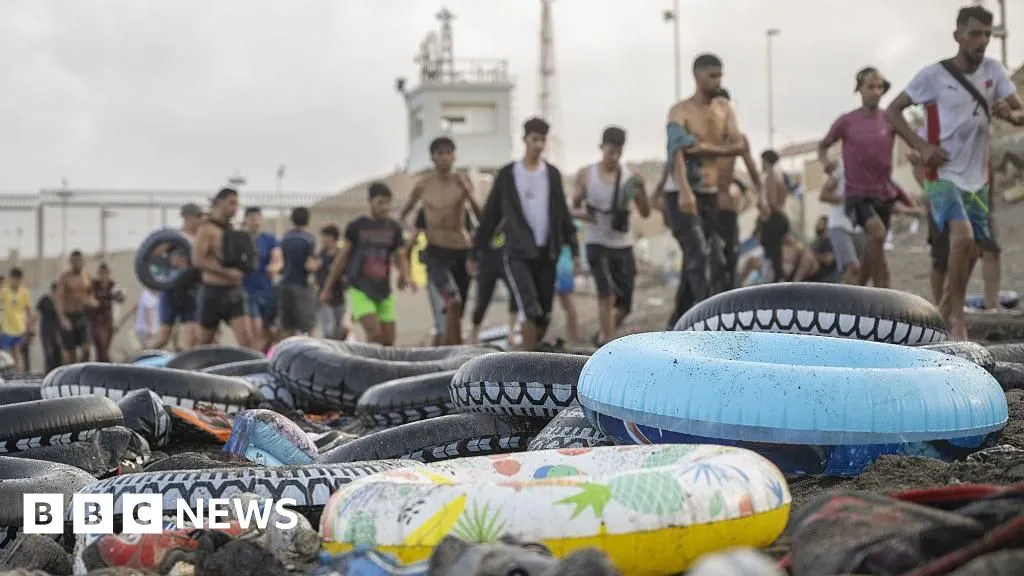

This past weekend, a Moroccan man in his twenties, whom we'll refer to as Mohammed, contemplated an audacious journey from Morocco to the Spanish enclave of Ceuta, located at the northern tip of Africa. Driven by a desire for a better life in Europe and influenced by numerous social media portrayals that romanticize the journey, he reached out to several Instagram accounts claiming to assist migrants with the crossing for a fee. However, it turns out that Mohammed is a fictional character I created to expose a troubling network of Instagram profiles that promote the migration of individuals to Ceuta through aspirational yet misleading content.
In the wake of a recent surge where approximately 78,000 migrants arrived by sea in Ceuta over a short period, leading to the tragic loss of around 100 lives, the situation has raised significant alarm. Although the chaos has subsided, it has ignited tensions among EU nations sharing open borders and has drawn criticism toward the Spanish government. Our investigations revealed that numerous Instagram profiles depict the perilous swim across the Morocco-Ceuta border as not only safe but also straightforward. In stark contrast to this portrayal, many individuals have tragically drowned during their attempts to make the crossing, with the perilous routes often extending far beyond what these accounts suggest.
Instagram's Role in Migration
Upon further engagement with these Instagram accounts, the BBC was integrated into several channels and WhatsApp groups. During one interaction, I inquired about assistance crossing to Ceuta, and one anonymous account eagerly offered to help for an upfront payment of 5000 dirhams (approximately £400). They claimed that they had previously assisted many individuals and promised to provide information about unconventional routes, including using sewer pipes to facilitate the crossing. Alarmingly, when I probed whether a refund would be possible if the crossing failed, the account went silent, even deleting previous messages. This incident underscores the grave risks posed by these accounts, which often disappear when confronted by authorities.
The situation is further complicated by the fact that many of these profiles continue to operate, continuously misleading individuals about the ease of migration. The content they disseminate, often referred to as "mirage" content, paints a deceptive picture of Ceuta, showcasing joyful social interactions that mask the harsh reality many migrants face. Despite the fact that around 75,000 of the recent arrivals have been returned to Morocco, these profiles propagate narratives that many have successfully transitioned from Ceuta to mainland Europe.
The Algorithmic Incentive
Our investigation revealed a pattern among these profiles. A significant number incorporate the term Haraga, a colloquial term used in Maghrebi Arabic to describe migrants who seek to evade authorities. Furthermore, they tend to feature the Spanish flag in their profile pictures and often include calling codes for both Morocco and Spain in their bios. This branding strategy is designed to resonate with potential migrants while obscuring the risks involved in such journeys. The surge in content related to Ceuta can be attributed to social media algorithms that favor emotionally charged posts, which can easily go viral and attract a larger audience. As an example, one viral video showed two women in wetsuits walking through Ceuta, misleadingly implying that the journey is effortless.
The interconnected nature of these accounts, facilitated by social media algorithms, presents a troubling reality where individuals looking to exploit vulnerable populations can easily set up profiles to profit from their desperation. As the situation continues to evolve, it is crucial for platforms like Instagram to take more robust action against this form of exploitation, as evidenced by the removal of several profiles following our inquiry. The alarming trend highlights the significant impact of social media on real-world issues, particularly in the context of migration and human trafficking.
As reported by bbc.com.