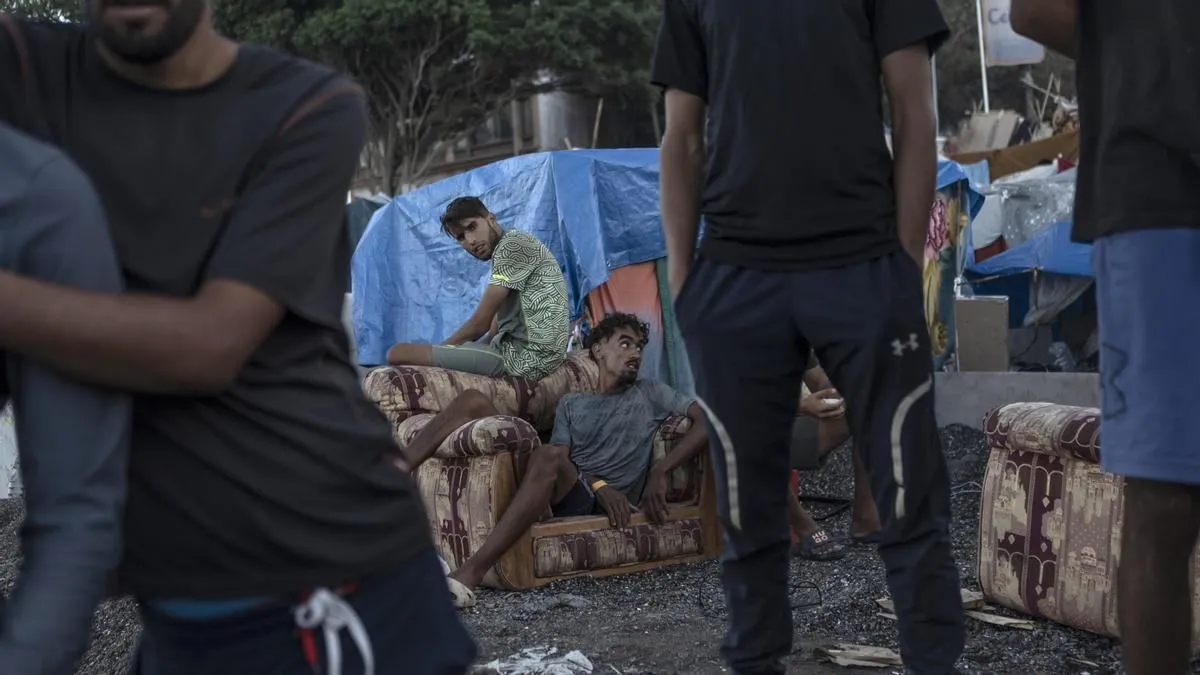

Unprecedented Police Action in Ceuta's Trampolín Settlement
In a shocking turn of events, the migrants residing at the Trampolín settlement in Ceuta were abruptly awakened by an unparalleled police operation. A fleet of police vans, including an armored vehicle from the National Police, stormed the beach where these individuals, primarily from Morocco, had been living since they swam to Ceuta at the end of July. After being forcibly removed from their makeshift tents and gathered in groups surrounded by police officers, three interpreters wearing vests from the NGO Engloba attempted to calm them, assuring them that they would be taken to a government camp. Taha, a 21-year-old Moroccan and one of the well-known barbers in the makeshift settlement, described the experience as 'the biggest deception of my life,' emphasizing that instead of a promised refuge, he was returned to Morocco.
Taha, who endured 65 days in Ceuta, recounted his harrowing journey, which included sleeping on rocks near the lighthouse and suffering from hunger and thirst. He reported being assaulted by Spanish military personnel during his time in the city. His determination to avoid returning to Morocco fueled his endurance, and he expressed outrage over the government's narrative claiming that their return was voluntary. 'They are saying everywhere that it was voluntary. I have seen it in El Faro de Ceuta. The police are saying it. It is not true. They kicked us out. They told us there was no other option,' Taha explained during a video call from a nearby city to Tangier, his voice filled with indignation.
Forced Returns and False Promises
Following the swift eviction from Trampolín beach, just a week before the Spanish royal family's visit to Ceuta, the Ministry of the Interior asserted that many individuals who had been living in deplorable conditions for two months chose to return voluntarily. The government claimed that after transporting them by bus to a gate connecting customs with the Tarajal warehouses, where the Temporary Attention Center for Foreigners (a sort of police station for identifying and triaging migrants) is located, they were given the option to register or return to Morocco. However, the government’s assertion that most opted to return to avoid fingerprinting and a potential five-year ban from entering the EU has been met with skepticism.
While migrants evacuated from Benítez beach confirmed the existence of such procedures, they reported facing coercion and misinformation from the police, leading them to feel pressured to return to Morocco. In stark contrast, those expelled from the Trampolín settlement claim outright deception. A dozen Moroccans who spoke with elDiario.es shared stories of being misled and forcibly returned by the police. 'They betrayed us. They lie. They did not ask us; I swear. What a shame. They are lying monsters,' expressed Jacob, another young Moroccan who was returned after the eviction. He recounted how they were not allowed to speak and were told that a newly enacted (but nonexistent) law mandated that only minors could remain.
The story of Taha, alongside those of other young men like Hassan, Karim, Rafik, and Bilal, illustrates a grim reality faced by many migrants in Ceuta. Their testimonies reveal a consistent pattern of deception, coercion, and denial of basic rights, including the opportunity to apply for asylum. Each of them recounted being assured they would be taken to proper shelters, only to find themselves at the border, facing expulsion without due process. The government's narrative of voluntary return stands in stark contrast to the harrowing experiences shared by the migrants, raising urgent questions about the treatment of vulnerable individuals seeking safety and a better life.
As reported by eldiario.es.