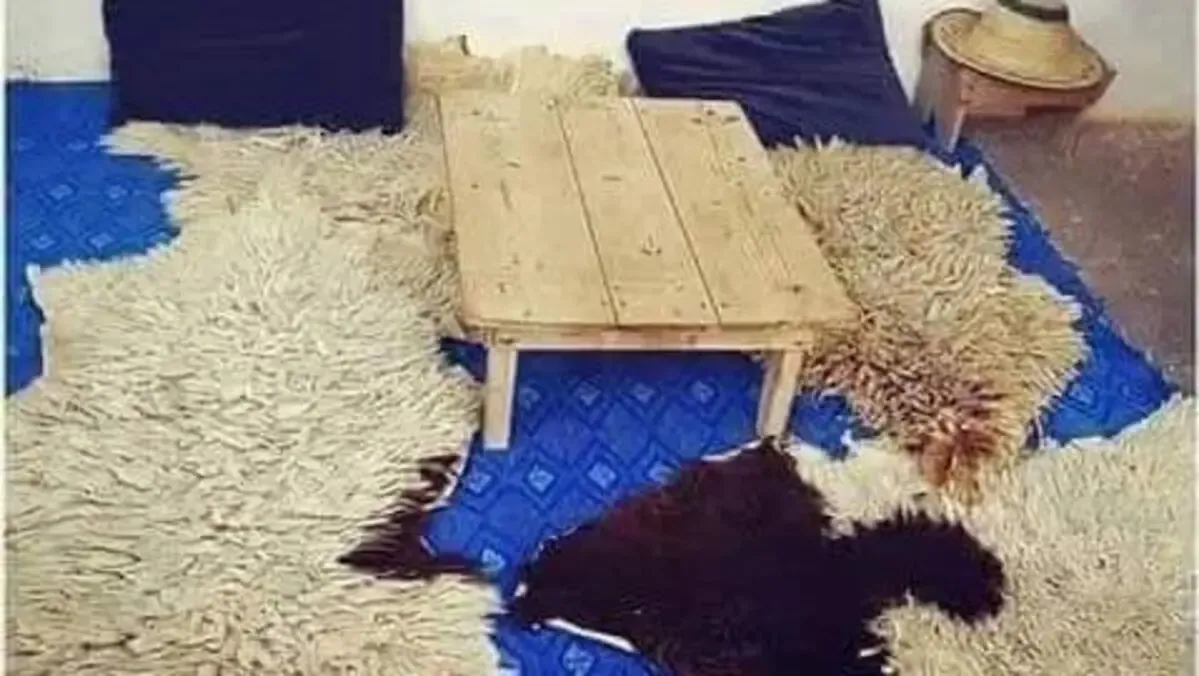

The Journey of 'Hidoura' in Moroccan Tradition
In the early mornings of Eid, the skins of sacrificed animals embark on a long journey across rooftops, where women gather around piles of hides and salt to create the traditional craft known as 'Hidoura'. This age-old practice is not merely a craft but a significant part of Moroccan cultural heritage, transforming discarded animal skins into what is often referred to as 'white gold'. For decades, this artisanal skill has provided both economic and social value to Moroccan communities, particularly during the festive season when the creation of Hidoura becomes a familial ritual passed down through generations of women.
The process begins with the meticulous cleaning and salting of the animal hides, which are then left to dry under the sun for several weeks. In the city of Guelmim, located in southern Morocco, women are dedicated to preserving this cherished tradition. However, the once-familiar sights of skin cleaning and salting in popular neighborhoods have noticeably diminished in recent times.
The Struggles of Traditional Craftsmanship
Accompanying 'Al Arabiya' and 'Al Hadath' news outlets, we followed Abdullah, a seasoned collector of hides, as he maneuvered his cart through the winding alleys of Guelmim from early morning. Despite the declining interest in his seasonal trade, Abdullah remains committed to his craft, diligently searching for animal skins in the streets of the city. His mission begins right after the Eid prayer, when enthusiasts collect hides from homes and alleys, which are then resold to tanneries. Historically, these hides held considerable value, and community members did not view them as waste.
Abdullah reminisces about the past, recalling how hide collectors would roam neighborhoods on simple carts, knocking on doors to gather skins. This image was once a common sight in Moroccan cities, but Abdullah notes a significant decline in this trade over the years, attributing it to changing lifestyles and the disappearance of traditional crafts. He also highlights that many young people today are unaware of the significance of Hidoura.
Fatima, another practitioner of Hidoura making, shares her commitment to this age-old tradition, having inherited the craft from her grandmother. She describes the gatherings of women who come together to clean and salt the hides, noting that families use the dried skins in their homes and mosques. Fatima learned the craft in her childhood and is determined to preserve this heritage that embodies a rich tapestry of memory and ancient traditions. Ibrahim, a craftsman in the region, recalls how this profession provided seasonal income for many families in the past, as there was a high demand from both households and mosques. However, he acknowledges the significant drop in interest due to modern lifestyle changes and the rise of contemporary products.
Dr. Aziz Ahlawi, an anthropologist at Mohammed V University in Rabat, explained that Hidoura used to be prominently featured in mosques and prayer spaces for decades, serving as a traditional rug made from sacrificed animal skins. Yet, its popularity has waned with the influx of modern and Turkish rugs, which are now more commonly used due to their ease of transport and maintenance. The researcher notes that animal hides were once highly sought after, with collectors actively seeking them out for reuse or resale. This practice has gradually faded, and nowadays, many hides are discarded near waste bins, sometimes leading to environmental pollution.
According to Ahlawi, this decline is also linked to social and demographic changes, as newer generations show less interest in traditional crafts associated with Hidoura. Rapid urban development and the constraints of modern living spaces have further contributed to the disappearance of this practice from many Moroccan homes.
As reported by alarabiya.net.