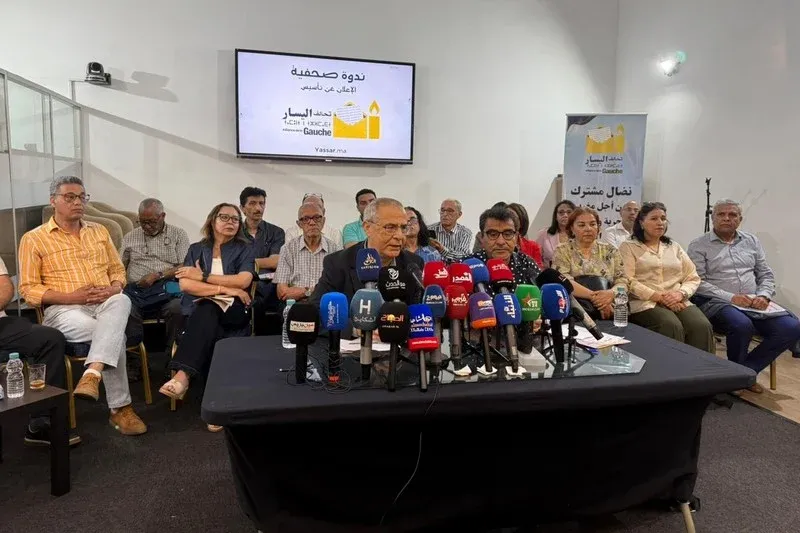

After years of fragmentation and diminished representation in the legislative body, the Democratic Left is poised to make a significant comeback in the upcoming parliament with eight seats, as announced by Interior Minister Abdelouafi Laftit. This outcome represents a marked improvement compared to the 2021 election results, where the current coalition of the left secured only two seats. The recent success is attributed to the "Left Alliance," which united the Democratic Left Federation and the Unified Socialist Party, successfully capturing local and regional seats across several cities and regions. While the previous parliamentary presence was primarily associated with notable figures such as Nabila Munib and Fatima Tamani, the new electoral landscape introduces fresh faces alongside Munib's return, extending the alliance's representation to Casablanca, Rabat, Beni Mellal, Fes, Marrakech, and Souss-Massa.
Nabila Munib: A Comeback from Anfa
One of the most prominent names returning to parliament is Nabila Munib, a leader in the Unified Socialist Party. Munib successfully claimed one of the four seats allocated to the Anfa district of Casablanca after leading the Left Alliance's list in what is considered one of the most competitive districts in the economic capital. Previously, Munib entered the House of Representatives in 2021 through the regional list for the Casablanca-Settat region, but this time she opted for a local district competition. As a former Secretary-General of the Unified Socialist Party, her name has been synonymous with the parliamentary and political presence of the Democratic Left in recent years.
Mahmoud Omar Benjelloun: Breaking Through in Rabat
In the Rabat Sea district, Mahmoud Omar Benjelloun secured a seat for the Left Alliance in a highly competitive electoral environment featuring several prominent political figures. His victory brought the alliance into a district that garnered significant attention during this election cycle, particularly given the presence of well-known names on the lists of other parties. Early counting data indicated that the alliance's list received 3,487 votes after 68% of polling stations were tallied.
Rachid Michich: Left's New Face in Beni Mellal
In Beni Mellal, Rachid Michich was elected as the third seat holder, leading the local list for the Left Alliance. Michich, an academic and businessman from a well-known socialist family, actively engages in civil work and was selected by the Democratic Left Federation to represent the local list in Beni Mellal. His election marks a significant gain for the alliance, establishing a local presence beyond the traditional hubs of Rabat and Casablanca.
Nabila Jalal: A Legal Voice in Parliament
Representing the regional list for the Casablanca-Settat region, Nabila Jalal entered parliament under the banner of the Left Alliance. A lawyer by profession with a focus on civil rights, Jalal is the president of the Women’s Rights Federation in the Casablanca-Settat region and leads the network of lawyers against the death penalty in Casablanca. Her arrival in parliament adds a crucial legal and human rights perspective to the new assembly, enhancing female representation within the anticipated coalition.
Souad Firich: From the Left and Migration to Parliament
From the Rabat-Salé-Kénitra region, Souad Firich succeeded in securing the regional seat for the Left Alliance. A committed leftist since the early 1980s, Firich has amassed extensive experience in associative work related to migration and the Moroccan diaspora. She previously served as the secretary-general of the International Solidarity Organizations Forum for migrants and presided over the Moroccan Association in France. Her victory provides a direct voice on issues concerning Moroccans abroad and their relationship with local Moroccan territories.
Monia Rachashi: A Women’s Face from Fes-Meknes
In the Fes-Meknes region, Monia Rachashi leads the women's regional list for the Left Alliance in parliament. The alliance selected Rachashi to head this list against a backdrop of strong female candidates from other parties in the region, culminating in her successful election to the House of Representatives.
Fatima Zahra Abdoun: The Left in Marrakech-Safi
In the Marrakech-Safi region, Fatima Zahra Abdoun won the regional seat for the Left Alliance. Abdoun was chosen as the head of the regional list for the alliance, as announced by the Democratic Left Federation in preparation for the September 23 elections. Her victory enhances the alliance's parliamentary presence in Marrakech-Safi, contributing to the geographical diversity of the left’s representation in the House of Representatives.
Sana Fawzi: From Souss-Massa to Parliament
Finally, in the Souss-Massa region, Sana Fawzi secured the regional seat for the Left Alliance. A prominent woman within the Democratic Left Federation, Fawzi's name has emerged in organizational roles over the past few years. She was elected as the national secretary of the Women’s Organization of the Democratic Left Federation and subsequently chosen to lead the regional list in Souss-Massa. The final results confirm her victory alongside six other candidates from different parties.
With these eight representatives, the Left Alliance transitions from a minimal parliamentary presence in the 2021 elections to a broader representation in the upcoming House of Representatives. While Nabila Munib symbolizes a return to the legislative institution, the other names provide a more diverse composition that integrates political, legal, academic, associative, and unionist experiences. Furthermore, in light of the results attained by other leftist parties in the legislative elections, this situation raises questions about what the parliamentary landscape for the left could have looked like had these parties joined the "Left Alliance," and whether consolidated electoral efforts could have granted the left a stronger position within the legislative body. This also opens up discussions regarding the future and whether the various components of the left, in all their forms, can develop collaborative coordination and work from within the opposition, potentially revitalizing the call for leftist unity from a parliamentary standpoint.
As reported by alaoual.com.