

The Growing Challenges in Moroccan-Spanish Relations
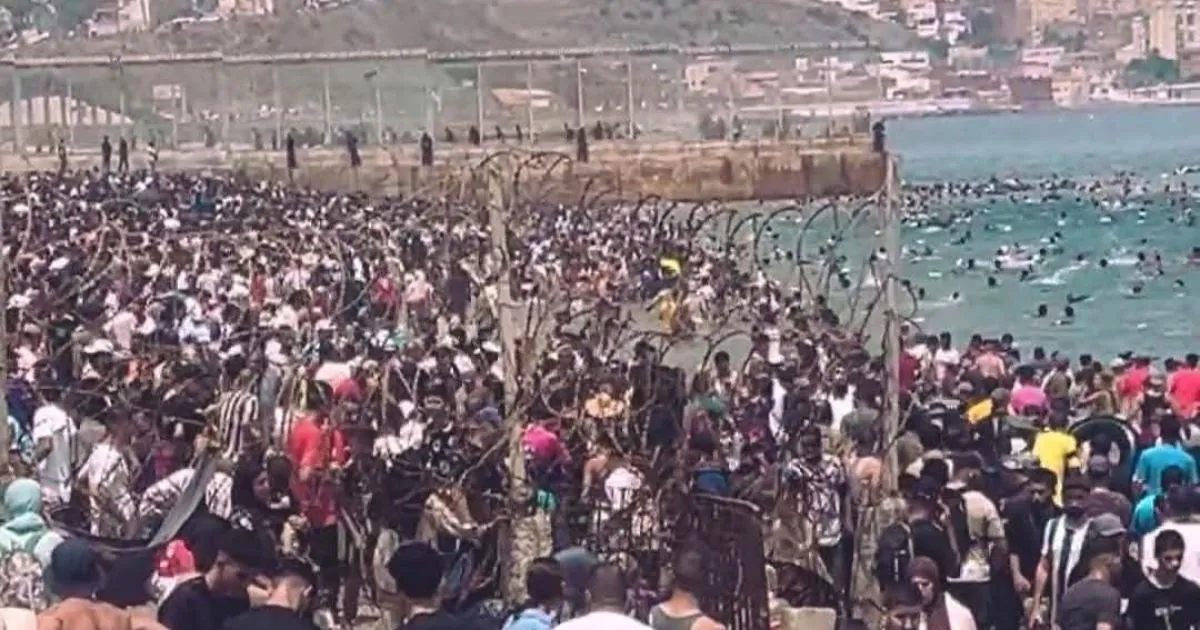
In recent times, Morocco's image and its relations with Spain have been increasingly deteriorating, primarily due to a series of crises linked to irregular migration and drug trafficking. These issues have been compounded by rising criticisms directed at Rabat regarding its handling of such matters, which are overshadowing the security and political cooperation between the two nations, as well as affecting the Spanish public's perception of Morocco. The recent surge in mass migration towards the Spanish city of Ceuta has brought these tensions to the forefront. In late July, the city witnessed an unprecedented influx of thousands of individuals from Morocco, which reignited accusations against Rabat of using migration as a political leverage against Spain. This situation raises significant concerns about the security of Spain's borders and the stability of the southern front of the European Union.
Eyewitness accounts from Moroccan journalists, as reported by various media sources, indicate that this wave of migration cannot be divorced from the prevailing social and economic conditions within Morocco, marked by poverty, unemployment, and structural imbalances. Prominent journalist Tofik Bouachrine described the event as one of the largest mass crossings in Ceuta's history, noting that over 70,000 young Moroccans left for a city with a population of only about 80,000. This statistic highlights a critical issue, as many migrants remain in Ceuta despite facing homelessness and hunger, refusing to return to Morocco. This behavior, according to these journalists, reflects a profound level of social despair and suggests that migration has evolved from being merely an individual choice to a manifestation of a growing crisis of confidence in the future within the country.
In this context, Moroccan journalist Khaled Bakary contends that reducing the phenomenon to external conspiracies overlooks fundamental reasons tied to structural elements in state management, particularly in light of escalating poverty and rising unemployment rates. He believes that protests related to water shortages, health, education, housing, and infrastructure, along with attempts at irregular migration, represent different facets of a deep-seated social crisis.
Drug Trafficking: Another Source of Morocco's Image Crisis
Furthermore, the tensions surrounding migration are not isolated; drug trafficking from Morocco has become a significant concern for Spanish and European authorities. In recent weeks, there have been numerous operations to seize large shipments and dismantle networks involved in smuggling cannabis and other drugs into the European market. Spain has intensified its security operations against international drug trafficking networks, with over a ton of cannabis seized near Gibraltar recently, alongside foiled attempts in the Canary Islands and the Balearic Islands. Reports indicate that cannabis originating from Morocco continues to be a primary source of this substance in the European market.
In another operation in the Canary Islands, Spanish security forces thwarted the entry of approximately 400 kilograms of cannabis and arrested 11 individuals after detecting a shipment being unloaded from the sea, intended for distribution within the archipelago or transport to other regions of Spain. European data unveils a more complex financial dimension to this issue. The European Union Agency for Criminal Justice Cooperation, Eurojust, reported on an international investigation revealing that at least 18 million euros from drug trafficking proceeds were laundered through converting money into gold, with the bullion transported to various countries, including Morocco. The assets linked to this network exceeded 30 million euros, and French authorities seized over 50 kilograms of hidden gold bars.
This situation positions Morocco within a global financial framework associated with organized crime proceeds, as indicated by European investigations, extending the drug trafficking issue beyond direct smuggling to encompass money laundering and the conversion of criminal activity revenues into movable and concealable assets.
Collectively, these developments suggest that Morocco's image among various sectors of the Spanish and European public is increasingly tied to issues of irregular migration, organized crime, and drug trafficking, all of which are sensitive matters directly impacting European security. While Rabat has sought to present itself as a key partner for the European Union in security cooperation and migration management, the recurrence of mass migration crises, the ongoing drug seizures linked to Morocco, and the kingdom's involvement in European investigations concerning money laundering raise pressing questions about the nature and effectiveness of this cooperation.
Most critically, if the allegations regarding Morocco's use of migration as a political pressure tool are substantiated, it would not only harm Moroccan-Spanish relations but also undermine the trust that should underpin European partnerships in border management and combating organized crime. Conversely, testimonials from Moroccan journalists reveal a striking paradox: while Moroccan authorities attempt to attribute mass migration waves to external factors, journalists within Morocco argue that the roots of this phenomenon lie in crises of poverty, unemployment, social disparity, and structural imbalances. Journalist Ali Anouzla described the Ceuta wave as the "largest popular referendum" through which over 70,000 Moroccans expressed their desire to leave the country.
Thus, Morocco appears to face challenges on the Spanish side that extend beyond a temporary crisis related to migration or drugs, impacting the political and security trust in a partner that should serve as a cornerstone for stability on Europe's southern borders. The recurring crises underline a growing gap between the image Rabat seeks to project as a reliable security partner and the realities and issues that dominate the Spanish and European agendas. As reported by spsrasd.info.
