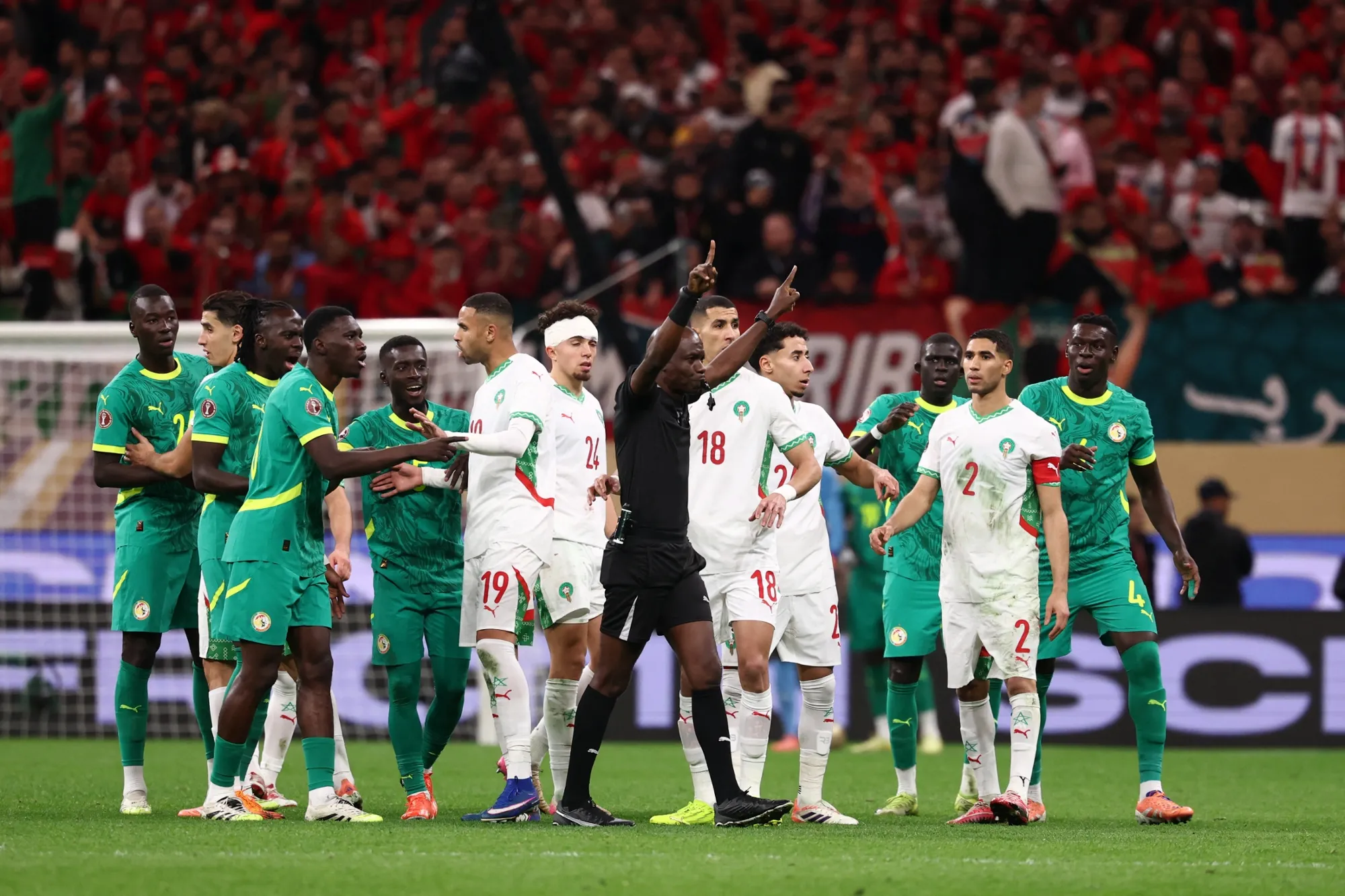

The End of a Controversial AFCON Journey
After nearly ten months of an extraordinary saga, the climax of the Africa Cup of Nations (AFCON) football drama is finally approaching. The Court of Arbitration for Sport (CAS) is set to hear Senegal's appeal against a decision that awarded Morocco the title under controversial circumstances. The hearing is scheduled for Thursday in Lausanne, where legal experts will examine the circumstances surrounding the final match.
Thierry Ulrich, a sports law expert from the University of Lausanne, described this case as "exceptional," highlighting that it is unprecedented for a national team to be stripped of a title that was achieved on the field and validated by the referee. The CAS panel, which includes French, Italian, and German representatives, will convene at 9:30 AM by the serene shores of Lake Geneva to hear from representatives of the Senegalese and Moroccan football associations, alongside officials from the Confederation of African Football (CAF).
While the CAS has warned that no decision will be rendered on Thursday, the arbitration body will begin its deliberations immediately after the session, suggesting a resolution could come swiftly after months of intense debate.
Controversy Surrounds Senegal's Title
Senegal was crowned the AFCON champion on January 18 in Rabat, defeating Morocco 1-0 after extra time amidst chaotic scenes. A significant portion of the Senegalese players left the pitch in protest against a penalty awarded to Morocco in stoppage time, which was missed by Ibrahim Diaw. They returned only after a fifteen-minute delay, allowing Senegal to score the decisive goal in extra time.
On March 17, following Morocco's appeal, the CAF’s appeal committee declared Senegal the loser with a score of 3-0 due to the players' premature exit from the field, in accordance with Articles 82 and 84 of the AFCON regulations, which prohibit leaving the pitch before the legal conclusion of the match without the referee's permission. The Senegalese Football Federation condemned this as “the most egregious administrative theft in the history of our sport,” while still holding onto the trophy and displaying it to the Senegalese community in Paris later that month.
By appealing to CAS, Senegal seeks to reclaim its title as AFCON champions and ignite a broader discussion regarding the fundamental principles of sports and the authority of referees. Ulrich noted that the CAF’s appeal committee adopted an excessively strict interpretation of the competition rules, ignoring that the Congolese referee, John-Jacques Ndala, allowed the match to resume after the Senegalese players returned.
According to the Laws of the Game, specifically Law 5.2, all decisions made by the referee concerning gameplay are final, including goal assessments and match outcomes. The council further asserts that the referee cannot alter the resumption of play, even if they later realize a mistake occurred. This principle reinforces the doctrine of “on-field decisions” long established by CAS, which stipulates that referee decisions can only be contested if proven to be corrupt or made in bad faith. Ulrich emphasized that the aim is to uphold competition integrity, asserting that results should be determined on the field at that moment, not later by judges; otherwise, the sport risks losing all its fans.
In parallel to this legal discourse, the Senegalese government has called for an international investigation into “suspicions of corruption within the governing bodies” of CAF as of March 18. In response, CAF has praised the “independence” of its disciplinary bodies. However, just fifteen days prior to the appeal decision, CAF inexplicably dismissed its legal expert, Yassin Osman Rubel, who had ensured the integrity of CAF’s proceedings for six years.
As reported by almountakhab.com.