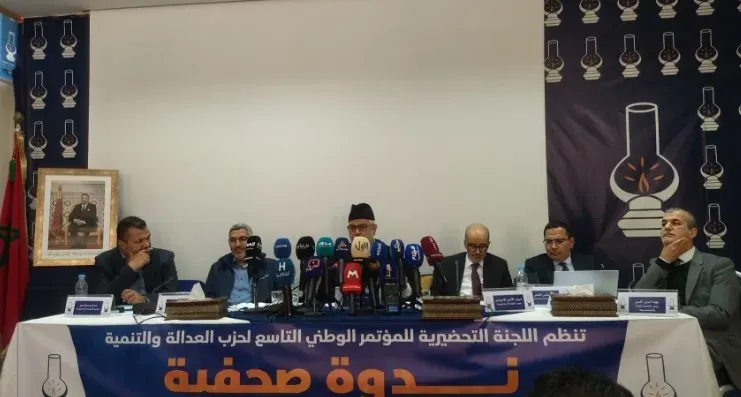

The Justice and Development Party (PJD) of Morocco, similar to other major political parties in the country, is currently experiencing a notable competition regarding the nomination of its candidates for the legislative elections scheduled for September 23, 2026. However, the unique aspect of this internal competition lies in the way it intertwines the strict organizational logic of the party with the notion of "electoral legitimacy" attributed to local leadership. This dynamic has resulted in intense discussions and rivalries among former parliamentarians, organizational figures, and ambitious youth aspiring to ascend within the party ranks. Notable districts witnessing such competition include Rabat, Salé, and Fez.
To manage these internal contests, the PJD has established a structured internal process comprising several key stages. This process begins with regional general assemblies for nominations, followed by proposals from regional committees, and culminates in a final decision made by the party's central endorsement committee, led by Abdelilah Benkirane. Despite this seemingly organized and transparent procedure, numerous internal debates have arisen regarding the adherence to the outcomes of regional assemblies, the influence exerted by the central leadership in final decisions, the prioritization of certain politically symbolic names over local contenders, and the delicate balance between recycling established figures and allowing new generations to emerge.
Consequently, one of the most prominent sources of controversy within the party has been the perception among some members that the outcomes of regional assemblies were not fully respected. This perception was exacerbated when the central endorsement committee intervened to amend or alter certain local proposals. Additionally, indirect accusations have surfaced regarding a preference for national leadership figures or symbolically significant names at the expense of local candidates who enjoy organizational backing in their respective districts. Within this context, the relocation of some leaders from their traditional constituencies to new ones—such as Idriss Azmi's move to Temara—has sparked discussions about whether the leadership is employing a "centralized electoral engineering" approach to redistribute prominent names based on political calculations rather than local choices.
Another contentious topic has been the candidacy or non-candidacy of certain historical leaders within the party. Media reports have circulated concerning internal disputes about the potential candidacy of Abdelilah Benkirane himself, with some voices arguing that his running for election could pose organizational and political challenges. Conversely, others contend that his electoral presence is vital for galvanizing party mobilization. The ongoing delays in finalizing candidate selections in electorally strong districts, such as Rabat and Salé, have further fueled debates due to the sensitivity of internal balances. Azmi's candidacy in the district of Temara instead of Fez has also been interpreted through various organizational and electoral considerations, yet no definitive official explanation has been provided by the party leadership.
An interesting point to note is that Azmi was notably absent from the initial list selected by party members in Fez during the regional assemblies dedicated to nominations, which observers have interpreted as an indication of shifting local power dynamics within the party in Fez, leading to the rise of new names. Conversely, the party's general secretariat endorsed Azmi as the candidate for the Temara constituency, perceived within the party as needing a nationally recognized figure with a strong political and media presence, particularly following the party's electoral decline in 2021. Some reports have suggested that Benkirane directly intervened to support Azmi's candidacy in Temara, given his status as the first deputy secretary-general and former president of the party's national council.
This choice, however, has also sparked local controversy, both within the party and among some stakeholders in Temara, who question the appropriateness of nominating a figure from Fez and its connection to local issues and constituents. Politically, Azmi's transition from Fez to Temara can be understood through three interconnected possibilities: the redistribution of national leaders to constituencies that the party considers viable for reclaiming seats; challenges or internal competition in Fez making his candidacy there less of a priority; and a leadership desire to leverage Azmi's symbolic value in a district closer to Rabat that carries more political and media weight.
The party leadership has endeavored to mitigate these criticisms by emphasizing in official statements that all files underwent thorough deliberation and that decisions were made through secret voting, taking into account suggestions from regional committees and regional assemblies, while also considering appeals and withdrawals prior to the final resolution. Additionally, Benkirane has instructed that the results of regional assemblies not be published until they receive final approval from the general secretariat, justifying this by stating that local proposals are not definitive decisions. However, this directive has been interpreted by some observers as an indication of the sensitivity of internal balances and the party's fear of leaking disputes to the public. The heightened competition is also attributed to the party's view of the 2026 elections as a crucial opportunity for political resurgence following its significant loss in 2021, which has transformed candidate endorsements in certain districts into a genuine opportunity to return to parliament. This context explains the plethora of appeals, withdrawals, and organizational discussions accompanying the selection process.
Despite all the internal disputes, it appears that the endorsement process adopted by the PJD has contributed significantly to the early resolution of a considerable portion of the candidate lists for the 2026 elections, especially in contrast to other parties still grappling with delays or open conflicts over their candidates. This proactive organization has allowed the party to finalize a significant number of districts months ahead of the campaign period, presenting an image of organizational readiness and political foresight. The presence of a strong central leadership, under Benkirane, has facilitated swift resolutions of contentious issues. The general secretariat retained the right to intervene in certain districts, which helped reduce lengthy internal negotiations, even though this has raised concerns among some party members. Factors contributing to this early resolution include the adoption of secret voting in some stages of candidate selection and early handling of appeals, as well as encouraging several historical leaders to accept the redistribution of districts or to withdraw from the race, as seen with Benkirane himself. Nevertheless, this early resolution did not entirely eliminate internal tensions; rather, it can be argued that it shifted some of the conflict from the stage of delayed resolutions to objections regarding the resolution methods, as discussions emerged about the extent to which local choices were respected, the degree of intervention by central leadership, and the nature of the criteria applied in certain endorsements. Nevertheless, the party has successfully reached an advanced stage in preparing its lists relatively early, which the leadership considers a crucial condition for restoring electoral mobilization following the 2021 crisis.
In conclusion, it can be said that the Justice and Development Party has distinguished itself by achieving early resolutions in its final candidate lists, contrasting with competing major parties. The PJD has adopted an early decision-making approach for a significant portion of its candidates for the 2026 elections, aiming to project an image of organizational discipline and electoral readiness after the setback of 2021. The general secretariat, acting as the endorsement body, began holding regional assemblies and central meetings in April and May 2026 to finalize the names of local and regional representatives. The party has already announced decisions for dozens of electoral districts, endorsing candidates in 19 regional and local constituencies during an initial phase, with subsequent sources confirming that the party has nearly completed the selection of its candidates in all districts. This early resolution carries several political and organizational implications: first, it aims to gain electoral time by enabling candidates to begin building local networks and mobilization; second, it seeks to avoid the late internal conflicts over endorsements that many parties have faced before elections; third, it conveys a message that the party still retains an organizational structure capable of managing internal affairs despite its decreased parliamentary representation; and fourth, it adapts to new legal requirements regarding the representation of women, youth, and Moroccans abroad in regional lists. However, this early resolution did not prevent the emergence of internal discussions and criticisms, particularly following reports of the inclusion of certain names outside the proposals put forth by regional assemblies, raising questions within the party about the limits of internal democracy and the balance of endorsements in sensitive districts like Rabat and Salé. Politically, under Benkirane's leadership, the party aims to leverage this early preparation to re-engage its party bases and restore some electoral presence, especially amidst social discontent and criticisms directed at the current government. The party hopes that this early organization will provide it with an advantage over parties still entangled in internal struggles over candidates and endorsements.
As reported by lemaroc35.ma.