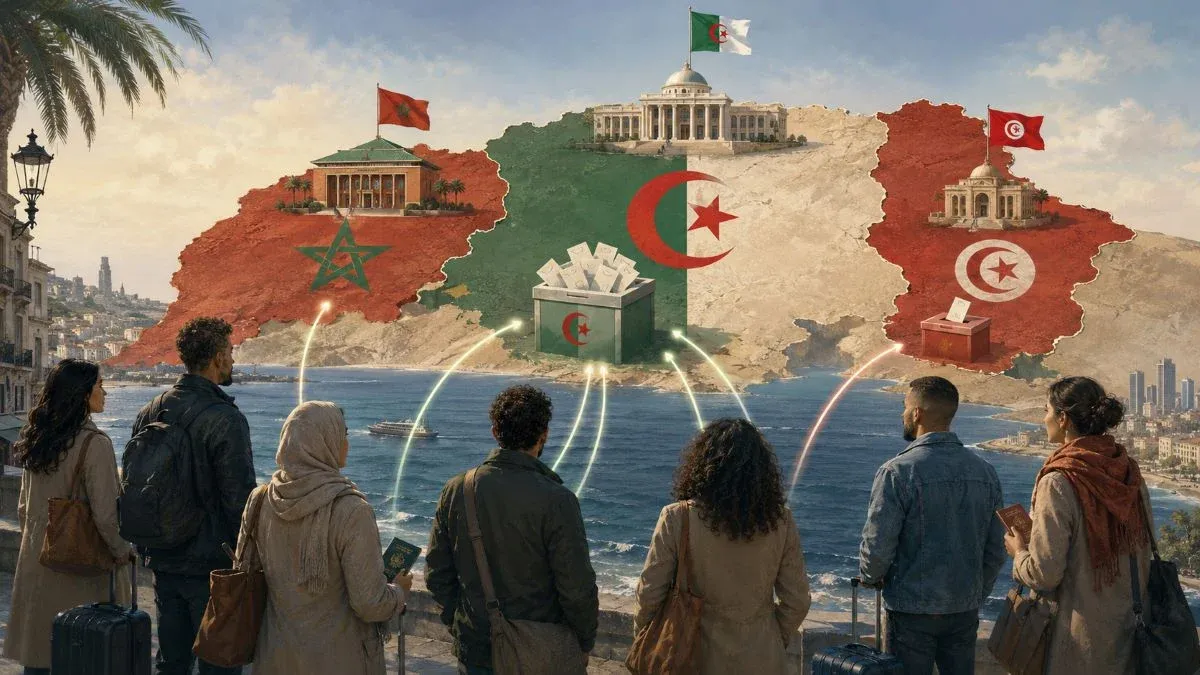
Electoral Disparities Among North African Countries
In the recent electoral developments across North Africa, a stark contrast emerges in the political representation afforded to the diasporas of Algeria, Tunisia, and Morocco. Algeria has granted twelve parliamentary seats to its diaspora, while Tunisia has allocated ten. In a notable absence, Morocco's six million expatriates found themselves without any designated representation in the recent elections held on September 23. This disparity underscores the varying degrees of electoral uncertainty each government is willing to accept from its expatriate communities, highlighting the complex interplay between political power and diaspora engagement.
The Algerian Constitutional Council announced on July 18 the definitive results of the legislative elections held on July 2, which saw twelve deputies from the diaspora entering the National People's Assembly—an increase from eight in the previous legislature. Conversely, Tunisia's representation has dwindled to ten seats from eighteen following electoral reforms enacted in 2022. In Morocco, the absence of reserved seats for its expatriate population in the 395 contested parliamentary seats illustrates a significant gap in political inclusion for Moroccan citizens living abroad.
The Role of Diasporas in National Development
All three countries recognize the substantial economic and symbolic contributions of their expatriates, particularly through financial remittances and investments that play a crucial role in national development. However, the trajectories diverge when it comes to granting autonomous political representation. Out of 854,285 registered voters abroad, only 91,810 participated, resulting in a voter turnout of 10.75%. After accounting for invalid ballots, this yielded 79,180 valid votes, which translated into twelve mandates for the Algerian diaspora. Notably, the majority of these votes came from three electoral zones in France, with participation rates falling below the diaspora average.
The representation landscape in Algeria is dominated by the National Liberation Front (FLN), which secured five of the twelve seats, while the National Democratic Rally (RND) and the El Moustakbal Front each obtained two. Two independent candidates and one from the El Binaa Movement filled the remaining seats, reflecting the predominance of established political parties in the new assembly. Meanwhile, Tunisia's electoral reforms have significantly reduced its external representation, moving away from a previously robust system of foreign representation that allowed for greater diaspora involvement in parliamentary affairs. This shift has raised concerns over the diminishing political influence of Tunisians abroad, particularly in light of the recent electoral context characterized by widespread abstention.
In stark contrast, Morocco has not reserved any seats for its expatriate population in the upcoming elections. While a Moroccan citizen abroad can run for office in a domestic constituency, they must navigate a complex voting process that requires registration in a local electoral list and physical presence to cast their vote. This model of indirect representation has not only limited the electoral agency of Moroccan expatriates but also reflects a broader reluctance to engage them in direct political processes. Historical attempts at direct representation have failed to materialize, despite constitutional provisions recognizing the voting rights of expatriates.
The political calculations regarding the number of seats allocated to diasporas reflect both demographic weight and strategic interests. However, the systems of representation and relationships with political parties differ markedly across these nations. As Algeria's newly elected deputies embark on their five-year mandate, they face a range of pressing issues, from consular services to civil status matters and transport links, all of which require accountable and responsive governance. Meanwhile, Moroccans in cities like Brussels or Montreal wishing to participate in their national elections face a cumbersome process that lacks the immediacy of direct political engagement.
As reported by afrik.com.