
The Location and Significance of the 'Mountain of the Axe'
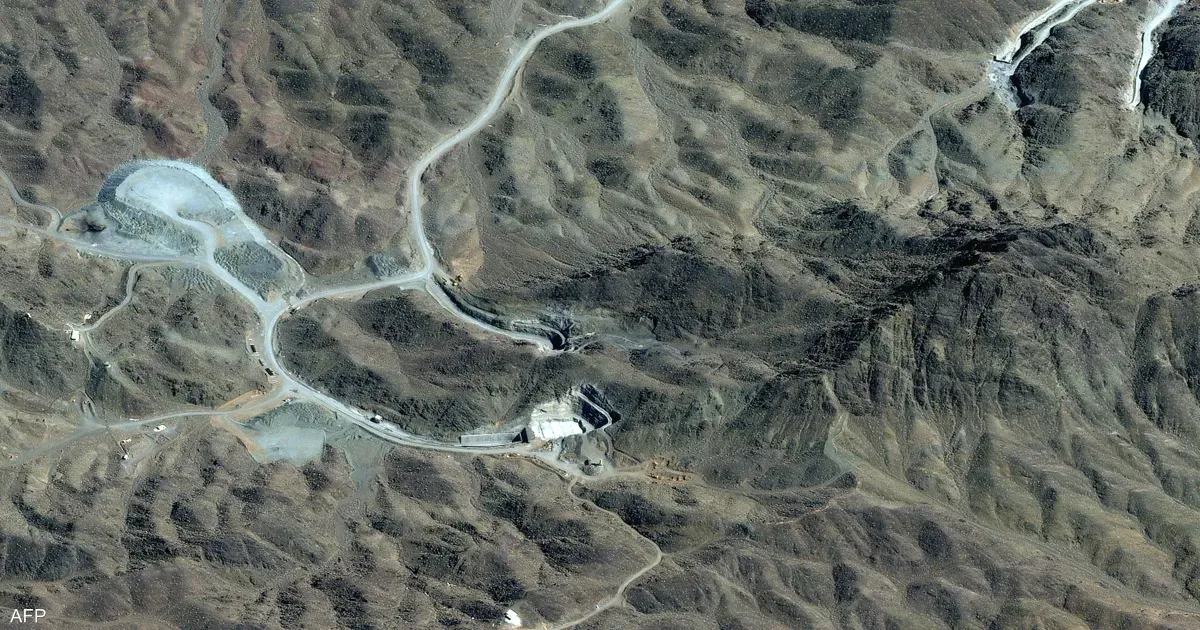
The 'Mountain of the Axe', a strategic site linked to Iran's nuclear program, has recently been thrust into the international spotlight following a bold threat from former U.S. President Donald Trump. In a statement made on July 13, Trump declared, "We will destroy the Mountain of the Axe. Tell the Iranians to prepare themselves." This facility, renowned for being heavily fortified and buried deep underground, is situated approximately 220 kilometers south of Tehran, just two kilometers away from the critical Natanz nuclear complex, which has been a focal point of international scrutiny due to its uranium enrichment activities.
Historically, the Natanz site has faced assaults, including airstrikes during conflicts involving the United States and Israel, with notable strikes occurring on February 28 and during a 12-day war last year. However, the 'Mountain of the Axe', still under construction, has remained untouched in these attacks, according to the Institute for Science and International Security (ISIS), a U.S.-based research organization dedicated to preventing nuclear proliferation. The mountain's peak rises about 1,600 meters above sea level, adding to the complexity of any potential military operation aimed at it.
The Historical Context and Current Developments
The site has been intertwined with Iran's contentious nuclear aspirations, which have long strained relations with Western nations, despite Iran's persistent denial of any intentions to develop nuclear weapons. According to ISIS, the construction of the facility at the 'Mountain of the Axe' commenced in 2020, following what Iranian authorities described as a sabotage incident at the Natanz site. This incident allegedly caused significant damage, prompting Iran to accelerate its efforts in developing advanced centrifuge technology for uranium enrichment.
In September of that year, former head of the Iranian Atomic Energy Organization, Ali Akbar Salehi, announced the initiation of a more modern and expansive facility designed for the manufacturing of advanced centrifuges, strategically located within the mountain near Natanz. Rafael Grossi, Director General of the International Atomic Energy Agency (IAEA), highlighted Iran's intention to pursue nuclear activities at the 'Mountain of the Axe', indicating a systematic effort to relocate sensitive facilities underground.
Analysis of satellite imagery by ISIS suggests that the site features two entrances leading to a facility estimated to be at least 100 meters deep. The organization noted that significant physical defenses have been established, including an extensive security perimeter and substantial reinforcements at tunnel entrances. Recent reports indicated that the eastern tunnel entrances have been partially backfilled to obstruct vehicle access, although they remain operational to some extent.
The current operational status of the site remains ambiguous. In his recent remarks, Trump asserted that the U.S. is closely monitoring the 'Mountain of the Axe' and noted a lack of observable activity. The ISIS report suggests that while construction continues, the facility has not yet commenced operations. The uncertainty surrounding Iran's plans for a large-scale assembly facility raises questions about the future of its nuclear capabilities, especially in light of previous setbacks to its centrifuge program.
Experts opine that the deeply embedded site may be beyond the reach of even the most powerful bunker-busting bombs in the U.S. arsenal, rendering ground forces a more viable option for potential attacks or sabotage. Nonetheless, the report hints at possible vulnerabilities that could be exploited through aerial strikes capable of penetrating underground defenses.
As reported by skynewsarabia.com.