
The Controversial Mountain of the Axe
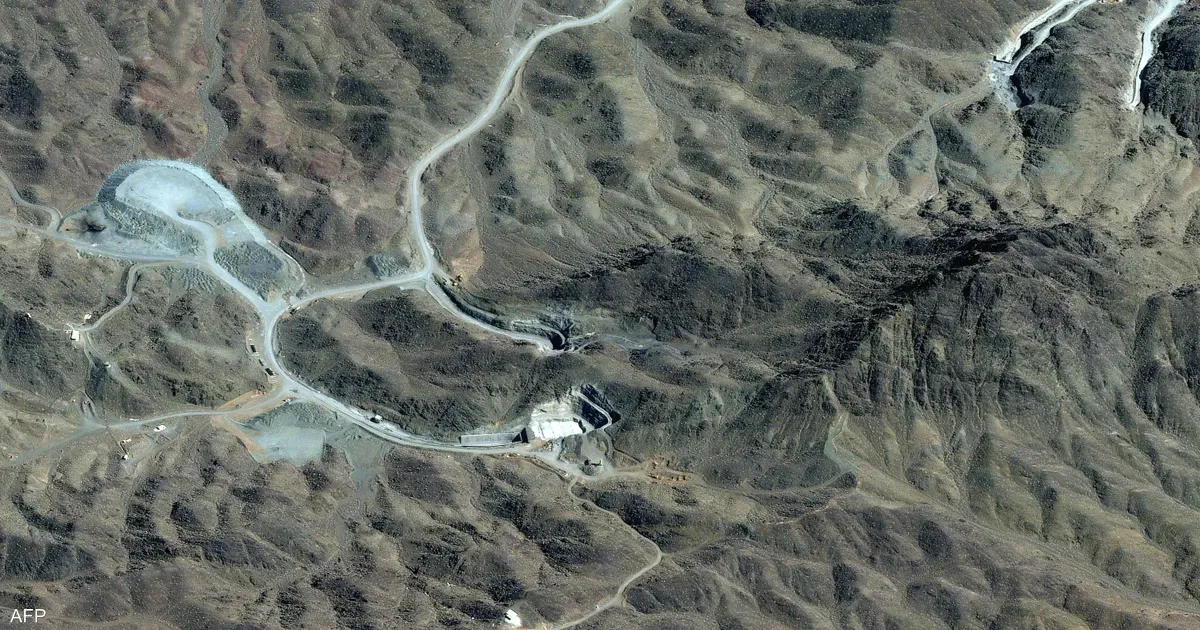
The Mountain of the Axe, a fortified site linked to Iran's nuclear program, has recently drawn significant attention following a threat from former U.S. President Donald Trump to target it for destruction. This heavily fortified facility is buried deep underground, located approximately 220 kilometers south of Tehran and just two kilometers from the Natanz nuclear complex, which is pivotal to Iran's uranium enrichment efforts. In a striking interview on July 13, Trump declared, "We will destroy the Mountain of the Axe. Tell the Iranians to prepare themselves." This statement underscores the escalating tensions surrounding Iran's nuclear capabilities and the potential U.S. military response.
Location and Historical Context
The Mountain of the Axe has become a focal point in the ongoing geopolitical strife between Iran and Western nations, particularly the United States and Israel. The Natanz site, where two uranium enrichment facilities are located, has previously been targeted in military strikes during conflicts involving the U.S. and Israel. Notably, the Natanz facility was bombed on February 28 during a 12-day conflict last year. A report from the Institute for Science and International Security, a Washington D.C.-based think tank focused on nuclear non-proliferation, indicates that the Mountain of the Axe has remained unscathed during these military engagements, even as construction has been ongoing since 2020 in response to prior acts of sabotage against the Natanz site.
At an elevation of about 1,600 meters above sea level, the Mountain of the Axe is strategically significant. The facility's construction was reportedly initiated after an explosion, which Iranian authorities attributed to sabotage at Natanz, causing considerable damage that hindered the development of advanced centrifuges for uranium enrichment.
In September 2020, Ali Akbar Salehi, then-head of Iran's Atomic Energy Organization, announced the construction of a modern facility within the mountain designed to manufacture advanced centrifuges. Rafael Grossi, Director General of the International Atomic Energy Agency, highlighted Iran's plans for nuclear activities at the Mountain of the Axe, indicating a systematic approach to placing sensitive facilities underground.
Satellite imagery analysis conducted by the Institute for Science and International Security reveals that the Mountain of the Axe features two entrances leading to a facility estimated to be at least 100 meters deep. The site has undergone extensive security enhancements, including a large perimeter and reinforced tunnel entrances, suggesting a defensive posture against potential attacks.
Trump's remarks on July 13 indicated that U.S. surveillance of the Mountain of the Axe is ongoing, with claims that no significant activity has been observed. As the situation develops, the U.S. continues to monitor Iran's nuclear ambitions closely. Nevertheless, the nature and purpose of the construction at this site remain ambiguous, raising questions about Iran's future nuclear strategies.
While experts agree that the site's depth renders it relatively immune to the most powerful bunker-busting bombs in the U.S. arsenal, they also suggest that it could be vulnerable to ground forces or specific aerial attacks targeting weaker points. As tensions persist, the international community watches closely to see how both Iran and the U.S. will navigate this precarious situation.
As reported by skynewsarabia.com.