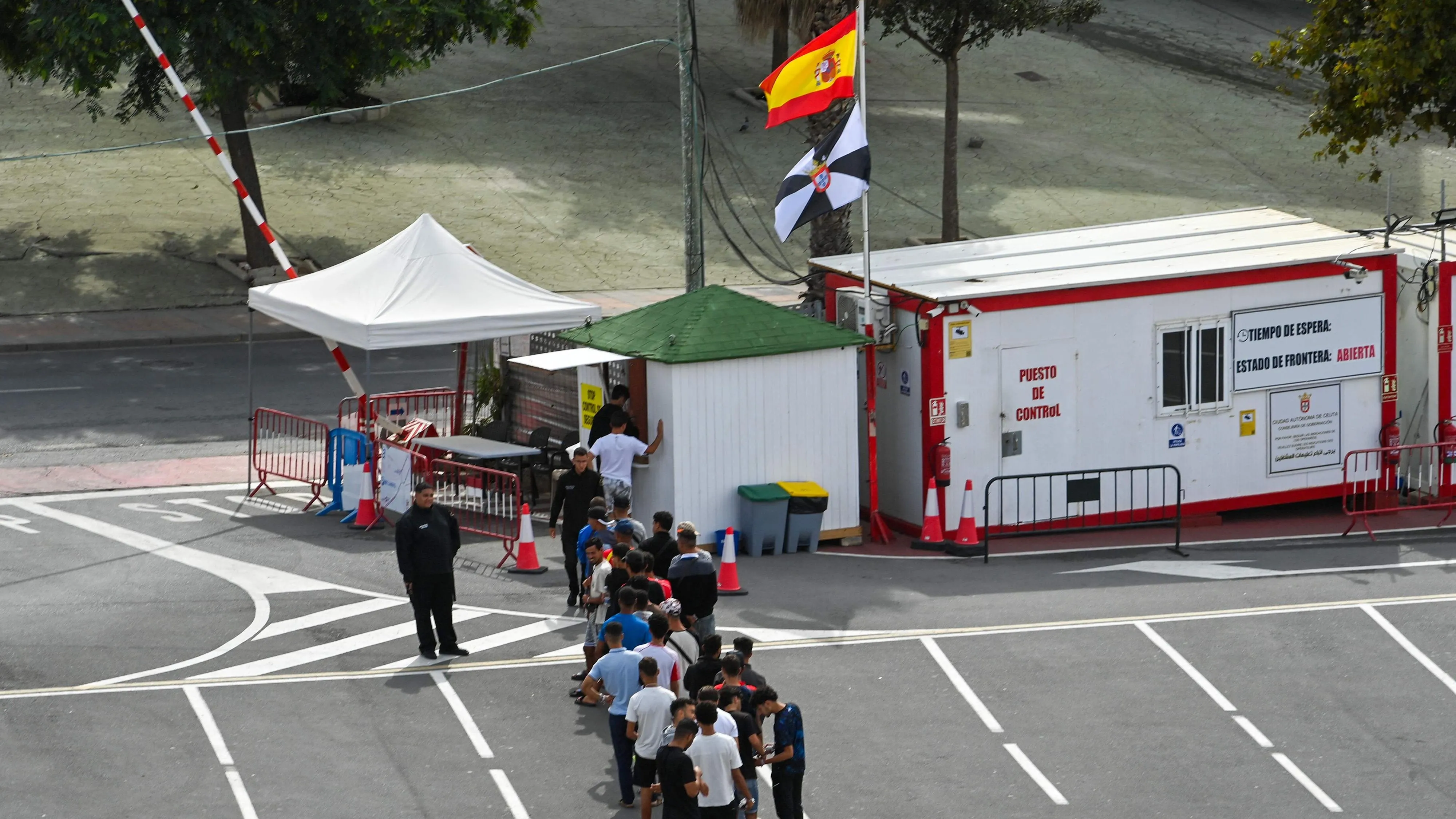
Figuig Incidents: A Flashpoint for Military Tensions
On April 11, 2026, two Algerian Mi-28NE attack helicopters flew over the border area of Figuig, marking a significant escalation in military tensions between Algeria and Morocco. This incident followed an earlier event in February, where Algerian soldiers placed boundary markers within Moroccan territory and discharged firearms near agricultural sites. The specialized publication Defensa classified the April occurrence as one of the "most critical incidents recorded in recent years" between the two nations. Together, Algeria and Morocco account for a staggering 60% of military expenditures on the African continent, and their land border has remained closed for three decades.
In the context of these incidents, analysts have noted a persistent "action-reaction logic" along a land border that has been closed since the 1994 Marrakech bombings, coupled with an Algerian airspace that has prohibited Moroccan civilian aircraft since August 2021. The most severe incident prior to these developments occurred at the end of 2021, when three Algerian drivers were killed in an airstrike attributed to Moroccan drones in a restricted area of Western Sahara, marking the first fatal confrontation between the two countries in decades. Notably, the Mi-28NE helicopters are combat aircraft, not surveillance drones.
Military Spending and Regional Rivalry
According to the annual report from the Stockholm International Peace Research Institute (SIPRI), released on April 27, 2026, Algeria allocated an impressive $25.4 billion to its defense in 2025, reflecting an 11% increase from the previous year. This expenditure accounts for 25% of Algeria's public spending, placing it as the second-highest ratio globally, behind war-torn Ukraine. Conversely, Morocco's military spending reached $6.3 billion during the same period, marking a 6.6% increase. For the 2026 fiscal year, Morocco's defense budget is projected to be around 157 billion dirhams, approximately $15.3 billion, which is a 17.77% rise compared to 2025.
Together, these two nations consumed 60% of the total $58.2 billion military expenditure reported across Africa in 2025. While the asymmetry between their military forces is acknowledged, it is not as overwhelming as it was a decade ago. Algeria possesses the second-largest military in Africa in terms of personnel, equipped primarily with Russian weaponry—including Sukhoi 30 fighters, T-90 tanks, S-300 and S-400 air defense systems, and Kilo-class submarines. In contrast, Morocco, while outnumbered, has been diversifying its military technology with a western orientation, and this procurement has accelerated significantly since 2025.
In a notable development, Algeria became the first foreign country to acquire the Su-57E stealth fighter jet from Russia in 2025, a military asset designed to evade radar detection and compete with leading American and European aircraft. The U.S. responded with concern, as Robert Palladino, head of the Middle East Affairs Office at the State Department, labeled the transaction as "worrisome" during a Senate Foreign Relations Committee meeting, warning of potential trade and financial sanctions under the CAATSA law, which allows the U.S. to penalize nations purchasing significant Russian military equipment. This marked the first public warning from the U.S. to Algeria regarding this issue.
As Morocco advances its military capabilities by receiving deliveries of AH-64E Apache helicopters, Turkish Bayraktar TB2 drones, and F-16 fighter jets, it is also bolstering its defenses with American Abrams tanks, HIMARS missile launchers, and French Caesar artillery. These acquisitions reflect Morocco's strategy to offset its numerical inferiority with technological superiority in key military areas, contrasting Algeria's reliance on Moscow for military supplies.
Historically, the roots of this rivalry date back to the decolonization process and unresolved conflicts from over sixty years ago, including territorial disputes stemming from France's redrawing of borders to favor Algeria and the ongoing contention over Western Sahara. The normalization of relations between Morocco and Israel in December 2020, as part of the Abraham Accords, further intensified Algeria's perception of a coordinated destabilization effort against it. This complex backdrop of military, political, and diplomatic maneuvers continues to shape the strategic landscape of North Africa.
As reported by lessentieldeleco.fr.