The Intersection of Faith and Freedom in North Africa
As the West grapples with its own shortcomings in safeguarding its Jewish communities, and as the Vatican turns a blind eye to the sole vibrant Christian community in North Africa, the Christians of Kabylie paradoxically find their most attentive supporters in Morocco and the United Arab Emirates. A decade after the Marrakech Declaration, which emerged in the wake of the Yazidi genocide and the persecution of Eastern Christians, the leadership regarding religious freedom is no longer solely derived from Europe.
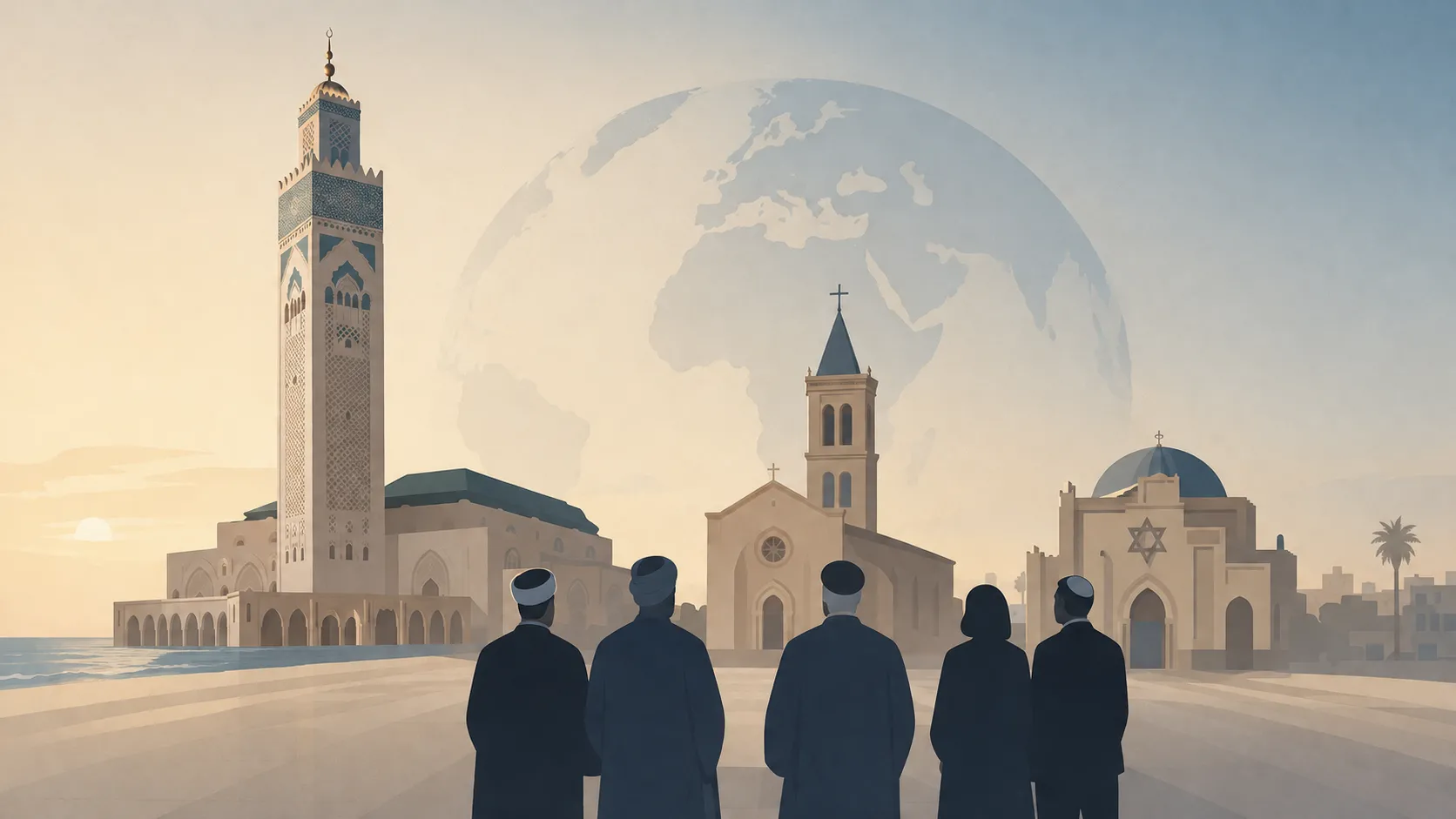
In July 2023, Casablanca hosted the International Religious Freedom Summit – North Africa, where researchers, diplomats, religious leaders, and civil society representatives gathered to assess the current state of Freedom of Religion or Belief (FoRB) in the region. The event's symbolism was profound, especially during a visit to three iconic places of worship in Casablanca: the Hassan II Mosque, the Sainte-Marie-de-Lourdes Church, and the Beth-El Synagogue. In the Beth-El Synagogue, a touching scene unfolded as prayers were recited side by side in Hebrew and Arabic by representatives of the Jewish and Muslim communities. This simple yet powerful image resonated deeply in a world fraught with identity fractures.
The evening continued at the Royal Mansour, celebrating the tenth anniversary of the Marrakech Declaration under the auspices of the Abu Dhabi Forum for Peace. To grasp the significance of this ceremony, one must reflect on the events of a decade ago. In 2014, the Islamic State launched a brutal campaign of extermination against the Yazidis of Sinjar, enslaving thousands of women and forcing entire communities to flee. Iraqi and Syrian Christians also faced systematic persecution. In response to this barbarity, Muslim religious authorities chose to confront it on theological grounds.
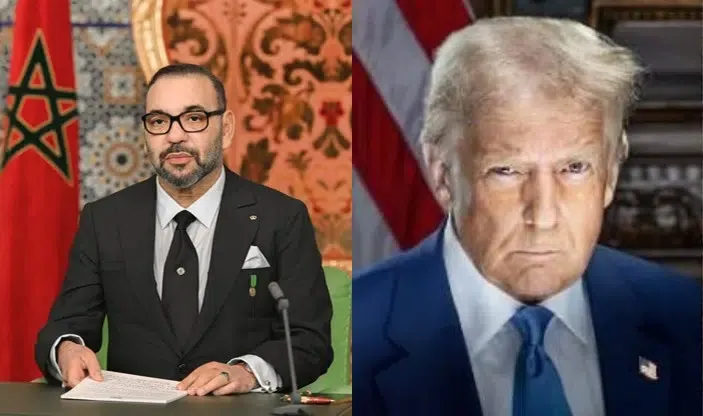
On January 25, 2016, over 200 scholars from the Muslim world convened in Marrakech, adopting a historic declaration affirming that religious minorities should enjoy full legal and spiritual protection within Muslim societies. The words of King Mohammed VI, Commander of the Faithful, displayed on screens at the Royal Mansour, retain their powerful resonance today: "Religion must not be manipulated to justify any infringement or denial of the rights of religious minorities in Muslim countries." This statement encapsulates the ambition of the Marrakech Declaration: to strip extremists of their monopoly on religious interpretation.
Before the intervention of Shaykh Abdallah bin Bayyah, Morocco's Minister of Habous and Islamic Affairs, along with the UAE Ambassador, emphasized the moral responsibility that religious authorities bear in addressing violence committed in the name of Islam. A prominent figure in contemporary Sunni Islam, Abdallah bin Bayyah was among the first to unequivocally condemn the Islamic State, delegitimizing its theological basis. His fatwa against ISIS remains one of the most significant religious texts produced by the Muslim world in recent decades. During the event, he honored Robert Rehak, Special Envoy for Holocaust Issues, Interfaith Dialogue, and Religious Freedom, in the presence of notable figures such as Sam Brownback, former U.S. Ambassador at Large for Religious Freedom, and a Kabyle delegation.
This gathering highlights a geopolitical shift that is often overlooked: influential Muslim religious authorities are now engaging directly with leading international defenders of religious freedom. This transformation takes on special significance when discussing Kabylie, as another Christian minority continues to live under the shadow of international indifference. The Christians of Kabylie, currently the only indigenous Christian community experiencing growth in North Africa, remain subjected to administrative closures of their churches by Algerian authorities, judicial prosecutions, and restrictions imposed by ordinance 06-03 concerning non-Muslim worship.
The paradox is stark. It is no longer solely Western organizations denouncing these violations of fundamental freedoms; now, recognized Muslim spiritual authorities, including King Mohammed VI and Shaykh Abdallah bin Bayyah, publicly assert that the protection of religious minorities is a duty rooted in Islamic tradition itself. This reality presents the Algerian regime with a significant contradiction. If Algeria positions itself as a modern, republican, and democratic state, it must fully ensure freedom of conscience, expression, assembly, and the free exercise of worship, in accordance with its international commitments.
Conversely, if it seeks to justify certain restrictions through religious references, another question arises: under what theological legitimacy could military generals define what constitutes an "offense to a Muslim," as outlined in article 144 bis of the Penal Code? Is this authority derived from military power or from the religious authorities they claim to uphold? The contradiction is profound. A military junta now finds itself publicly admonished, not by Western governments, but by Muslim spiritual authorities affirming that Islam cannot serve as a basis for the persecution of religious minorities.
Ultimately, the Marrakech Declaration transcends the singular issue of the Yazidis or Eastern Christians. A decade later, it directly challenges states that continue to restrict freedom of conscience in the name of an official religious identity. The Christians of Kabylie stand as one of the most evident illustrations of this struggle. Their fight is not merely that of a religious minority; it embodies the struggle of all who refuse to allow faith, or the absence of faith, to be dictated by the state.
As reported by nouvellerevuepolitique.fr.