
The Decline of a Football Institution
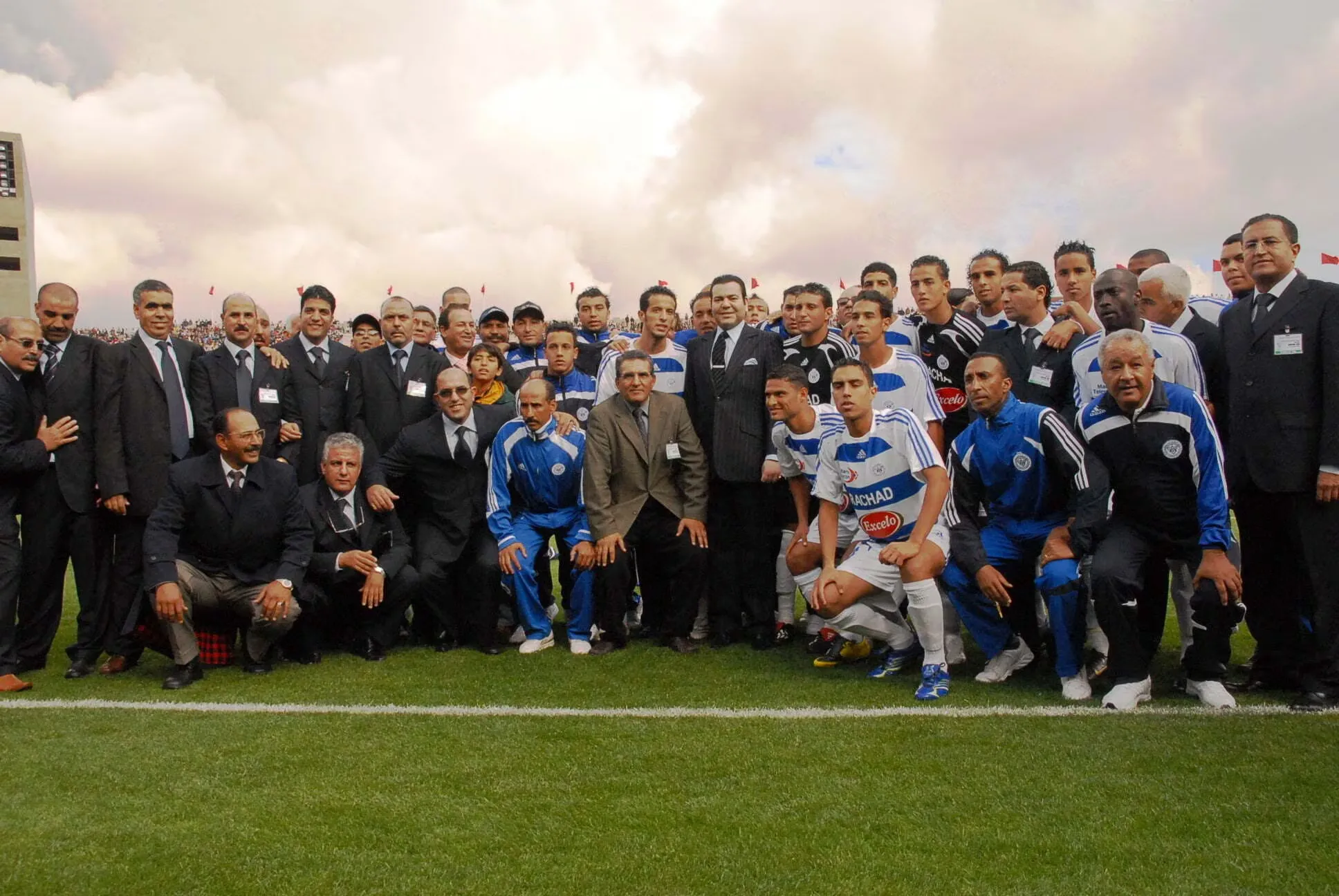
Le Rachad, a club that once thrived as an underdog in Morocco's second division, has experienced a dramatic fall from grace. Having spent two seasons in the elite division during the early 1990s and coming heartbreakingly close to winning the prestigious Coupe du Trône in 2007—losing in a penalty shootout after leading the match until the 68th minute—the club now finds itself languishing at the bottom of the national football hierarchy. This is a stark decline for an institution that has long been a cornerstone of Bernoussi’s identity and a vital part of the popular football narrative in Casablanca.
For anyone familiar with Moroccan football, it is undeniable that Le Rachad has primarily served as a breeding ground for talent, enriching the Botola with numerous skilled players over the decades. Notable alumni include Youssef Safri, Bouchaïb Lambarki, Hicham Louissi, Samir Zekroumi, and Ismaïl Koucham, along with the equally talented yet less publicized generations of the 70s and 80s who contributed to clubs like Raja, Olympique de Casablanca, TAS, and Chabab de Mohammedia.
The club's relegation to D4 is a harsh reality that evokes personal memories for many, especially those who grew up in the neighborhood, interacting with the players as neighbors, classmates, or friends. The Rachad stadium was more than just a venue; to the eyes of children, it represented a microcosm of football culture, akin to a Maracanã for the local community. The infamous 'Abbassiya' system, which allowed us to sneak in without tickets, became part of our childhood lore. We would wait by the entrances, and eventually, the gates would open, sometimes at halftime or in the dying moments of the game, depending on the mood of those in charge. The chances of slipping inside increased when Le Rachad was trailing or when the stands were sparsely populated.
A Glimpse into the Club's Rich History
Memories flood back from 1987 when Le Rachad triumphed over Wydad (2-1) in the Coupe du Trône, a feat they had achieved three years earlier with the same scoreline at the Mohammed V complex. The Wydad's captain at that time was none other than the legendary Abdelmajid Shaita, also a product of Bernoussi. During its heyday, Le Rachad had its own heroes, like the winger Mohamed Ouerrak, who balanced a successful football career with academic excellence, ultimately becoming a dedicated doctor. Today, the community celebrates not just the athlete but also the medical professional he has become.
Another unforgettable figure is Mohamed Mesrour, known as Hammou, a formidable striker renowned for his long-range goals, sometimes from midfield. His emotional appearance on Chouf TV, where he lamented the apathy of club officials regarding his plight, remains seared in the memory of many. Hammou, who once wore the jerseys of Le Rachad, FUS Rabat, the Kuwaiti club Kazma SC, and even the national team, exemplifies the tragic narrative of forgotten heroes in Moroccan football.
In his prime, Hammou led the team to its first promotion to the first division, and I fondly recall dedicating an article to him in the readers' section of 'Al Mountakhab' when I was just 16 or 17 years old. The club has been a significant part of my journey as a writer, marking the inception of my connection with journalism. This generational legacy includes figures like the goalkeeper Jaber, who later joined KACM before working for the DGSN, and my high school friend Kébir Rezzouk, an elegant left-footed player who became a youth coach for the club.
However, these reflections are not meant to assign blame, even though many analyses could be offered. It seems that the club began to lose its essence when its iconic stadium, located in the heart of the neighborhood, was demolished to make way for a tram maintenance center. I would have preferred to see dilapidated housing areas disappear rather than this stadium, which was a true training ground and a living symbol of the neighborhood. In the name of urban development, a vital part of the club's identity was sacrificed.
Since then, Le Rachad has endured a prolonged period of decline, becoming a club without a fixed home. Day after day, management struggled to find a training ground, then another venue for their matches. Young players were scattered across local pitches, and before the anticipated inauguration of the new Ahmed Ahrass stadium in September 2025, the damage had already been done. The club had lost what made it unique, morphing from a nurturing academy into a team reliant on external signings, severing its connection with its foundational identity.
Adding to this plight is a governance model often entrusted to elected officials who prioritize securing their electoral positions over the demands of sports management. This reality is not unique to Le Rachad but is a common thread among many Moroccan clubs, with the limitations becoming painfully clear.
Real solutions require a genuine professionalization of club management. While some first-division clubs have yet to fully implement the 'sports society' model mandated by the Federation, Le Rachad could serve as a pioneering example even in D4. Bernoussi is among the wealthiest municipalities in the Kingdom, bolstered by a robust industrial fabric and a significant concentration of businesses, including notable companies like Somaca (Renault), Richbond, Unilever, Procter & Gamble, and many others.
The relegation to D4 could, therefore, be a painful yet necessary wake-up call. Behind the harshness of demotion lies a rare opportunity to rebuild the club on solid, sustainable, and professional foundations. This revival, however, hinges on the collective effort of all stakeholders—economic actors, elected officials, civil society, and club alumni—coming together in a unified drive towards revitalization.
A community of over 154,000 residents deserves a football club that reflects its aspirations, not one destined for the lower divisions.
As reported by fr.le360.ma.