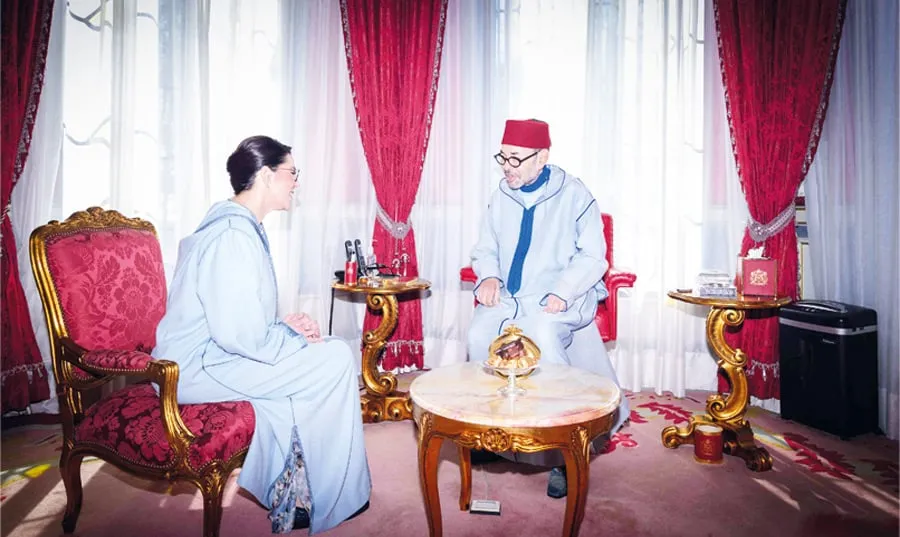

The Historic Appointment of Fatima Zahra Mansouri
In a significant political milestone, the appointment of Fatima Zahra Mansouri as the Prime Minister of Morocco marks a transformative moment in the nation’s governance. This decision, made by King Mohammed VI, aligns with Article 47 of the 2011 Constitution, which stipulates that the monarch appoints the head of government from the party that secures the majority in the parliamentary elections. As Mansouri embarks on her journey, engaging in extensive consultations with party leaders to shape the anticipated ministerial cabinet, her appointment has sparked a multitude of articles and social media discussions, analyzing the implications of this unprecedented shift in Morocco's political landscape.
Political analyst Abdullah Tourabi emphasizes that Mansouri's effectiveness will not be measured by her gender but by the caliber of the individuals she selects for her cabinet, which he insists must be politically significant and morally credible. He expresses concerns about whether the new government will be formed based solely on numerical strength or if it will strive to establish a robust political coalition. Critical issues such as the cost of living and anti-corruption legislation, which were central to the criticisms of the previous government under Aziz Akhannouch, will also be pivotal in assessing her administration's early actions.
Challenges and Expectations for the Future
While Shrafat Afailal, a former minister and leader in the Progressive Socialist Party, believes that Mansouri's appointment signifies a leap from mere participation in decision-making to forging a new chapter in modern Moroccan history, Bouthaina Qarouri, head of the Zahra Forum for Moroccan Women, cautions that royal appointments do not automatically confer advantages. She suggests that the true measure of Mansouri's success will depend on her capacity to combat corruption and address the pressing social and economic challenges facing Moroccans, including rising living costs and unemployment. The hope is that Mansouri will adopt a governance style that prioritizes accountability and transparency, distancing her administration from the practices observed in the former government.
Academic Idris Kanburi predicts that a female-led government will prompt a shift in political attitudes toward governance in Morocco. He notes that women’s associations may experience a divide between political support for the government and feminist advocacy, with some factions potentially using Mansouri's leadership to critique traditional male-dominated political structures. He adds that her appointment could serve as an opportunity for the Authenticity and Modernity Party to rebrand itself as a progressive force in Moroccan politics.
As the discourse surrounding Mansouri’s leadership unfolds, questions arise about whether she can successfully navigate the challenges that have historically plagued male administrations. Academic Tijani Boulaali posits that this appointment transcends a mere change in leadership; it symbolizes a broader political shift. He stresses that the focus should not solely be on her gender but on her ability to implement tangible policies that address the concerns of the Moroccan populace. Similarly, researcher Abdessalam Fazzazi asserts that her leadership will test the principles of parity and equality in Moroccan politics, potentially paving the way for greater female representation in decision-making roles.
The sociopolitical implications of Mansouri's appointment are profound, as it moves the conversation from mere representation to genuine leadership. Dr. Moulay Youssef Wakili points out that her legitimacy will hinge on her ability to convert political capital into meaningful outcomes, raising critical questions about how her government will operate and its capacity to meet the socio-economic expectations of citizens. As Morocco embarks on this unprecedented journey under the leadership of a woman, the nation watches closely to see whether this shift will lead to substantive changes in governance and societal engagement.
As reported by alquds.co.uk.