
The Events of Ceuta/Sebta: A Reflection of Geopolitical Dynamics
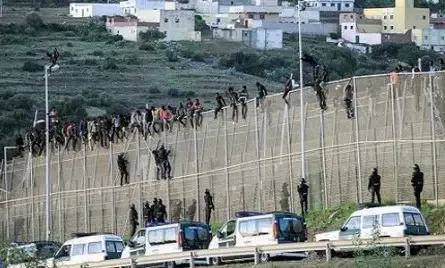
On July 30 and 31, significant border crossings occurred at Ceuta/Sebta, events that have been extensively covered in German-speaking media, often as if they directly impacted Germany itself. It is crucial for readers to understand the unique status of these Spanish exclaves on the Moroccan Mediterranean coast. These regions operate under an autonomous governance structure, belonging to the Spanish kingdom and hence part of the European Union, yet they are not included in the Schengen Area. Furthermore, they are geographically separated from the Spanish and European mainland by the Mediterranean Sea, which means that no migrant will find themselves at an asylum facility in Berlin, Munich, or Cologne tomorrow. However, the true implications of the recent occurrences primarily concern the local region, revealing themselves more clearly when one steps back from the narrow confines of daily politics and considers the broader shifts that have been influencing the western Mediterranean for years. The crisis was not merely an isolated incident but rather a magnifying glass for the tectonic changes in the relationship between Spain and Morocco, as both nations seek a delicate equilibrium in a newly emerging regional order. Events like these often provide opportunities for political entities to introduce domestic issues, similar to how Italian Prime Minister Meloni closed borders with Spain despite Italy receiving more refugees from North Africa than Spain. This is frequently accompanied by heightened fears regarding rising nations that were once colonies, such as Morocco, which has come under suspicion of having instigated the events of July 30 and 31, 2026, to exert pressure on Spain and Europe.
In an interview with Cadena SER on August 31, Spanish Prime Minister Pedro Sánchez clarified that reports from the CNI intelligence agency found no evidence of Moroccan authorities' involvement in the escalation. He denounced the accusations as 'dangerous' and 'unfounded,' simultaneously praising the 'immediate' coordination with Rabat. This endorsement is notable and politically significant, reflecting a deeper understanding in Madrid that the stability at the southern border is secured not solely through border control but rather through a complex web of trust, geopolitical interests, and historical sensitivities.
Understanding the Legal Context of the Crisis
The events of July 30 and 31 can only be fully comprehended when considering the legal context surrounding them. We will refrain from delving into the socioeconomic backgrounds of migration dynamics across the African continent, which have been explored in numerous studies. A ruling from the Spanish Supreme Court on July 8, 2026, ostensibly prohibited the immediate rejection of individuals arriving by sea at Ceuta/Sebta. This decision was quickly reinterpreted on social media as a perceived invitation. On August 25, Spanish Defense Minister Margarita Robles referred to a 'magnet' created by a simplified interpretation of this ruling. Facebook groups spread the message that the border was 'open.' Concurrently, misinformation circulated regarding a supposed reduced Moroccan police presence during the throne celebrations. The mobilization was not centrally orchestrated but was a form of digital self-organization. The rapid dissemination of information overwhelmed traditional state security mechanisms, a pattern observable in various European border regions. The crisis illustrates how border policy in the digital age is shaped by dynamics that elude state control and can create new realities in mere seconds.
On August 2, Morocco announced that it had reacted proportionately based on early warning signals and had been combating smuggler networks. Sánchez estimated the scale of the crisis at around 70,000 border crossings, with nine out of ten individuals having since returned. These figures highlight that the operational cooperation between Rabat and Madrid functions despite political tensions, with both governments sharing a vested interest in preventing the events from escalating into a structural crisis. While security cooperation is emphasized by both sides, the judicial realm presents a different reality. Moroccan Justice Minister Abdellatif Ouahbi indicated on August 12 that his ministry was considering suspending the extradition agreement with Spain, as several transfers of wanted individuals had failed due to suspects suddenly becoming untraceable or scheduled handover appointments being canceled. Ouahbi referred to 'incomprehensible' processes and called for reciprocity. Additionally, regarding the return of unaccompanied minors from Ceuta/Sebta, Rabat urged Spain to eliminate administrative obstacles that delayed family reunifications.
This conflict illustrates that operational cooperation at the borders does not automatically translate to other political fields. The judiciary is an area particularly susceptible to mistrust, where political signals can swiftly have structural repercussions. The events underscore that the relationship between Rabat and Madrid is not solely defined by shared interests but also characterized by institutional asymmetries that become apparent during moments of heightened political sensitivity. While Madrid regards the territorial question surrounding Ceuta/Sebta and Melilla as 'definitively resolved,' Rabat employs a more subtle form of historical communication. During the Mawlid celebrations at the royal palace, the Minister of Islamic Affairs, Ahmed Taoufiq, recalled two scholars closely associated with Ceuta/Sebta: Qadi Ayyad and Abu al-Abbas al-Azafi. Moroccan commentator Aziz Daouda interpreted this mention as indicative of the centuries-old cultural intertwining of the city with the Moroccan sphere—long before modern nation-states emerged. Although Rabat did not issue an official statement, this historical recollection serves as a quiet yet precise diplomatic marker, reminding us that territorial questions are not solely defined by contemporary legal frameworks but also by historical continuities deeply embedded in the political culture.
The crisis unveils a deeper dynamic that has been scarcely examined in German-speaking reports: Ceuta/Sebta is not merely a border area but a geopolitical sensor for the power architecture in the western Mediterranean. Since Spain supported the Moroccan autonomy plan for Western Sahara in 2022, relations with Algeria have become severely strained. Madrid is now striving for normalization—a process that Rabat is watching closely. For Morocco, Algeria's influence on the Western Sahara issue is a strategic focal point. Any rapprochement between Madrid and Algiers alters the regional balance. In this context, Ceuta/Sebta and Melilla are not 'bargaining chips' but indicators of how Rabat assesses the regional situation. Thus, the events at the end of July must also be understood as an expression of geopolitical sensitivity that extends far beyond immediate border policy.
Prime Minister Sánchez leads a fragile coalition without a stable majority. The conservative PP and the far-right Vox party are leveraging the events in Ceuta/Sebta to pressure the government. A change in government could shift Spain's position on the Western Sahara issue once again—a risk that Rabat has calculated. The crisis illustrates how closely Spain's foreign policy stability is tied to its domestic political landscape. The territorial question possesses a remarkable rhetorical reflection. Spain demands the return of Gibraltar, arguing from the standpoint of territorial integrity and colonial continuity. Morocco employs similar argumentative patterns concerning Ceuta/Sebta and Melilla. While the legal cases are not directly comparable, politically, both states reveal how they utilize historical narratives to legitimize their positions. The crisis highlights that territorial issues in the western Mediterranean cannot be viewed in isolation but are part of a larger geopolitical grammar. It also raises numerous unresolved questions: what is Britain doing on a peninsula in the Mediterranean connected to the Spanish mainland, and why does Spain insist on maintaining two exclaves on the Moroccan Mediterranean coast? How do two NATO partners continue to engage with each other, or are they merely two kingdoms that claim to be closely linked?
The joint hosting of the 2030 FIFA World Cup forces both sides into functional cooperation. This project acts as a strategic framework that prevents operational tensions from becoming structural fractures. The World Cup is not merely a significant sporting event but a geopolitical project that will shape relations between Rabat and Madrid in the coming years. The events at Ceuta/Sebta illustrate that Spanish-Moroccan relations are not defined by individual crises but by the capacity of both governments to balance operational cooperation and geopolitical interests pragmatically. This balance is stable enough to manage border crises yet vulnerable enough to be influenced by legal conflicts, domestic political shifts, or regional dynamics. As long as the Western Sahara question remains unresolved, Algeria redefines its regional role, and Spain's domestic politics remain fragile, Ceuta/Sebta and Melilla will continue to serve as a geopolitical barometer—not as hotspots of crisis but as precise indicators of how the power architecture in the western Mediterranean is evolving.
As reported by maghreb-post.de.