
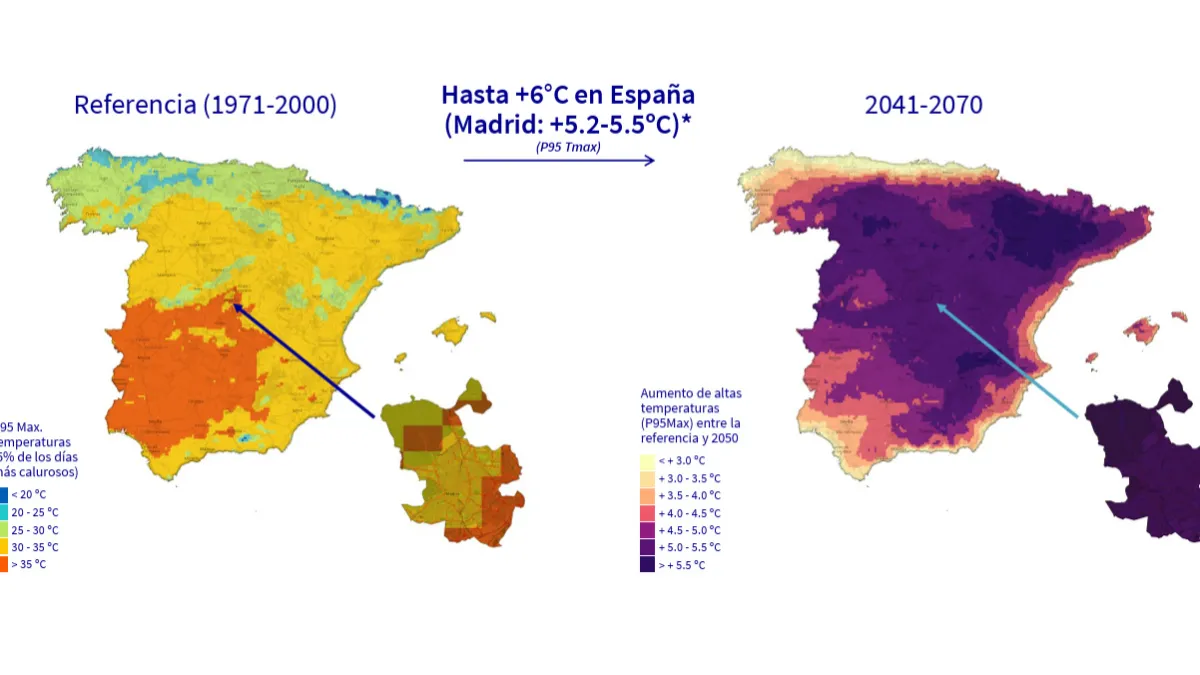

Impacts of Climate Change on Madrid by 2050
With each passing year, temperatures rise, winters become milder, and summers endure longer and more intense heatwaves, as evidenced by the current weather patterns. Unfortunately, these trends are expected to worsen if we fail to implement effective climate mitigation measures. The AXA insurance company, through its foundation, has sounded the alarm regarding the dire consequences of climate change on our lives. Renowned for their meticulous risk assessment, AXA has consistently warned about the impacts of climate change, exemplified by their notification to policyholders on the day of the catastrophic DANA event in Valencia. Today, in Madrid, AXA Climate presented a report titled 'Cuidar el presente, proteger el mañana: adaptación climática de la ciudad de Madrid,' which outlines alarming projections for the city’s climate by 2050 if no actions are taken to mitigate these changes.
According to AXA's projections, if current CO2 emission trends and temperature increases persist, we could see maximum temperatures in Madrid rise by between 5.2°C and 5.5°C. This would result in a climate reminiscent of that currently experienced in cities like Marrakech, with Madrid potentially enduring over two months where the perceived temperature exceeds 33°C. The frequency and duration of heatwaves could double, leading to an additional 55 days of extreme heat and 62 extra warm nights each year. This drastic climatic shift would have a profound impact on the city’s economy, with Claudia Ylla, the report’s author, indicating that Madrid could lose up to 16.4% of its per capita GDP solely due to the heat's adverse effects on economic activity. Furthermore, extreme heat is projected to increase workplace accident risks by 17%, resulting in an estimated loss of half a workday per week for each exposed worker. By 2030, Spain could see a loss of approximately 7,700 jobs due to decreased productivity linked to extreme heat.
Future Challenges: Droughts and Floods
Experts predict that Madrid will experience a repeating climate pattern characterized by diminished rainfall and increased intensity of downpours. By 2050, the city will remain highly susceptible to urban flooding caused by torrential rains and, to a lesser extent, the overflowing of rivers such as the Manzanares, Jarama, Guadarrama, Henares, or Alberche. Conversely, the report also highlights the looming threat of water stress. It indicates that by 2050, the annual water demand in Madrid may surge from three times to 4.5 times the available water supply due to reduced average rainfall and greater variability. The vulnerability of Madrid's water system largely lies within its reservoirs, which supply most of the water consumed in the region. A decline in precipitation diminishes the replenishment of critical reservoirs like Valmayor and El Atazar, weakening the system's safety margin. Additionally, the concentration of risk between July and October renders Madrid increasingly vulnerable to prolonged periods of water scarcity, according to Ylla, the report's author and researcher at AXA Climate.
The report also underscores the accelerating pace of global warming in regions such as Europe, which is experiencing the fastest temperature increases, approaching an average rise of nearly 2.5°C since the pre-industrial era. Spain is not immune to this trend, with national average temperatures rising by approximately 1.7°C, setting new heat records year after year. Over the last decade, the economic impacts of the climate crisis in Spain have exceeded €20 billion, disproportionately affecting the most vulnerable populations, infrastructure, and the normal functioning of economic and social life.
In light of these predictions, AXA emphasizes the urgent need to act simultaneously on two interconnected fronts: mitigation, by drastically reducing greenhouse gas emissions, and adaptation, by preparing cities, productive sectors, and social systems to withstand the inevitable effects of warming.
As reported by elindependiente.com.
