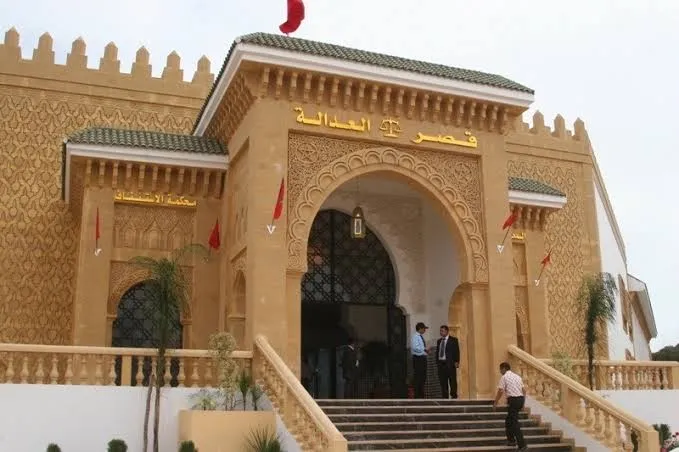

The tragic collapse of two buildings in the "Future" subdivision of the Al-Masira district in Fes has once again captured public attention, particularly following the recent decision by the financial crimes division of the Court of Appeal in Fes to postpone the trial of those involved in this grievous case until September 29. This development extends the judicial process surrounding one of the most painful architectural disasters witnessed in the scientific capital of Morocco in recent years. The collapse, which occurred in December 2025, tragically claimed the lives of 22 individuals and left an additional 16 injured. Investigations have since expanded to include elected officials, civil servants, security personnel, engineers, and contractors.
The postponement of the trial is not indicative of any fundamental changes to the case or a reduction in the number of prosecutions; rather, it is intended to provide defendants with additional time to establish their legal defenses. This delay comes after the absence of lawyers at the session for the second consecutive time due to their boycott of judicial services as a protest against current legal regulations. The case involves eight defendants who are currently in custody and 11 others who are free on bail, including the president of the Zawiya district, Ismail Al-Jai Al-Mansouri, and his deputies, as revealed by information published after Tuesday's session.
Notably, the name of Ismail Al-Jai Al-Mansouri has resurfaced prominently in the judicial arena, particularly since he was among the officials investigated from the outset, alongside his deputies, Abdullah Al-Hadaf from the National Rally of Independents party and Al-Khamar Samouh from the Authenticity and Modernity party. Furthermore, the case extends beyond mere political disputes within the district council; it encompasses a judicial file linked to a humanitarian tragedy that has left dozens of victims in its wake. Technical and judicial investigations have revealed that additional floors were constructed without obtaining necessary legal permits, the use of substandard building materials, and illegal transactions regarding what is known as the "right to air." Additionally, violations related to the issuance of sale contracts and housing certificates were flagged by the public prosecutor as contrary to legal norms. Consequently, 21 individuals have been charged with offenses including involuntary manslaughter, bribery, mismanagement of non-transferable property, and issuing administrative certificates to individuals who were not entitled to them.
What makes this case particularly intriguing is that the investigation did not stop at the responsibilities associated solely with the construction process but sought to dismantle the network of administrative and technical responsibilities surrounding the collapsed properties. This aspect of the investigation has broadened the scope of prosecution, encompassing elected officials, security personnel, civil servants, engineers, contractors, and intermediaries. Thus, the upcoming trial on September 29 promises to be more than just a legal proceeding for specific individuals; it represents a genuine judicial test to determine whether there are intertwined individual, administrative, and technical responsibilities that contributed to the tragedy, each according to their level of involvement.
Furthermore, the postponement of Tuesday's session should not be interpreted as a closure of the file or a withdrawal from prosecutions; it simply delays the judicial confrontation to a later date, allowing for the proper conditions for trial to be established and for the defendants to exercise their right to defense. The rejection of requests for temporary release for the detained defendants keeps eight individuals in pretrial detention until their requests are evaluated according to the court's discretion.
Amidst these judicial proceedings, the broader questions remain suspended in the public's mind: How were additional floors constructed? How were properties traded and documents and certificates associated with them issued? Most importantly, was the tragedy a result of isolated individual errors, or will the investigation reveal a complex system of interrelated flaws and responsibilities? These inquiries gain significance due to the fact that this disaster involved the collapse of two buildings, rather than being a minor incidental occurrence, and it resulted in victims who paid with their lives for potential shortcomings in the construction and urban planning system. Thus, it is crucial that the trial, independent of political and electoral considerations, clarifies where each party's responsibility begins and ends and who legally bears the consequences of the decisions and actions leading up to the buildings' collapse.
As for Ismail Al-Jai Al-Mansouri, being prosecuted while free does not imply guilt, nor does his inclusion among the accused preclude him from a presumption of innocence; the final determination rests with the court after discussing the evidence, defenses, and hearing from all parties involved. However, his position as the president of the district council places his involvement in this case under significant political and public scrutiny, elevating the management of urban and administrative affairs in the district to an unprecedented level of examination.
Additionally, it has been reported that Al-Mansouri's presidency of the Zawiya district council has not always been free from local political controversy; the council has experienced disputes over management practices, quorum attendance, and the presence of certain members. Some councilors have criticized the management style of the council, while the president has presented a counter-narrative, emphasizing his adherence to the law and rejecting what he perceives as undue pressure from some elected officials. Although these political dynamics do not establish a direct connection to the current criminal case, they help explain the heightened interest in the name of the district president in the Fes political landscape.
As all eyes now turn to the session on September 29, the "Future" tragedy stands at a critical juncture. After months of investigations, expert evaluations, and interrogations, the public expects the data revealed in the investigations to materialize into facts discussed openly in court, with clear responsibilities delineated, free from generalizations or settling of scores.
Ultimately, the strongest message that can emerge from this case is not merely the issuance of verdicts against those proven responsible, but that this tragedy becomes a pivotal moment in how construction and urban monitoring is conducted in Fes, ensuring that violations beginning with a piece of paper, a permit, or an additional floor do not culminate in a tragedy resulting in dozens of coffins. The loss of 22 lives is not just a statistic in a legal file; it represents souls, families, and a city still awaiting a clear answer to the question of responsibility.
As reported by fes24.com.