In the face of sweeping economic, social, and cultural transformations both nationally and internationally, the urgent need for a renewal of leftist political thought in Morocco has become increasingly prominent. The Moroccan left is currently grappling with a multifaceted crisis that is influenced by global factors such as globalization and the individualization of social movements. Additionally, internal divisions, intellectual stagnation, and a shift towards institutional and electoral strategies have significantly weakened its foundation. Prominent figures within the left are now calling for a historic reconciliation with marginalized regions, the integration of critical issues such as the Sahrawi conflict and advanced regionalization, as well as a focus on the evolving nature of work, climate justice, scientific research, and the reform of public services as central tenets of a new progressive agenda.
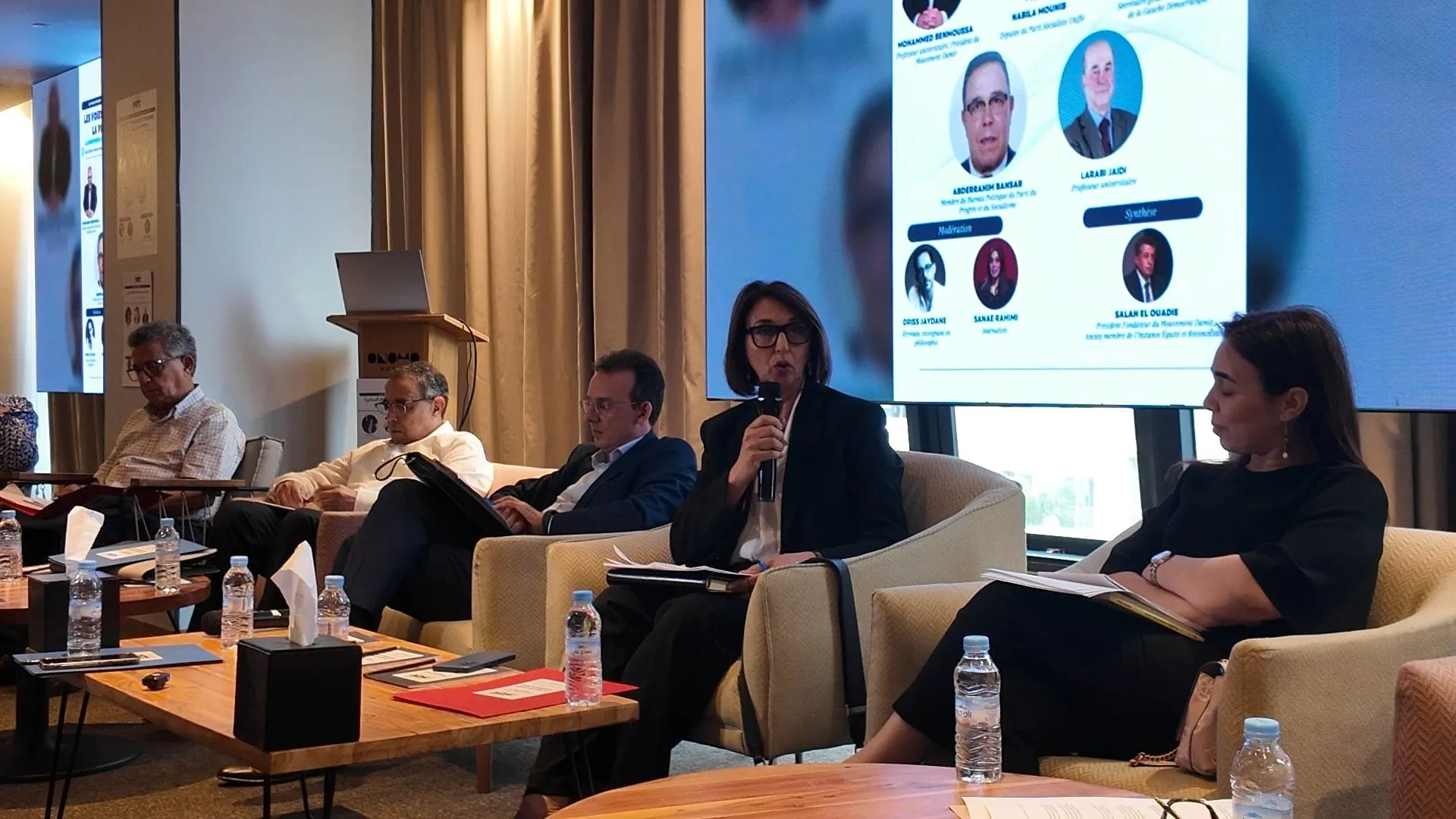
Amidst these challenges, the Moroccan left is urged to cultivate a genuine relationship with the youth and to leverage social movements and digital platforms to foster a resilient grassroots support base. This imperative resonates strongly in light of Morocco's rapidly changing societal landscape, where restoring trust between citizens and institutions is viewed as crucial for the country's democratic future. In this context, the Damir movement recently convened an intellectual roundtable titled "Paths to Renewing the Left," which sought to explore the capacity of the entire Moroccan political spectrum to generate innovative ideas and provide pragmatic solutions that resonate, particularly with the youth.
The Need for Historical Reconciliation and Future Challenges
During the roundtable, Nabila Mounib, a deputy from the Unified Socialist Party (PSU), emphasized the historical trajectory of the Moroccan left, recalling its foundational struggles, particularly in the national liberation movement and the quest for a democratic and equitable Morocco. However, significant disruptions to this project emerged, notably from the mid-1960s onward, marked by the interference of international financial institutions and the gradual dismantling of public education. Mounib highlighted that the educational system, which once embodied national spirit and progress, has been deliberately undermined to stifle critical consciousness.
Today, as Morocco confronts a "global financial, economic, military, and technological complex" that dictates terms on a worldwide scale, the left can no longer rely on outdated paradigms. Mounib argues for an urgent "general amnesty for historical reconciliation" with marginalized communities and regions. The renewal of leftist thought, she insists, must incorporate new digital and artificial intelligence tools, alongside a concerted return to grassroots activism.
As global automation looms, threatening to displace millions of jobs, the left must forge alliances with social movements to advocate for models that prioritize the eradication of illiteracy, substantial support for scientific research, environmental preservation, and the revitalization of public health and education services.
Diagnosing the Crisis and Theoretical Refoundation
Abderrahim Bansar, a member of the political bureau of the Party of Progress and Socialism (PPS), provided a systemic analysis of the current crisis afflicting the Moroccan left. He rejected any form of counterproductive self-flagellation, asserting that this crisis is not unique to Morocco; rather, it reflects a complex interplay of objective and subjective factors. On an objective level, the left operates within a globalized, hyper-individualized environment, where social media has transformed collective action, diminishing the influence of traditional party structures and weakening trade unions.
Subjectively, the left suffers from internal divisions, a decline in its intellectual base in favor of purely electoral strategies, and a retreat into institutional roles that neglect grassroots activism. Bansar contends that the renewal of the left cannot occur without a rigorous engagement with the dialectic between theory and practice. Theory must guide action, while practice must challenge and evolve theoretical concepts. He advocates for significant research initiatives and in-depth studies on pressing issues that require clear responses, including national questions related to autonomy projects and advanced regionalization, the analysis of new labor market mutations (such as informal work, digital precarity, and structural youth unemployment), and the integration of climate justice into social struggles.
The ultimate goal of this renewal is to break away from partisan isolation and build broad alliances around a progressive societal project capable of shifting the balance of power in favor of democracy.
As reported by lebrief.ma.