
Understanding the Shifting Landscape of Global Conflict
Mustapha Sehimi critically examines the progressive brutalization of the world, a phenomenon fueled by the resurgence of warfare, the diminishing promises of peace, and the pervasive spread of violence within societies. The rule of law now faces increasingly profound tensions, revealing a disconcerting landscape where hopes for peace and progress begin to crumble under the weight of more belligerent narratives. This paradox presents a disheartening reality where aspirations for human rights and cooperation coexist with a troubling acceptance of violence, suggesting that the protective barrier of the rule of law may ultimately yield to the dictates of state interests.
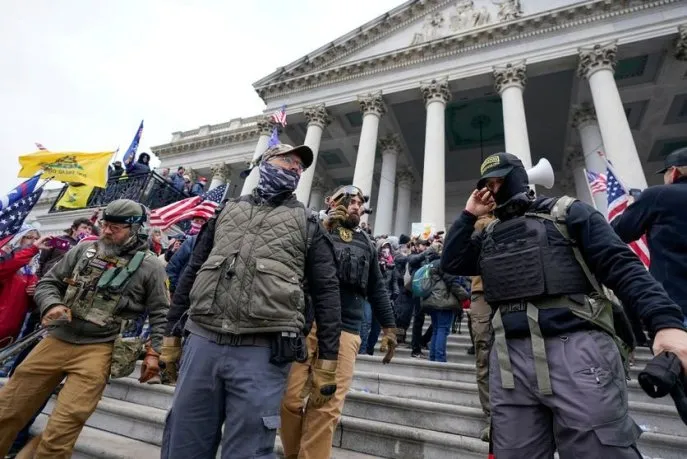
Today's global stage is marred by armed conflicts igniting at the very gates of Europe and the re-emergence of geopolitical rivalries. We find ourselves distanced from the post-World War II myth of peacekeeping. Is the world truly on a path toward brutalization? Currently, two diverging worldviews are at play: one that celebrates a joyous globalization purported to bring peace and security through prosperity, and another that highlights the relentless rise of new sources of conflict. For the latter, the notion of living in a peaceful world is increasingly questionable. Aside from the relatively tranquil period between 1945 and 1975, when the West externalized its conflicts onto other continents, one might argue that true peace has been an elusive dream. For instance, the United States, while seemingly insulated from wars on its own soil for an extended period, is home to 17.2 million veterans, many of whom—approximately 4.4 million—are products of military engagements initiated since the September 11 attacks. Alarmingly, these veterans are often active within extreme right-wing militias, contributing to a societal brutalization that has taken root since Barack Obama’s administration.
The Complex Dynamics of Violence and Warfare
The term “brutalization” serves not as a diagnosis but as a conceptual tool to analyze the diffusion of conflict and violence both between and within societies. Originally proposed in the 1990s to describe the social violence and political radicalization following World War I, this concept encapsulates how violence permeates societal fabric through desensitization over time. It raises the question of why Western nations appear so taken aback by recent armed conflicts in the Middle East and Ukraine that now threaten broader escalation. This surprise can be attributed to psychological factors; consider a hypothetical scenario in a nuclear control room where an alarm blares, alerting personnel to an impending threat—initially met with disbelief, it reflects a denial reminiscent of attitudes prevalent before the outbreak of World War I and into the 1930s.
Historically, following World War II, European nations built their identities on three foundational promises: abundance, concord, and emancipation. The establishment of a vast market within the European Union was designed to prevent the resurgence of war at borders, a strategy that worked effectively for some time. However, the myth of peace maintained through market openness and resource distribution is now facing a terminal crisis, with conflict re-emerging at all levels—international, national, and social. Strikingly, the lessons learned from the catastrophic wars of the 20th century seem to have been lost. The modern warfare paradigm has shaped these three promises into preventative remedies against the use of arms, yet since the 1970s, faith in these ideals has waned significantly. Although proclaimed, the belief in their efficacy has diminished, while new promises have emerged, including neoliberal Thatcherism, individualism, and a reawakening of religious fervor.
The intersection of these competing promises shapes our current and future realities, often resulting in conflict where parties leverage these tensions to their advantage. For example, Russian narratives criticize the moral decay of Western societies, while Ukrainian movements like Femen emerge in response. During the Siege of Fallujah, Iraq, for instance, Islamist forces deployed suicide trucks while American soldiers blasted rock music to disrupt their actions, epitomizing the chaotic interplay of ideologies in conflict.
Ultimately, the armed conflicts, regardless of their nature, often lead to mass atrocities. Analyzing these events reveals several layers of causation, starting with situational factors that generate emotions such as fear and resentment, leading to retaliatory actions. The context of warfare—whether offensive or defensive—also plays a crucial role, as does the way combatants express their ethnic, racial, political, or religious differences, which can exacerbate the risk of violence. The objectives of war, including political ambitions and narratives provided to combatants, further complicate this landscape. The desire for revenge in the wake of terrorist acts, the irredentism of Hamas, and the extremism of current Israeli leadership all indicate a conflict fraught with potential for widespread crimes. The rise of xenophobic political parties and authoritarian doctrines in democratic nations raises concerns that such dynamics may herald an era marked by more frequent and violent armed conflicts.
As reported by quid.ma.