
In the heart of Iran, a silent mountain stands unyielding, devoid of water or trees, yet it harbors what might be the remnants of Iran's nuclear program. This mountain, fortified by Tehran as if preparing for an existential battle, is the site that has drawn the attention of global powers, especially after former President Donald Trump threatened to destroy it, regardless of the cost involved in such an endeavor.
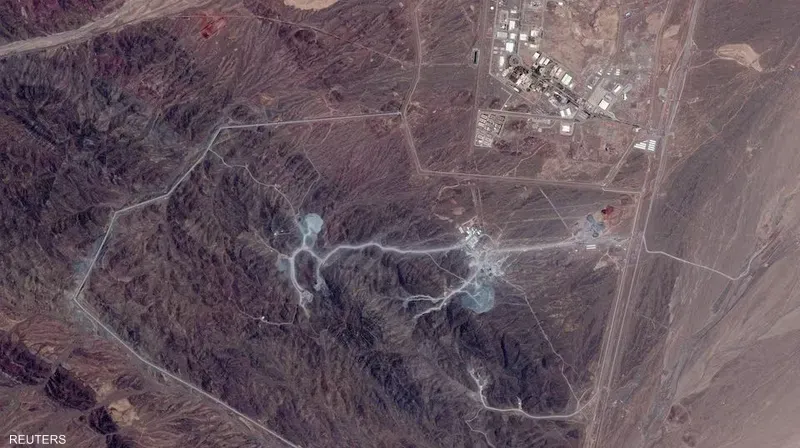
This is not merely a new military installation; it is a mountain that could alter the course of conflict and potentially reshape the entire region. Located approximately 225 kilometers south of Tehran, this mountain was largely unknown outside intelligence circles until recently. The Iranians call it Kuh Kolang Gaz Na, while some Western reports refer to it as the Axe Mountain.
Today, this mountain has become a focal point in statements from the U.S. President himself, who has discussed the possibility of a strong imminent strike against the site. But how did this barren rock formation in the Iranian plateau evolve into one of the most perilous targets in warfare? Why does the President of the United States speak of it as if it were a military adversary in its own right?
The Nuclear Nexus: Natanz and Beyond
To understand the significance of this mountain, one must return to Iran's most notorious nuclear site: Natanz. Just a few kilometers from the mountain lies the Natanz complex, which has served as a crucial hub for Iran's nuclear program for nearly two decades. This site has experienced nearly every form of attack imaginable; from cyber assaults that disrupted its operations to mysterious explosions that damaged its facilities, and acts of sabotage for which no group has claimed responsibility.
In 2020, a mysterious explosion destroyed a facility for assembling centrifuges within the complex. From that moment on, Tehran learned a clear lesson: anything built above ground is vulnerable and can be destroyed. The solution was both simple and harsh: if you want to protect something, bury it.
Immediately following that explosion, Iran began excavation inside the mountain. By 2021, it announced that the site would be used for assembling centrifuges, serving as a replacement for the destroyed Natanz facility. According to estimates from the Institute for Science and International Security, the intended production capacity was approximately six thousand centrifuges annually.
This was not Iran's first venture into the depths of mountains. Previously, it constructed the Fordow enrichment facility inside a mountain near Qom, surprising the world when it was revealed. However, what is unfolding at Axe Mountain appears to be deeper, larger, and more enigmatic than Fordow.
So what exactly lies within it? The precise answer is that no one knows. The International Atomic Energy Agency has never entered the site; no inspector has ever tread its tunnels, nor has any camera captured its interior, and no official report has described its equipment. The only information the world possesses comes from satellite images that monitor the mountain from above, unable to penetrate its depths.
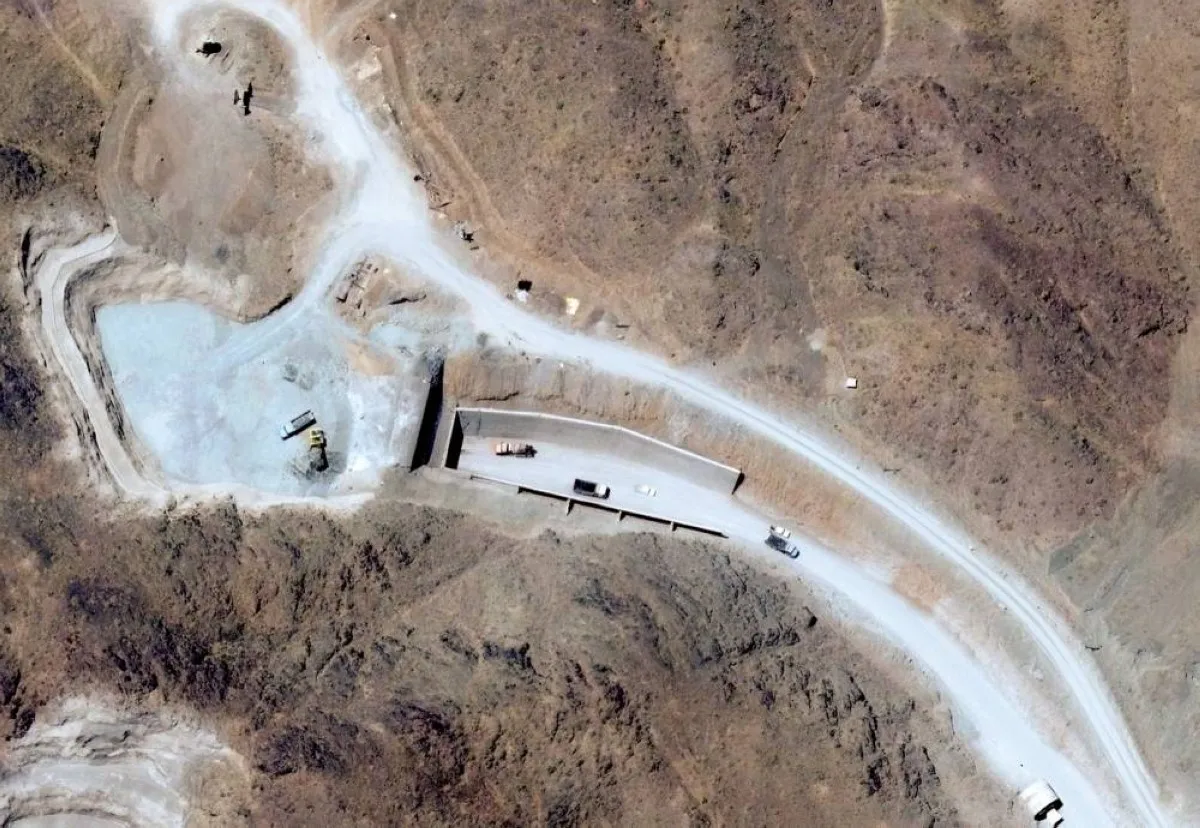
Yet these images reveal enough to raise alarms. The mountain rises over 1,600 meters above sea level, and estimates suggest that facilities have been dug to a depth of nearly one hundred meters into the rock. Security fences surround the site, and tunnel entrances can be seen from the west, east, and south, resembling a complete underground city with multiple entrances, yet no windows overlooking the outside world.
The Wall Street Journal reported on an Israeli intelligence assessment stating that Iran transferred centrifuges to this site last fall. However, the ambiguity remains: were these devices moved merely for storage and protection? Or is it to establish a new enrichment facility operating in secrecy?
The Implications of a Granite Fortress
The difference between these scenarios is monumental. If the site is merely a storage facility, then Iran is securing its equipment. However, if it is an operational facility, this implies that the nuclear program is not only hiding but is also rebuilding itself in the depths. Why this mountain specifically? The answer is survival.
In the summer of 2025, the United States executed an operation dubbed 'Midnight Hammer,' targeting Natanz, Fordow, and Isfahan—three sites considered pillars of Iran's nuclear program. These facilities were bombed, with Washington declaring a crippling blow to the nuclear project. Yet one site remained untouched: Axe Mountain.
Instead of being bombarded, construction within the mountain continued, hastening after the attacks, making it one of the few facilities to emerge unscathed from the confrontation. It has become the last survivor of a war that was theoretically meant to erase all connections to Iran's nuclear program. More intriguingly, Tehran did not merely preserve it but began to enhance its fortifications.
High-resolution satellite images have shown new developments at one of the eastern tunnel entrances, with quantities of rock and dirt piled over the tunnel opening and reinforced concrete structures added to allow for additional layers of rock and concrete. Simply put, Iran is not only burying the facility within the mountain; they are burying the mountain under another mountain—layer upon layer, rock upon rock, transforming the site into a shield made of the earth itself.
Herein lies the more pressing question: can the United States actually destroy it? Surprisingly, Trump himself acknowledged that Iran may have moved its equipment to depths that could challenge even the most powerful American bunker-buster bombs. This is no trivial statement. When the leader of the nation with the largest military arsenal in the world admits that a specific target may be beyond the reach of its munitions, it signals that the battle is no longer between aircraft and installations, but rather between technology and geology.
The U.S. possesses massive bombs designed to penetrate fortifications, having used such weapons against Fordow. However, every bomb has its limits, and each warhead can only reach a certain depth before its power dissipates. When the target is buried under thicker layers of rock, the bomb's power becomes less critical than it appears in military demonstrations.
Trump stated that the Iranians are operating in a new site protected by granite, and that they are seeking to delve deeper. Granite is the key to the story. The Iranians did not choose this mountain randomly; they opted for an extremely tough rock, knowing it could absorb shocks and resist penetration attempts. In Washington, calls are growing to target the mountain before concluding major military operations, with demands to destroy or recover any stock of highly enriched uranium that may have been transferred there.
For proponents of this view, the mountain is not a secondary target; it is the mission that remains unfinished. Yet the U.S. stance itself carries a striking contradiction. Initially, Trump downplayed the site's significance, claiming that the more critical issue was the stockpile of enriched uranium, asserting that Washington was monitoring its location and believed part of it still resided within the facilities that had previously been bombed. Then, on the same day, he directly threatened the mountain, stating a phrase that reveals much: he usually does not speak this way, and if he believed the Iranians could do something about it, he would not have disclosed it.
This raises another hypothesis. A commander preparing for a genuine strike typically does not announce his target in advance before cameras. Disclosing a target may not only be about an impending attack but could also be an attempt to intimidate, exert pressure, negotiate, or send a clear message to the adversary: 'We know where you are hiding, even if you are underground.'
Is the mountain a genuine military target? Or is it merely a bargaining chip yet to be played on the negotiation table? If the site is struck and collapses, Iran could lose its last infrastructure capable of restarting its nuclear program, turning a project that has lasted over twenty years into rubble buried beneath the rocks. However, if the mountain is struck and remains standing, the implications for Washington could be even graver.
Because the entire world will witness that even the most powerful bunker-buster bombs can falter before a mountain. At that point, many countries will receive the message: every strategic project, every secret arsenal, and every sensitive facility can be safeguarded by going deeper. What the United States could lose then is not just a bomb, but the prestige that the bomb confers.
Conversely, if the mountain is not targeted, it will remain a testament that an entire war, with all its aircraft, missiles, and fires, could not conclude the objective for which it was initiated. Therefore, the landscape before targeting the mountain will not be the same afterward.
Washington may find itself facing more perilous options, and discussions about more destructive weapons may intensify, potentially even leading to considerations of using tactical nuclear weapons, despite the enormous risks such actions would pose to the region and the world.
In turn, if Iran loses this site, it might feel it has nothing left to lose, which could escalate the confrontation to a level that no one can control. Since the dawn of history, humanity has sought refuge in the mountains, seeing them as stronger than armies, more enduring than kings, and longer-lasting than wars.
Today, after thousands of years of progress and the creation of weapons capable of annihilating entire cities, humanity returns once more to the same place: the depths of the mountain. And the question hangs over the entire region: who will ultimately prevail? The mightiest military arsenal known to history, or a silent rock that knows neither speech nor surrender?
As reported by attasiaa.com.