
A Widening Gap Between Official Narratives and Social Reality
In Morocco, a stark divide is emerging between the official narrative of the ruling regime and the grim realities that the populace faces daily. As social conditions deteriorate amidst a backdrop of mounting crises, the issues of marginalization and exclusion become increasingly pronounced. While authorities strive to project an idealized image of their policies and achievements, widespread public discontent is bubbling up across various regions of the kingdom, exposing the deep-rooted disparities that official propaganda seeks to obscure.
Local media recently circulated a critical article titled "Where is Morocco Headed?" which sharply critiques the current state of affairs. The piece highlights the contradiction between the promotion of what is termed a 'social state' and the harsh conditions under which citizens struggle to cope with rising living costs, housing issues, and declining purchasing power. This situation is further exacerbated by persistent poverty and unemployment, alongside widening social inequalities.
Protests and Public Discontent Amidst Economic Strain
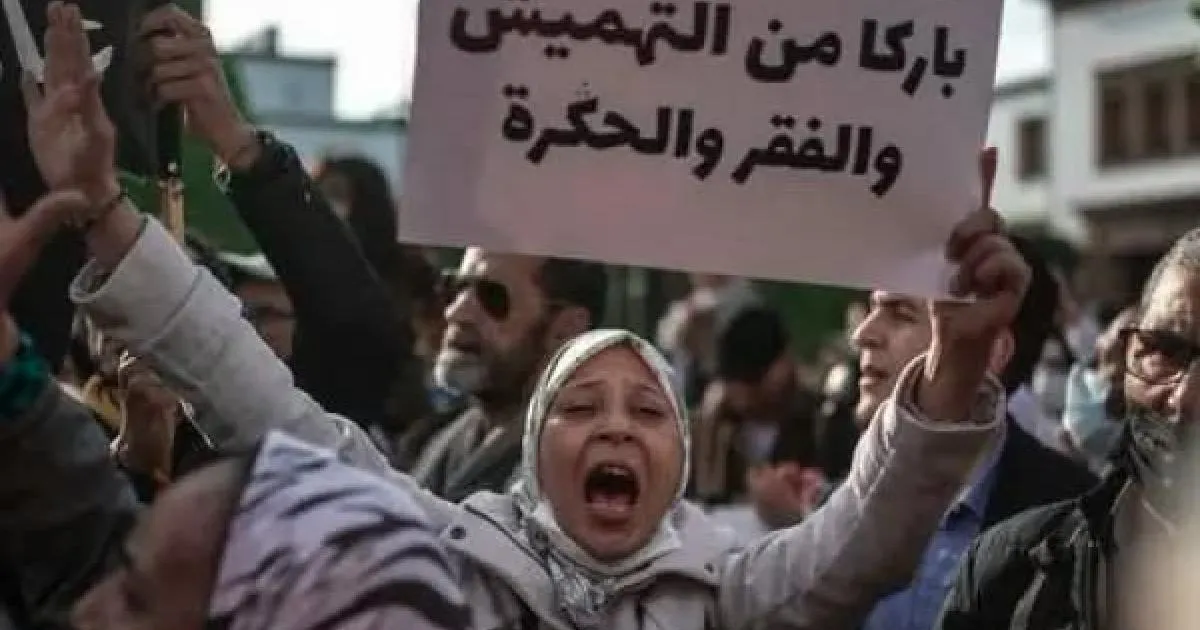
In light of these troubling realities, Morocco has witnessed a surge of protests in recent months across several cities, driven by deteriorating social and economic conditions. Demonstrators have rallied around demands for employment opportunities, public services, and the right to live with dignity. Notably, the participation of young people in these movements has become a significant indicator of the growing frustration against an increasingly repressive security approach that seeks to stifle dissent.
The plight of earthquake victims in the Al-Haouz region further underscores the government's inability to address pressing humanitarian issues. Three years post-disaster, many affected families are still waiting for aid and housing solutions, while protests continue to arise as victims demand their rights. The authorities, however, persist in presenting misleading statistics about reconstruction efforts that fail to reflect the real suffering experienced on the ground.
Simultaneously, millions of Moroccans grapple with a crisis of purchasing power, as soaring prices for essential goods and housing, coupled with rising service costs, have made everyday life increasingly burdensome for low- and middle-income families. Despite ongoing government rhetoric about social programs, these initiatives have proven ineffective in preventing the deepening of living conditions.
These circumstances are intertwined with escalating criticism regarding corruption and mismanagement of public funds. Reports of privileges, influence, and conflicts of interest circulate, while ordinary citizens bear the brunt of the accumulating economic and social imbalances that persist year after year. Politically, the article critiques recent parliamentary elections, suggesting that they merely serve to redistribute roles within the party landscape, while the same regime continues to dominate under the auspices of the ruling authority.
The electoral competition ultimately leads to a mere change of faces and positions, without addressing the fundamental choices that govern the nation, leaving citizens distanced from real decision-making processes.
The article adopts a harsher tone when discussing the normalization of relations with Israel, a process that the Moroccan authorities are intensifying on political, economic, and security levels, even as the occupation continues its aggression against the Palestinian people in Gaza. This trajectory epitomizes a significant disconnection between official policy and public sentiment, which largely rejects this shameful normalization.
Moreover, the analysis notes the electoral participation of the Moroccan Jewish community, following reports that its members are mobilizing for upcoming elections, including discussions surrounding the Moroccan diaspora and potential proxy voting. This initiative is framed within a broader political context aimed at strengthening Moroccan-Israeli ties, criticized as an increasing exploitation of the Jewish dimension in Moroccan politics amid deepening normalization efforts.
The article ties these various threads together as reflecting multiple facets of an increasingly turbulent social and political reality: street protests, families still grappling with their suffering, intensifying living pressures, corruption scandals, and an electoral scene that fails to alter the game. This is juxtaposed with the official push towards solidifying relations with Israel. Ultimately, the article paints a picture of the Moroccan regime grappling with the widening chasm between its political rhetoric and societal realities, relying on a security-driven management of protests and a misleading official narrative that highlights projects and achievements, while social tensions continue to mount and unresolved issues weigh heavily on the lives of Moroccans.
As reported by entv.dz.