
The Disparity Between Official Discourse and Societal Realities in Morocco
In Morocco, a significant divide is emerging between the official narrative presented by the ruling establishment and the grim realities that are increasingly impacting society. This chasm has widened in the face of declining social conditions, the accumulation of crises, and a surge in marginalization and exclusion. While authorities persist in showcasing an idealized image of their policies and programs, widespread public anger is manifesting across various regions of the kingdom, revealing the profound imbalances that official propaganda seeks to obscure.
An article titled "Where is Morocco Headed?" circulated by local media on Monday, critiques these conditions sharply, highlighting what it describes as the contradiction between promoting a so-called "social state" and the harsh realities faced by citizens burdened by the challenges of living costs, housing, and diminishing purchasing power. This critique is particularly poignant as it coincides with the persistence of poverty and unemployment, alongside widening social disparities.
Protests and Political Critique Amid Economic Hardship
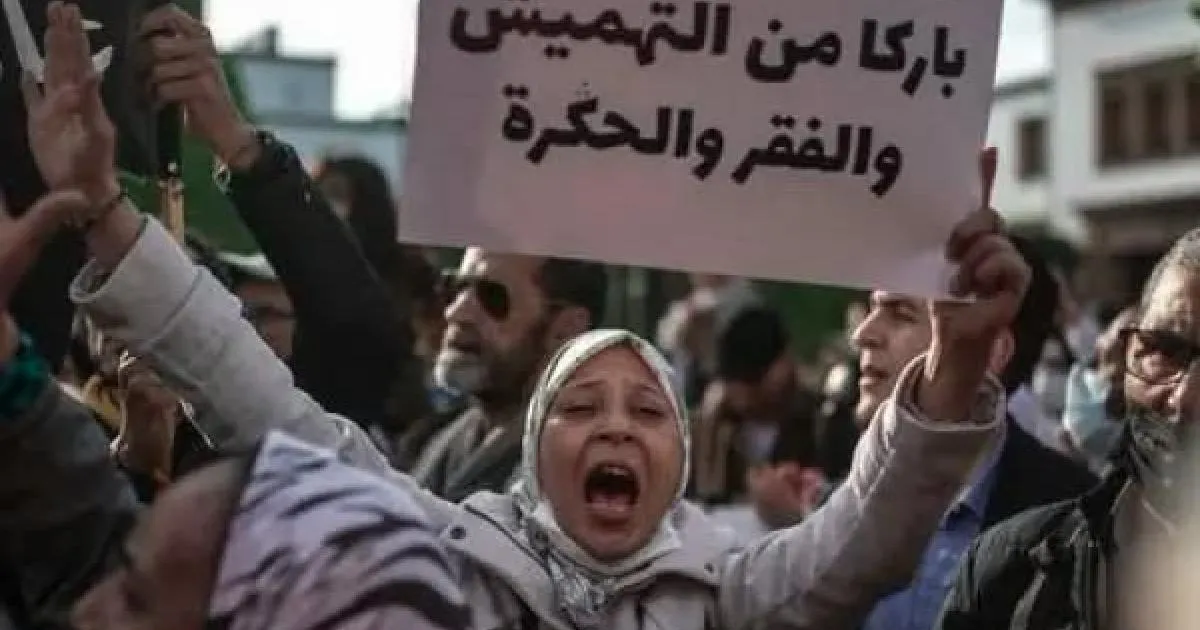
Against this backdrop, the recent period has witnessed widespread protests across several cities in Morocco, driven by deteriorating social and economic conditions. Demonstrators have articulated their demands for employment, public services, and the right to a dignified existence. The participation of youth in these movements has become a prominent indicator of the growing discontent, particularly in the face of an increasingly repressive security approach that seeks to stifle dissent. Furthermore, the ongoing plight of victims from the Al-Haouz earthquake underscores the state's persistent failure to address one of the country's most pressing humanitarian crises. Three years post-disaster, affected families continue to await support and resettlement, while protests by the victims persist, juxtaposed against misleading official reports on reconstruction efforts that fail to accurately reflect the suffering on the ground.
Simultaneously, the crisis of purchasing power looms large for millions of Moroccans, exacerbated by the rising costs of essential goods, housing, and services, which have made daily burdens heavier for low- and middle-income families. This situation unfolds despite government rhetoric surrounding social programs, which have not succeeded in curbing the decline in living standards. These circumstances cannot be divorced from the escalating criticisms regarding corruption and the mismanagement of public funds, as issues surrounding privileges, influence, and conflicts of interest circulate widely, with ordinary citizens bearing the brunt of the economic and social imbalances that accumulate year after year. Politically, the article critiques parliamentary elections, suggesting that they merely serve to redistribute roles within the party landscape, while the overarching governance system remains unchanged under the grip of the ruling establishment.
The electoral competition, as articulated in the piece, ultimately results in a change of faces and positions without impacting the fundamental choices that govern the nation, leaving citizens distanced from actual decision-making circles. The article takes on a more critical tone when discussing Morocco’s normalization with Israel, a path that the ruling authorities continue to strengthen across political, economic, and security dimensions, all while Israel's aggression against the Palestinian people in Gaza persists. This trajectory is viewed as a stark illustration of the disconnection between official policies and the popular opposition to disgraceful normalization.
Additionally, the analysis addresses the electoral involvement of the Moroccan Jewish community, following reports about efforts to mobilize its members for upcoming elections, including discussions around Moroccans living abroad and the possibility of proxy voting. This step is contextualized within a broader political framework linked to the enhancement of Moroccan-Israeli relations, critiquing what is perceived as an increasing use of the Jewish dimension in Moroccan political discourse, coinciding with the deepening of normalization.
The article weaves these various threads together, presenting a multifaceted picture of an increasingly tumultuous political and social reality: street protests, families still grappling with unresolved hardships, mounting living pressures, corruption scandals, and an electoral landscape that fails to alter the rules of the game, all parallel to an official push to solidify ties with Israel. Thus, it paints a portrait of the ruling establishment confronting a widening gap between its political rhetoric and societal realities, relying on a security-driven approach to manage protests and a narrative focused on showcasing projects and achievements through misleading public relations maneuvers, while social unrest and unresolved issues continue to burden the lives of Moroccans.
As reported by entv.dz.