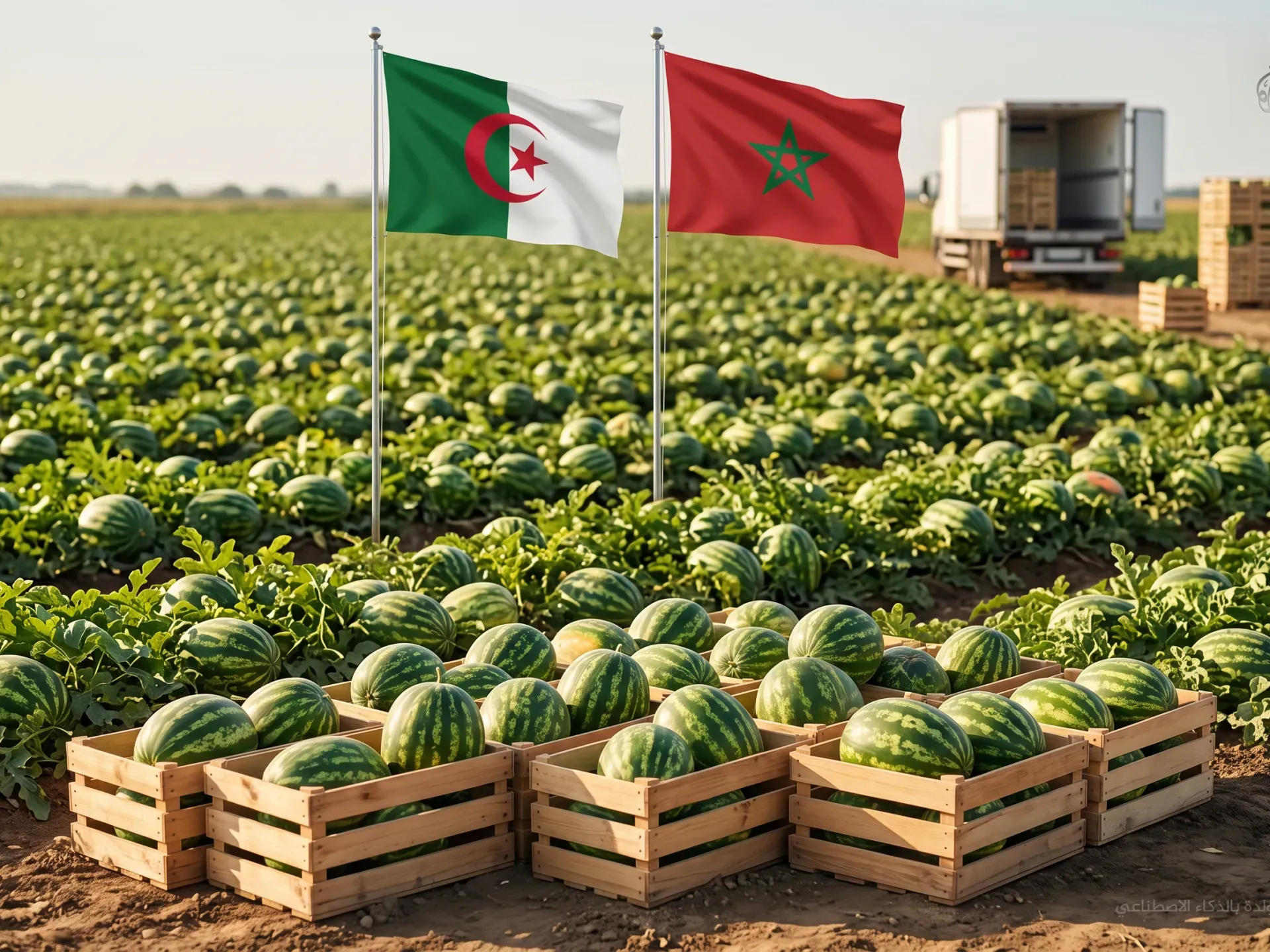

Recent data from the Food and Agriculture Organization of the United Nations (FAO) unveils significant insights into the watermelon production landscape in the Arab world, revealing that these countries collectively produce around 6 million tons of this popular fruit amidst the challenges posed by heat and drought. Notably, Algeria has emerged as the fourth-largest producer globally, while Morocco ranks sixth in exports. These figures highlight the Arab region's substantial presence beyond mere local consumption, as it positions itself on the global agricultural map.
In total, 20 Arab nations reported watermelon production figures amounting to approximately 6.02 million tons, which accounts for 5.7% of the world’s total production of 104.96 million tons. Algeria alone contributes 41.9% of the Arab watermelon harvest, underscoring its leading role in the region's agricultural output.
The relationship between the Arab region and watermelon cultivation is not a recent phenomenon. A study conducted by a team led by Oscar Alejandro Pérez-Escobar at the Royal Botanic Gardens examined watermelon seeds dating back around 6,000 years from Libya and another set from northern Sudan approximately 3,300 years old. The findings suggest that ancient cultures likely collected these fruits for their seeds long before the sweet flesh we enjoy today became prevalent. The study also connects the closest wild ancestors of modern watermelon to the Sudanese variety known as Kordofan.
Summer Cultivation and Nutritional Benefits
Watermelon cultivation spans from the Mediterranean coasts to oases and desert fields across the Arab region. This annual trailing crop thrives in warm conditions and is typically planted either directly from seeds or through seedlings, favoring deep, well-drained soils. The plants require regular moisture during establishment, flowering, fruit set, and expansion, making effective irrigation management critical in the arid environments of the region.
Conditions vary significantly across the region; North Africa experiences a mild, wet winter and hot, dry summer, while the interior regions, including much of the Arabian Peninsula, endure extreme heat and low rainfall. These climatic differences influence planting schedules and irrigation methods, as successful cultivation necessitates adequate warmth for germination and stable water supplies during fruit development.
Watermelon, with its high water content, offers essential hydration during hot days while providing vitamins A and C, potassium, and relatively low caloric density. However, moderation is key, as its sweetness derives from natural sugars. The red coloration of the flesh is due to lycopene, a carotenoid pigment with antioxidant properties. Research from the U.S. Department of Agriculture (USDA) indicates that red-fleshed watermelon varieties contain the highest levels of lycopene, comparable to or exceeding some tomato varieties. Additionally, watermelon contains citrulline, which the body converts to arginine, a precursor for nitric oxide that helps relax blood vessels. While studies show elevated blood arginine levels after watermelon juice consumption, it is important to note that these findings do not suggest watermelon is a remedy for hypertension or a substitute for medication.
Despite the abundance of watermelon production, a noticeable gap exists between production and export levels. Some countries harvest millions of tons yet do not rank among the top exporters, while trading hubs that are not major producers often excel in distribution. Production figures reflect what is harvested within a nation, whereas trade statistics measure what crosses international borders.
Global Trends and Arab Producers
On a global scale, watermelon production rose by approximately 0.5% in 2024 compared to the previous year, reaching 104.96 million tons, with more than 60.5% of this total originating from mainland China. The leading watermelon producers in 2024 were as follows:
- China: 63.51 million tons
- India: 3.72 million tons
- Turkey: 3.2 million tons
- Algeria: 2.52 million tons
- Brazil: 1.98 million tons
- Russia: 1.94 million tons
- Uzbekistan: 1.73 million tons
- United States: 1.68 million tons
- Senegal: 1.36 million tons
- Iran: 1.28 million tons
The top ten producing countries accounted for 79% of global production, with Algeria leading Arab nations by a significant margin, producing more than the combined output of Egypt, Saudi Arabia, Tunisia, and Morocco. The production figures for Arab countries are as follows:
- Algeria: 2.52 million tons
- Egypt: 712.5 thousand tons
- Saudi Arabia: 608.5 thousand tons
- Tunisia: 504.1 thousand tons
- Morocco: 339.5 thousand tons
- Iraq: 285.9 thousand tons
- Libya: 233 thousand tons
- Syria: 207.7 thousand tons
- Yemen: 177.4 thousand tons
- Sudan: 173.5 thousand tons
However, the year 2024 also marked the hottest on record for the Arab region, with Algeria, Morocco, and Tunisia experiencing their warmest years, as temperatures soared 1.64 degrees Celsius above the 1991-2020 average. Concurrently, rainfall in many parts of North Africa plummeted by around 40% compared to the norm, with northwest Africa entering its sixth consecutive year of drought, according to the World Meteorological Organization. This water scarcity poses significant challenges for watermelon crops during the critical flowering and harvesting stages, amplifying the need for efficient irrigation systems.
Interestingly, when examining watermelon exports, the landscape shifts significantly. In 2024, the cumulative value of watermelon exports from 104 economies reached approximately $2.15 billion, with Spain leading the charge at $561.6 million, followed by Mexico, Italy, and the United States. Despite the Arab countries' strong production figures, their export values reveal the complexities of global trade dynamics.
As reported by aljazeera.net.