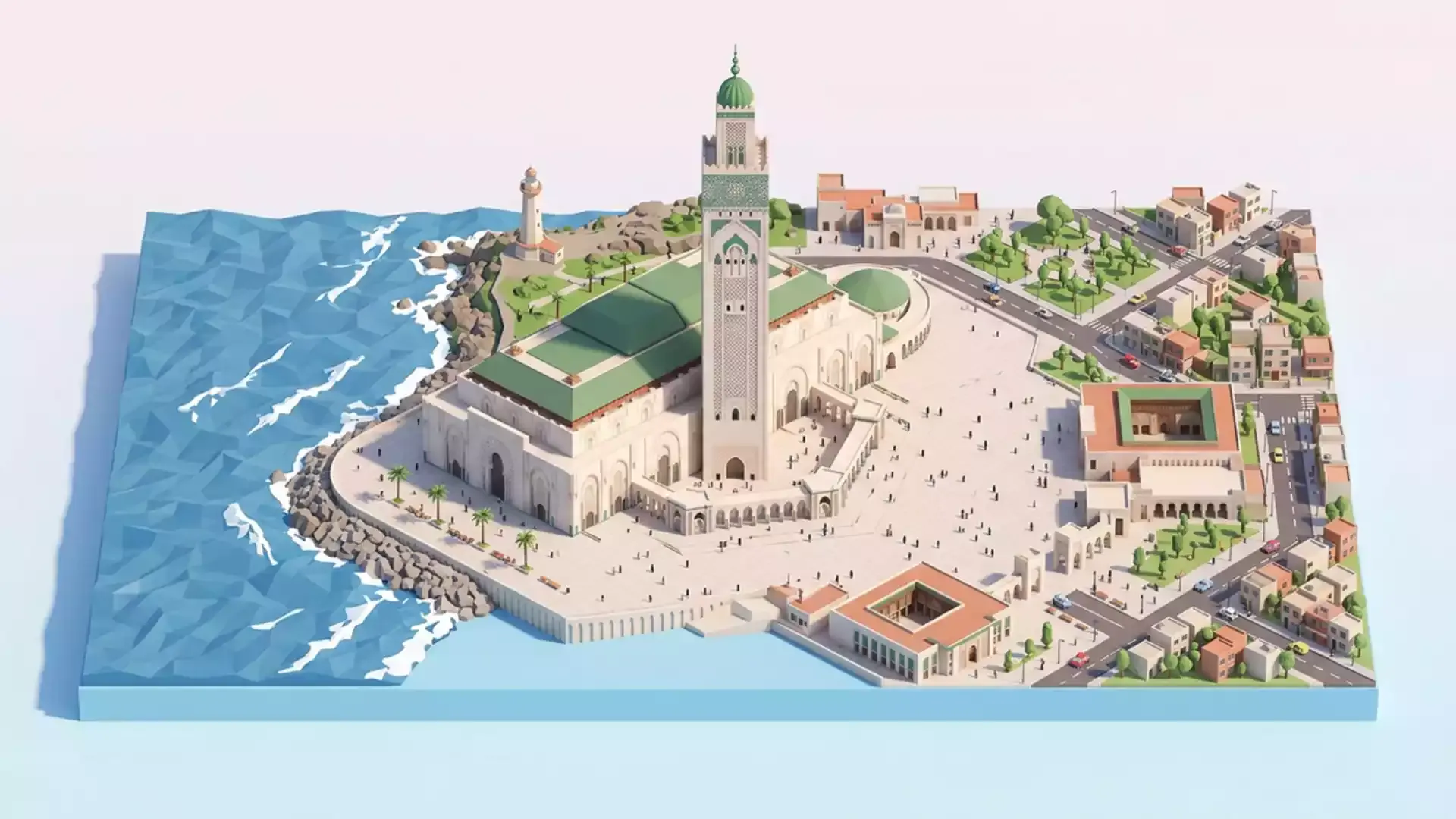

Exploring the Architectural Splendor of the Hassan II Mosque
The Hassan II Mosque, an iconic symbol of Casablanca, stands majestically on the shores of the Atlantic Ocean, seamlessly blending monumental architecture with a breathtaking coastal setting. Constructed under the reign of King Hassan II during the late 1980s and early 1990s, this mosque is one of the largest in the world, featuring a minaret that soars to an impressive height of 210 meters, thus asserting its presence over the city's skyline. The mosque's unique location emphasizes its connection to the maritime environment, as it partially extends over the sea, creating a striking visual connection between the structure and the water.
Officially inaugurated on August 30, 1993, the Hassan II Mosque was built on a foundation laid in July 1986. The design, conceived by French architect Michel Pinseau, showcases a harmonious blend of modern engineering techniques and traditional Moroccan architectural styles. The expansive prayer hall is topped with a vast roof, while the exterior is adorned with stone, marble, and ceramic finishes. Intricate ornamental designs, calligraphy, and decorative friezes embellish the mosque, framing views of the ocean and integrating the structure with the surrounding neighborhoods of Casablanca.
A Cultural and Religious Hub
Inside the Hassan II Mosque, visitors are welcomed by a grand prayer hall where the floors are crafted from exquisite stone and marble. The walls are embellished with stunning tile work, stucco, and intricately designed wooden ceilings. Over the years, thousands of Moroccan artisans and craftsmen contributed their skills, utilizing techniques such as Zellige mosaics, carved cedar wood, and fine plasterwork to create a space that resonates with cultural depth. The interior design features a striking interplay of vertical heights and open spaces, supported by large columns that organize the area into clear sections.
The decorative elements of the mosque artfully combine geometric patterns with floral motifs and calligraphy, drawing from both Moroccan and Andalusian traditions. This rich tapestry of materials creates a visual dialogue between shiny marble surfaces, matte plaster areas, and intricately decorated wooden elements. Beneath the main prayer level, additional chambers incorporate stone and water, continuing the architectural themes of mass and reflection. The entire complex is designed to accommodate large crowds while maintaining the integrity of its artisanal details.
Beyond its function as a place of worship, the Hassan II Mosque serves as a significant religious center for Casablanca, hosting not only daily prayers but also religious celebrations and educational events. This makes it a cultural touchstone that transcends its sacred role. The mosque's size and its prominent position along the Atlantic contribute to its visibility, making it a landmark that extends far beyond its immediate surroundings.
Urbanistically, the Hassan II Mosque acts as a transition between the densely built environment of Casablanca and the open Atlantic coast. Its expansive forecourts, staircases, and terraces create a stone buffer between the city and the ocean, with the minaret serving as a vertical accent. This synthesis of religious function, representative architecture, and prominent location illustrates Morocco's evolution towards grand, visible projects in the modern era.
The Hassan II Mosque is located in the northern part of Morocco, directly along the Atlantic coastline, and is easily accessible via road from the city. A visit to this expansive mosque complex reveals a magnificent prayer hall, courtyards, terraces, and the towering minaret, showcasing the marriage of traditional Moroccan craftsmanship and contemporary engineering. Notably characterized by its towering 210-meter minaret, its immediate proximity to the Atlantic, and the intricate ornamentation, stone and woodwork, the mosque stands as a testament to Morocco's rich architectural heritage.
As reported by ad-hoc-news.de.