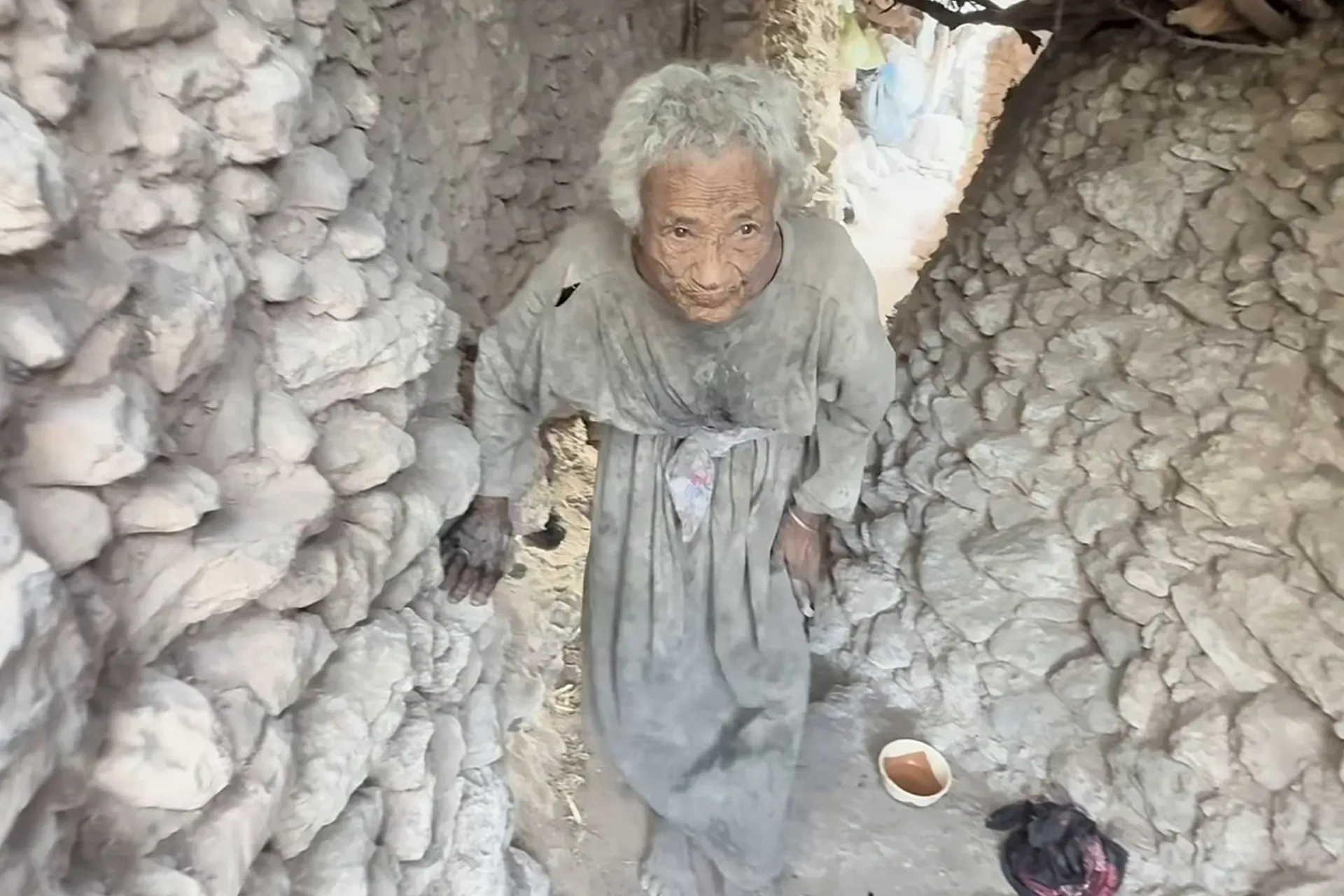

In a desolate cave devoid of the most basic necessities of life, an elderly Moroccan woman named Hassiba has spent years in solitude. Her story recently gained significant attention across Morocco after video clips surfaced, revealing her harsh living conditions in the rural region of Rkaraka within the province of Safi. Now in her eighties, Hassiba resides in this cave without access to electricity, water, or gas, relying solely on firewood to meet her daily needs. The videos portray her frail physique, dressed in tattered clothing amidst a setting filled with dust and flies.
When asked about her needs, she made minimal requests, stating that she only required some money to purchase tea and sugar. In a shocking revelation, she admitted that at times, when food is scarce, she resorts to eating dirt. This harrowing narrative struck a chord with many, leading to widespread sympathy and outrage among the Moroccan public.
A Medieval Existence
The plight of Hassiba was brought to light last Friday when the website "Code Safi" published a video titled "Hassiba: A Woman from the Medieval Era," showcasing her life inside the cave which she claims to have inhabited for years, with no alternative shelter available. In the footage, she expressed her solitary existence, explaining that her nearby neighbors occasionally bring her food. Hassiba revealed that both of her parents have passed away, and her siblings live in the city, leaving her alone in this desolate environment. The cave's interior starkly illustrates a lack of water and electricity, further emphasizing her dire circumstances.
The shocking images rapidly circulated across social media platforms, inciting a wave of empathy and shock among Moroccans. Activists and bloggers began calling on social services to intervene, assess Hassiba's situation, and provide the necessary care and protection. Many questioned the mechanisms in place for identifying poverty and vulnerability in rural areas, arguing that a woman in her eighties reaching such a dire state highlights the urgent need for more effective systems to detect and address difficult social cases before they worsen.
Criticism also arose regarding the lack of action from those around her, who had known of her circumstances yet failed to provide assistance sooner. There were calls for safe housing and appropriate care for her, emphasizing that protecting vulnerable individuals is a shared responsibility between the community and institutions. Activists further questioned the role of family, neighbors, and local authorities in monitoring such cases, asserting that the suffering of individuals living in precarious conditions should not go unnoticed until documented by cameras and shared online.
Authorities Step In to Assist Hassiba
As public concern grew, Moroccan media reported that local authorities and a medical team visited Hassiba's cave last Saturday to assess her condition, following directives from the provincial governor of Safi. Officials attempted to persuade the elderly woman to leave the cave and relocate to a safer and more suitable environment, but she firmly declined, insisting on remaining in the only home she has known for years. Sources indicated that Hassiba also refused to stay with relatives, despite their efforts to provide her with food and warmth. She occasionally visits them to eat and socialize before returning to her cave.
In light of this ongoing debate, the Moroccan Organization for Human Rights and Anti-Corruption has called on relevant authorities to conduct a field and social investigation regarding Hassiba's situation in the Al-Ghayat community of Safi province. They emphasized the importance of understanding her living and health conditions while respecting her wishes and privacy. The organization stated that addressing the circumstances of vulnerable individuals should not be limited to temporary interventions prompted by social media outcry but should involve institutional approaches that ensure dignity, protection, and sustainable support.
They also urged for a safe and dignified solution for Hassiba, protecting her from exploitation or public shaming and from the circulation of her images in a manner that could violate her privacy.
As reported by aljazeera.net.