
The Historical Foundations of Moroccan Sovereignty and Its Alliance with Israel
In the realm of political philosophy and the historical emergence of states, major alliances are seldom mere happenstances or the result of transient geopolitical shifts; rather, they often reflect a natural extension of a "genetic code" shaped during the initial foundational moments of these entities. A clear example of this historical intertwining is the dissection of the Moroccan state system, particularly in light of its current security and military alignment with the Israeli entity, as well as its involvement in the post-Gaza war arrangements. This relationship cannot be analyzed without considering the historical trajectory that began precisely in 1666.
In that pivotal year, with the decline of the Saadian state and the rise of Sultan Rashid bin Sharif, marking the foundation of the Alaouite dynasty, a new governing doctrine manifested itself through dangerously symbolic and material actions. Notably, the Sultan chose to reside within the "Mellah" (the Jewish quarter in Fez) instead of being hosted by the prominent Muslim scholars and dignitaries of the city. This event was not merely a security maneuver to protect the new ruler in a tumultuous environment; rather, it signaled the initiation of a financial, political, and structural alliance that would extend across centuries, evolving from a "partnership with the local Hebrew component" into an "existential strategic partnership with global Zionism."
This historical alliance, established in 1666, was built on mutual need and a highly intelligent and perilous pragmatic philosophy. The nascent Moroccan state sought a "financial and diplomatic nerve" free from the constraints of legal legitimacy and the political conditions imposed by national and Islamic elites, both Arab and Amazigh, who endeavored to enforce them as part of the oath of allegiance and internal accountability. Conversely, the Jewish community found in the Sultan a form of existential protection, quickly transforming into a vital functional tool, giving rise to what was historically known as the phenomenon of "Sultan's traders." This narrow financial and diplomatic elite became the exclusive link between the palace and Western powers, managing the treasury, customs, foreign trade, and monopolizing essential goods. This arrangement afforded the central authority complete financial independence, enabling it to subjugate the interior and dismantle traditional power centers.
The Evolution of Moroccan Political Doctrine and Its Contemporary Implications
Since that moment, the doctrine of the Moroccan state has been founded on the idea of superiority over the popular base, viewing functional minorities linked to foreign entities as the true safety valve for the continuance of the throne. This same doctrine prevents the monarchs of this regime from granting a single press conference to the local media while simultaneously opening palaces and towers to Western and Zionist journalism. Today, history demonstrates that it not only repeats itself but also unveils its naked essence; the organic relationship that binds the Moroccan state to the Israeli entity is not an incidental deviation prompted by the pragmatism of the "trilateral agreement" or the political trade-off regarding the Western Sahara issue. Instead, it represents the zenith of maturity for the very old financial and political alliance. The Moroccan regime has replaced the traditional "Sultan's trader" in the Mellah with the security and financial institutions of Zionism in Tel Aviv and Western capitals, relying on the same structural principle: the quest for legitimacy and existential security manufactured beyond borders, far from the approval of the street and the necessities of national and religious identity.
This article aims to trace the longitudinal and latitudinal lines of this extended alliance, shedding light on how the mechanisms of the "economic Mellah" of 1666 have transformed into a "security and military column" in Gaza, illustrating how the Moroccan regime continues to exploit foreign and Zionist capital to safeguard its diminished sovereign existence, all at the expense of the blood of the nation and the constants of its citizens who reject normalization. In the political lexicon of the Moroccan state, strategic statements from sultans and kings rarely stray from the hereditary code upon which the state was established; rather, they often serve to provide an intellectual and theoretical cover for the regime's inclination towards foreign entities.
The most glaring and brazen manifestation of this doctrine is encapsulated in the famous saying of the late King Hassan II, who repeatedly asserted, in various forms, that "the Arab region would thrive if Arab capital blended with Zionist intelligence." This statement was not merely a diplomatic blunder or a slip of the tongue prompted by the search for mediations of peace in the last century; instead, it was a conscious and structural philosophical summary of the Moroccan state's "functional doctrine," an attempt to legitimize the integration of the Israeli entity into the Arab body through the gateway of economy and technology. This vision paved the way for normalization and the shocking military and security transformations we witness today.
The royal thesis on "the integration of capital and intelligence" directly stems from the same historical well that erupted in 1666; when Hassan II applied the concept of "intelligence and cunning" to the Zionist component and made it a condition for the region's revival, he was reproducing the behavior of his predecessor, Sultan Rashid bin Sharif, the first founder of the Alaouite entity, who preferred to reside in the "Mellah" over staying among the dignitaries of the popular and national base. In the subconscious awareness of the Moroccan state, the Hebrew component of yesterday and the Zionist of today, whether as the "Sultan's trader" in the seventeenth century or as the security and technical advisor in Tel Aviv today, is always viewed as the superior capable element, the guaranteed alternative to the national and religious base that the Moroccan state fears will question and revolt against it.
Thus, "Zionist intelligence" in the Moroccan perception becomes not a tool for development but rather a technical and security umbrella for protecting thrones, a safeguard that grants the authority complete superiority over the will of the original subjects, both Arabs and Amazigh, while simultaneously justifying the regime's estrangement from its local media and its inclination towards Western circles.
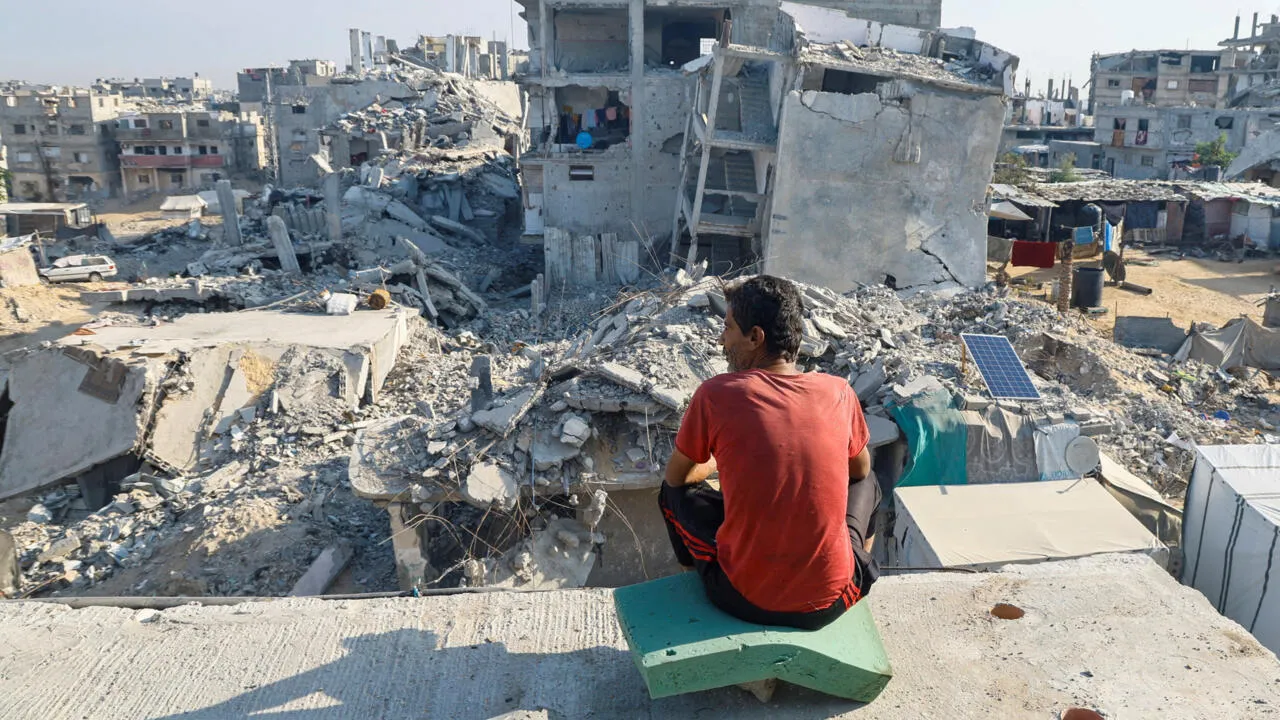
Today, amid the protracted agony, this article provides a dismantling entry point for reading the moral and political cost of this statement; the blend that Hassan II heralded between "capital and intelligence" has not produced development or prosperity for the region; rather, it has yielded a geopolitical monstrosity whose manifestations we see in the new Moroccan column stepping onto the ground of the besieged Gaza Strip to perform proxy security tasks for the benefit of the Zionist occupation. The notion of "Zionist intelligence" has transformed from a shiny economic slogan into a "security whip" wielded against the Moroccan populace, illustrating how the Moroccan regime's illusion of alliance with this entity has turned into an unprecedented value and historical rift.
The recent developments in the field place the foreign policy of the Moroccan state in direct confrontation with history; the arrival of a Moroccan military contingent to deploy in Gaza (the new Moroccan column) and its undertaking of security tasks under the umbrella of what is termed the "International Stability Force," sponsored by American-Zionist backing, represents an unprecedented shift in the nature of the conflict. This move signifies not merely diplomatic normalization but a complete transition to a field and combat coordination square aimed at protecting the Zionist entity and relieving it of the security costs of managing the sector.
The shocking paradox lies in the regional comparison; why is the Moroccan regime, which chairs the "Committee of Jerusalem," rushing to secure the entity while countries like Egypt and Jordan, which normalized relations decades earlier and possess direct borders and large armies, have refused to become embroiled in the quagmire of Gaza and have refrained from sending a single soldier to serve the Zionist agenda? The Moroccan regime has tied its sovereignty and national decision-making to a cheap trade-off: "American recognition of Moroccan sovereignty over Western Sahara in exchange for complete submission to the Zionist alliance." This agreement has placed Moroccan military and political decision-making under the direct guardianship of Washington and Tel Aviv. In contrast, countries like Egypt and Jordan, despite their ties to old treaties, do not owe their existence or vital sovereignty issues to the Zionist entity; thus, they possess a margin of political maneuverability that prevents them from moral suicide by sending forces to protect the occupation. The Moroccan regime, however, has been stripped of this margin and is compelled to pay the field price by sending its soldiers to serve as a "new Moroccan column" that reproduces the old French colonial doctrine, as Moroccan conscripts are sent to die in proxy wars on behalf of their masters in the West and Tel Aviv.
The Moroccan regime's rush to assist the entity in Gaza, amidst the reluctance of conventional normalization states, reveals the political corruption of a regime that has completely detached itself from its national and religious context. The events in Gaza have proven that the "functional alliance" that began in the Mellah of Fez in 1666 has reached its crimson peak; the Moroccan state today accepts that the blood of its soldiers is tainted with the remains of children in Gaza, serving as a security guard at the gates of the entity, prioritizing the security of global Zionism over the will and constants of the authentic Moroccan people.
As reported by echoroukonline.com.