
Alhucemas: A Crossroad of History and Modern Leisure
As dawn breaks over Sfiha Beach in Alhucemas, the vibrant sounds of music fill the air, hinting at the lively nightlife that thrives here even at five in the morning. While Ossiano Beach may close its doors at this hour, the Havana and Golden Beaches remain open throughout August, drawing in visitors from various corners of the globe. Just a short distance of 700 meters from the buzz of rental sunbeds, jet skis, and tourists sipping mojitos lies the Spanish military outpost of Peñón de Alhucemas. This 480-meter islet has a rich history, once home to soldiers known as 'gaviotos,' who would eagerly peer through the command post’s telescope to catch glimpses of the beach revelry across the water.
The Legacy of Military Presence and Territorial Claims
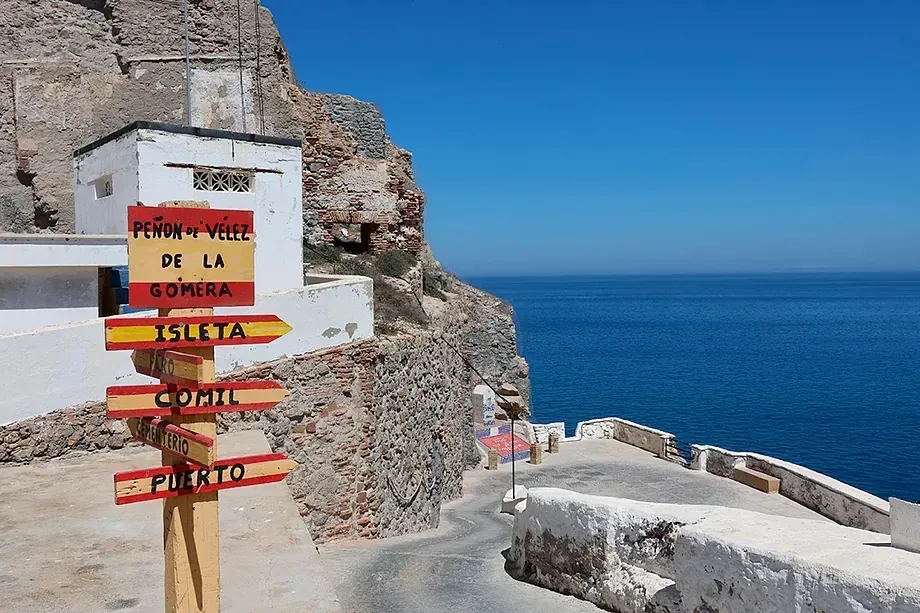
The narrative of Peñón de Alhucemas is interwoven with the experiences of both seasoned veterans over 70 years old and the young soldiers stationed there today, all sharing the unique bond of serving at what is often referred to as the last frontier of Europe. In proximity to Alhucemas is another outpost, Vélez de la Gomera, positioned across from Badis, a quaint Moroccan coastal village that remains blissfully unaware of the bustling beach life of Alhucemas. Beyond these, the Perejil islet and the Chafarinas Islands also play a role in the complex geopolitical landscape, which saw heightened activity this past summer with the arrival of nearly 80,000 individuals in Ceuta. Amidst calls on Moroccan social media for renewed attempts to claim Ceuta and Melilla, the Moroccan Minister of Justice, Abdellatif Ouahbi, reiterated the long-standing claim his country maintains over these territories, which form part of Morocco’s ambitious vision for a Greater Morocco under King Mohamed VI.
The historical backdrop of these islands takes us back centuries to when Spanish forces firmly established control over these regions. The garrison at Peñón de Vélez de la Gomera has been a continuous presence for 462 years, dating back to September 6, 1564, during the reign of Felipe II. Originally a solitary islet, it became physically connected to Morocco following a significant earthquake in the 20th century. This location is not only the oldest continuous Spanish possession in North Africa, following Melilla, which was taken in 1497, but also marks Alhucemas as a strategic point since its acquisition on August 28, 1673, under Carlos II's rule.
In stark contrast to the current beach clubs offering an Ibiza-like atmosphere with Afro house music, the area once housed the Mediterranée, a French holiday club well-remembered by the ex-military personnel stationed in Alhucemas. For many, including Juan José, a political prisoner from 1973, and Ramón, a former soldier, the memories of this place are vivid, often filled with humorous anecdotes about interactions with French women and the camaraderie shared among soldiers during their downtime. The rhythm of life on the rock was dictated not by the calendar, but by the arrival of ships from Melilla, bringing supplies and letters from home, moments that would be cherished before the rigors of military life resumed.
Discipline was paramount among the troops, with strict adherence to rules, though moments of revelry occasionally led to consequences, as recounted by Josep Lluís, a sailor from 1972. Both Alhucemas and Vélez de la Gomera served dual purposes as military barracks and prisons, historically used to exile political dissidents and common criminals from the Spanish mainland. On November 15, 1838, a significant event unfolded when Carlist lieutenant Pedro María Quintana incited a revolt among the confined individuals, attempting to seize control of the military post, though their plan ultimately failed.
By May 6, 1907, both islands transitioned from prisons to regular military outposts, and remnants of that era linger in Alhucemas today. Visitors can still find traces of the past, from the lighthouse and old hermitage to the hidden alleys and dungeons that tell a story of a bygone era. Meanwhile, the Peñón de Alhucemas garrison remains vigilant under the Spanish flag, a testament to the enduring legacy of this historical site and its strategic importance in the broader narrative of Spanish-Moroccan relations.
As reported by mundoamerica.com.