
The Human Drone Crisis: Morocco's Exploitation of Vulnerable Migrants
In a thought-provoking opinion piece originally published in the Spanish newspaper El Mundo, the author raises a critical alarm about the recent surge of migrants crossing into the Spanish enclave of Ceuta from Morocco. This influx, reportedly involving over 50,000 individuals, has not arisen spontaneously; rather, it appears to be a premeditated action by the Moroccan regime under King Mohammed VI. The article argues that this mass migration serves as a strategic move, benefiting both the far-right factions in Spain and simultaneously undermining the efforts of Spanish Prime Minister Pedro Sánchez.
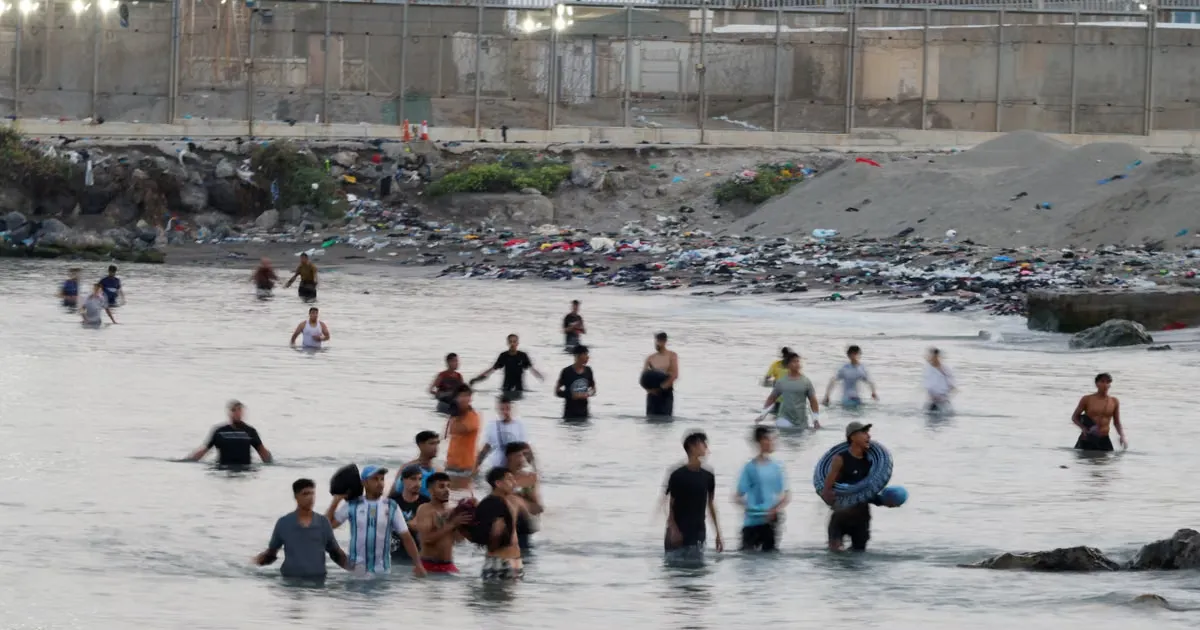
On July 30, 2026, Moroccan authorities deliberately allowed thousands of their citizens—including men, women, and children—to breach the heavily fortified borders of Ceuta. This orchestrated event has resulted in tragic consequences, with reports of fatalities reaching alarming numbers—75 according to Spanish officials and 11 as per Moroccan sources. Many of those who attempted the perilous swim across the El Tarajal beach have since returned home, leaving behind a significant number still present in Ceuta. This situation has sent shockwaves throughout Europe, intensifying the ongoing discourse surrounding migration and border control.
The author contends that the Moroccan elite holds disdain for the impoverished segments of their society, using them as pawns in a larger geopolitical game. This manipulation extends beyond Moroccan citizens to encompass sub-Saharan migrants, who often traverse treacherous deserts in search of better opportunities, only to find themselves caught in a web of exploitation and despair. The article paints a picture of a regime that capitalizes on the vulnerabilities of these individuals, further complicating the migration crisis that plagues Europe.
As the situation unfolds, it is evident that the ramifications extend far beyond the immediate borders of Ceuta, affecting political landscapes and social dynamics across the European continent. The implications of this crisis call for a urgent reevaluation of immigration policies and humanitarian responses as nations grapple with the challenges posed by such large-scale movements of people.
As reported by courrierinternational.com.