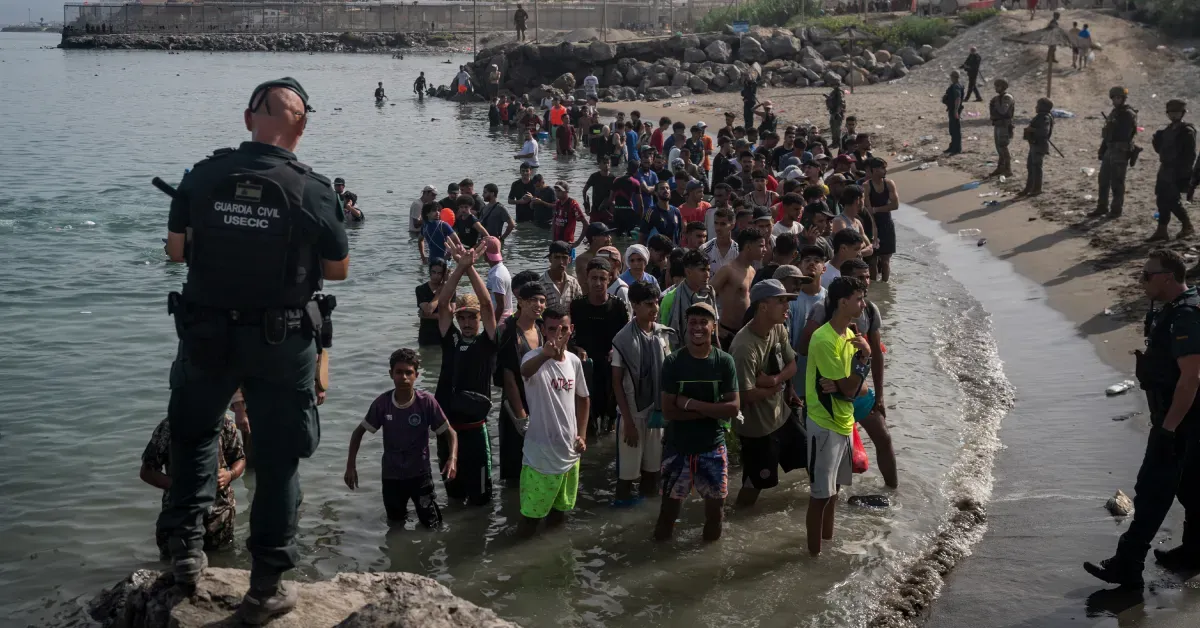

On the morning of July 31, Juan García, a local pastor in Ceuta, awoke to a startling scene outside his window. Hundreds of migrants, seeking refuge from the oppressive heat, gathered around a public fountain that lies between his home and that of his colleague, Pastor Javier Santolaria. Over the course of just two days, an unprecedented wave of around 80,000 migrants arrived in Ceuta, a small Spanish city situated on the northern coast of Morocco, which is home to approximately 84,000 residents. Thousands of these individuals made the perilous journey across the short stretch of water from Morocco, while others crossed the land border in large groups. Tragically, at least 141 migrants lost their lives during this daunting crossing, highlighting the severity of the situation.
As young men filled the streets, desperately searching for food and water, Pastor García, who leads the Bethel Church, heard reports of a nonprofit organization’s vans being swarmed by migrants seeking humanitarian aid. In stark contrast, many local residents chose to remain indoors, keeping their businesses shut due to safety concerns. Pastor Santolaria voiced a similar apprehension, acknowledging that while the desire to help was prevalent among locals, the potential for violence made direct assistance too risky. He remarked that when someone stepped outside with food or water, a crowd of approximately 200 people would quickly gather, leading to chaotic and potentially dangerous situations.
The Migration Crisis Unfolds
The unfolding crisis attracted significant media attention, with anti-immigration politicians seizing the opportunity to criticize Spain’s more lenient immigration policies. By the end of Friday, most of the migrants had returned to Morocco, yet approximately 10,000 individuals remained in Ceuta, according to the city’s mayor. For local pastors like García and Santolaria, the mission of serving their community continues even after the media frenzy subsides. They provide spiritual guidance to people from various backgrounds who find themselves in Ceuta and offer support to those battling drug addiction.
In response to the calls for caution from local authorities, Santolaria's church, Iglesia de Dios, Casa de Alabanza, opted to hold services via Zoom that Sunday. He emphasized the importance of seeking divine wisdom during times of crisis, stating that the church must demonstrate prudence and compassion in its outreach efforts. The surge in migration was partly fueled by widespread misinformation regarding a recent immigration ruling, which circulated rapidly on social media platforms. Many believed that a June ruling by the Spanish Supreme Court would allow migrants who arrived illegally by sea to remain in the country, prompting a rush to cross into Ceuta.
Local Reactions and Long-Term Implications
In reality, the Supreme Court ruling merely amended Spanish immigration law, clarifying that individuals who enter illegally by sea cannot be deported without due process. García, who supports controlled immigration, expressed his concerns regarding the current situation, emphasizing the need for awareness of who is entering the country and what their needs are. Santolaria echoed this sentiment, describing the recent influx as an “invasion,” underscoring the urgency for a structured response to migration.
Pastor Martin Merki, who has led the International Christian Church in Ceuta for over three decades, noted that while his city has historically welcomed migrants, the current influx is unprecedented, surpassing previous waves. Many of the recent arrivals hail from Morocco and Algeria, with young Moroccans facing a staggering 37 percent unemployment rate, driving them to seek opportunities in Europe. Merki's church, located near the migrant reception center, frequently encounters young Muslim men who typically spend several months in the center before being allowed to transition to mainland Spain for work opportunities.
Through his ministry, Garcia has been dedicated to assisting individuals struggling with addiction since 1999, employing a rehabilitation method that emphasizes shelter, food, and spiritual guidance through faith in Jesus. His inclusive approach ensures that support is available to all, irrespective of their background, and he recalls the stories of many individuals who have found hope and healing through their faith.
As reported by christianitytoday.com.