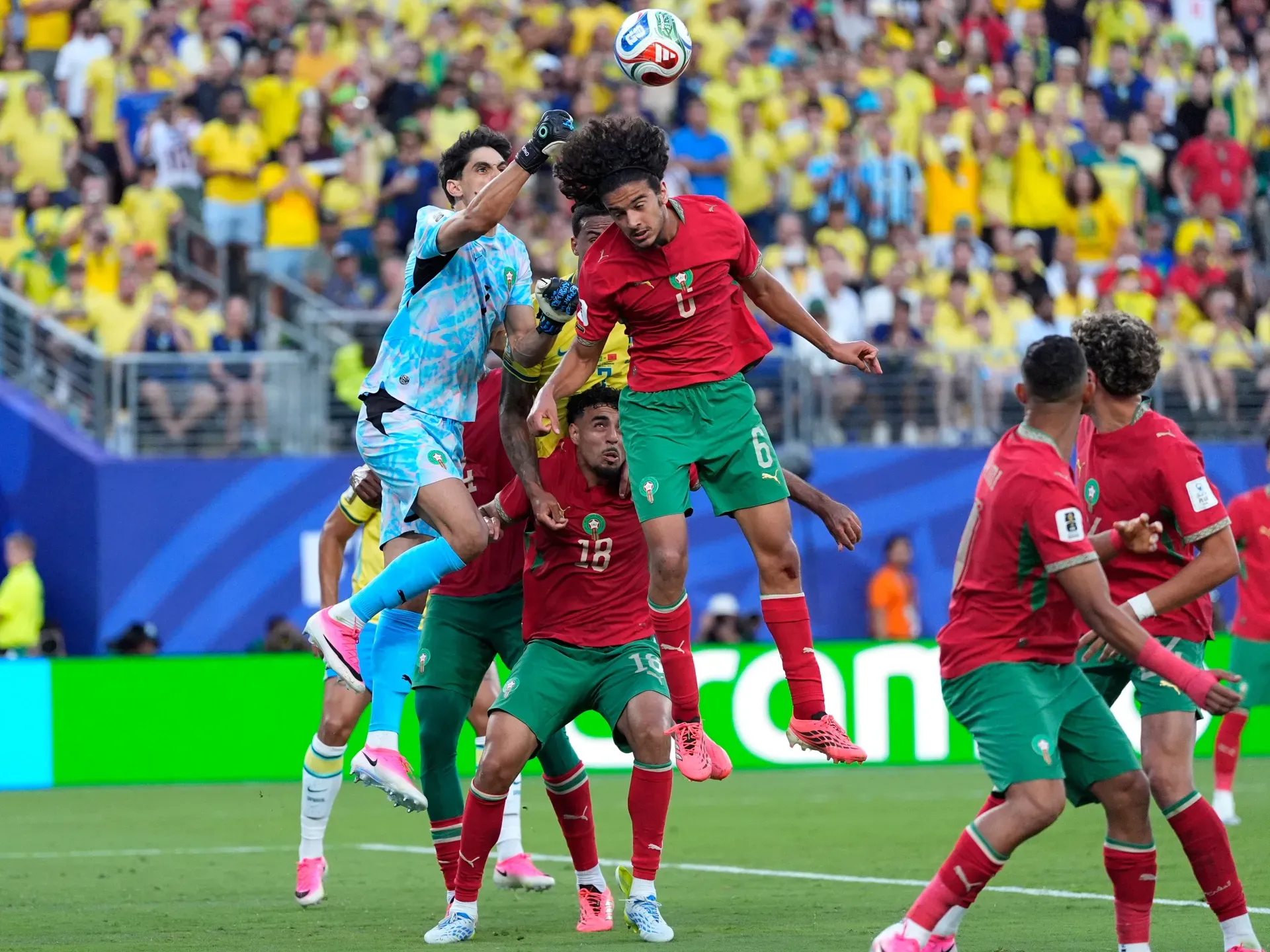

The remarkable performance exhibited by the Moroccan national team against Brazil in their opening match of the World Cup, paired with the surprising draw of Cape Verde against Spain, underscores the success of a strategic policy aimed at integrating players from diverse European backgrounds to significantly enhance national squads with emerging talent from the diaspora. All eleven players who participated in Morocco's starting lineup were born outside the country and trained in European clubs, with the sole exception being goalkeeper Yassine Bounou, who was born in Canada but raised in Morocco.
The Rise of African Teams Through Diaspora Integration
Over the past two decades, many African nations have turned their focus towards migrant communities in Europe to scout for promising players, leading to a notable improvement in their competitive capabilities. This is particularly evident in Cape Verde, a nation with a population of around 600,000, which relied on players born or raised in Europe to achieve an unexpected qualification for the World Cup—an impressive feat considering they had not even participated in the qualifiers just over twenty years ago. The global migration patterns, coupled with FIFA's significant changes in eligibility rules and the ongoing quest for talent in the diaspora, have drastically reshaped the landscape of international football.
FIFA's eligibility rules require all players participating in the World Cup to hold the nationality of the country they represent, which involves a thorough examination of passports. To prevent nations from unfairly granting nationality to foreign players in order to bolster their teams, players must have resided in the country for five years or have a parent or grandparent born there. Historically, the early editions of the World Cup lacked eligibility regulations; for instance, Luis Monti played for Argentina in the inaugural tournament of 1930 and then represented Italy four years later after moving there to join Juventus. FIFA later enforced strict policies stipulating that once a player competes in an official international match at any level, they remain tied to that country without exception.
The Role of Mohamed Raouraoua in Changing Eligibility Laws
National federations in North Africa were among the first to advocate for allowing players to change their sporting allegiance. Former president of the Algerian Football Federation, Mohamed Raouraoua, who was a pivotal figure in this proposal, stated, "We did not see it as fair to select players of African descent for youth teams in European countries, only for them to never have the opportunity to compete at the senior level." His proposal aimed to grant these players the freedom and right to choose their national representation. He further emphasized that the presence of these players greatly benefits many African teams, enhancing the overall quality of football. In 2003, FIFA amended its regulations to permit players to change their allegiance provided they proved eligibility for dual nationality and had not previously played for a senior national team. Although initially imposing an age cap of 21 for such changes, FIFA later allowed players of all ages to apply to represent other countries at the international level.
One of the first beneficiaries of this new rule was defender Antar Yahia, who debuted with the Algerian U-23 team in a match during Olympic qualifiers in January 2004, shortly before making his first appearance with the senior national team. He had previously played for the French U-20 team. FIFA must approve any change in allegiance following a formal request. Notable players such as Pierre-Emerick Aubameyang and Frédéric Kanouté represented France at youth levels before switching allegiance and later winning the African Player of the Year award. Senegal's captain Kalidou Koulibaly has also played over 100 international matches since he changed his allegiance from France to this West African nation after competing with the French U-20 team.
The impact of these eligibility rules is evident in the current World Cup, featuring an exceptional total of 289 players, approximately 25% of the participants in the tournament hosted by Canada, Mexico, and the United States, who represent countries in which they were not born. Many of these players have changed their sporting allegiance and are now reaping the rewards of this decision by having the opportunity to play on the biggest stage in the sport. A prime example is young player Ibrahim Mbaye, who scored a goal for Senegal against France on Tuesday, less than a year after his last appearance with the French youth team.
As reported by aljazeera.net.