
Digital Transformation and Its Implications for Democracy
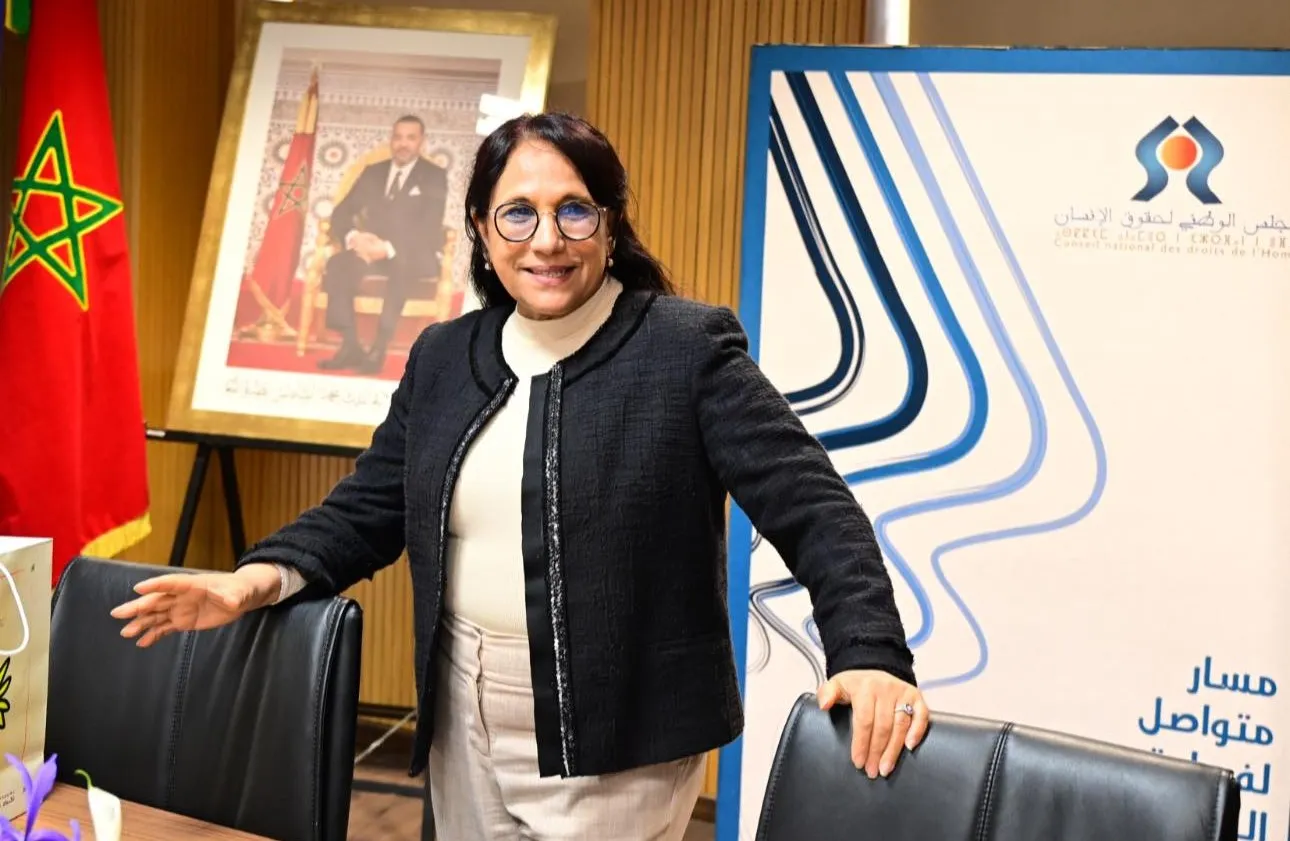
Amna Bouayach, the President of the National Human Rights Council, has raised significant concerns regarding the profound transformations that digitization and artificial intelligence impose on the future of democracies and electoral processes. Bouayach emphasized that the world is currently experiencing a moment that could be deemed "critical and decisive," as it reshapes the relationship between citizens, information, and the public sphere, especially in light of the rising risks of misinformation, deepfakes, and algorithmic influence on collective will and political choices. Speaking at the opening of the tenth international conference on human rights and elections held in Marrakech, she noted that the current conference is themed "Elections and Human Rights in the Era of Digitization and Artificial Intelligence," which reflects the rapidly changing international context that places democracies under an unprecedented structural test. She articulated that the stakes have evolved beyond mere technical or procedural concerns to encompass future challenges, which she described as existential in nature.
The conference, hosted in Morocco for the first time in Africa, attracted experts, human rights advocates, and electoral institutions from various countries. This was seen as a growing acknowledgment of Morocco's position in international discussions related to human rights, digital transformations, and democratic governance. Bouayach announced that the next session of the conference would take place in an Asian country following the Marrakech event. She highlighted that the selection of Marrakech was not arbitrary, given its historical symbolism as a space for cultural exchange, idea sharing, and civilizational interaction. The discussions at this conference transcend a mere intersection of technology and elections, addressing a central issue in contemporary democratic thought—how to protect fundamental rights and freedoms while ensuring the integrity of electoral processes in an era where digital technology reshapes the public sphere and influences political participation and collective will formation.
Challenges and Opportunities in the Digital Age
Bouayach asserted that elections are not just mechanisms for power transition but are also a constitutional and universal right linked to freedom of expression, opinion, political participation, and equal access to public spaces and information. She cautioned that any changes affecting public opinion formation or reconfiguring the relationship between citizens and information directly impact the legal framework of democratic practice itself. In her analysis of ongoing transformations, Bouayach posited that humanity stands at a new crossroads, reminiscent of monumental shifts throughout history—from the discovery of fire to the invention of the wheel and the harnessing of electricity. She noted that artificial intelligence and emerging technologies have become integral to daily life, increasingly shaping communication patterns, work, access to services, public life participation, and public discourse.
While acknowledging that these transformations present unprecedented opportunities to enhance rights and freedoms, expand access to information, improve public services, and bolster electoral transparency, she also warned of what she termed "deep and complex challenges" associated with protecting freedom of choice and maintaining trust within democratic societies. Bouayach explained that digital spaces have evolved from mere communication tools into genuine extensions of the public sphere, where opinions and collective choices are formed. She specifically raised concerns about algorithms and digital systems that govern the flow of information and determine the priorities of visibility and dissemination, asserting that these increasingly influence the relationship between citizens and information and shape public discourse itself, often in the absence of transparency regarding how these systems operate. She warned of the fragmentation of the common public sphere, leading societies toward parallel digital spaces producing divergent narratives devoid of shared references.
In one of the more striking segments of her address, Bouayach described misinformation and disinformation as the "scourge of our time," affecting not only the right to access information but also undermining the essence and philosophy of electoral processes, the integrity of public discourse, and the trust on which democratic institutions rely, particularly when digital spaces become tools for reproducing fear, polarization, and manipulation of collective consciousness across borders. She highlighted the growing risks associated with deepfake technologies, automated content generation, and the precise targeting of public opinion, asserting that artificial intelligence now offers unprecedented capabilities for content production, amplification, and dissemination at an accelerated pace and lower cost, making it increasingly difficult to distinguish between the real and the fabricated, as well as between accurate and misleading information within digital spaces.
Bouayach added that this reality bestows disinformation with a tremendous capacity for spread and influence, often surpassing the ability of societies and institutions to verify and correct it, especially amid a persistent lack of a culture of news verification before sharing or engaging with it. She cautioned against the exploitation of these technologies for political, electoral, ideological, or commercial purposes and the potential for external actors or non-state networks to influence national public discussions and electoral processes. However, she emphasized that the solution does not lie in rejecting technology or demonizing artificial intelligence but rather in collective reflection on the governance conditions necessary for these transformations, ensuring that human rights and freedoms remain at the heart of these new dynamics, from design to training, use, and evaluation.
Bouayach stressed that the real challenge lies in framing artificial intelligence systems within a clear rights-based framework that guarantees transparency, accountability, and non-discrimination while protecting freedom of choice and individual autonomy. She revealed that since the 2021 elections, the Council has engaged in developing new tools for observing elections by integrating digital discourse analysis, tracking information dissemination dynamics, and monitoring interactions within social networks to understand patterns of influence in digital spaces. She announced that the Council would continue, during the Moroccan legislative elections of 2026, to enhance auditing mechanisms and empower observers, including monitoring early warning indicators of risks, analyzing data, and systematically utilizing it to improve the efficacy of observation and intervention.
In her closing remarks, Bouayach proposed that the conference conclude with a reference document establishing a regular dialogue space for exchanging experiences among stakeholders, researchers, and institutions from various countries in the Global South, aimed at developing joint approaches to accompany rapid digital transformations from a human rights and democratic perspective. She reiterated that the collective challenge today is to ensure that emerging technologies and digital spaces do not become tools for undermining democracy and eroding societal trust, but rather serve as means to enhance freedom, participation, justice, and build digital governance that places humanity at the center of technological transformation.
As reported by assahifa.com.