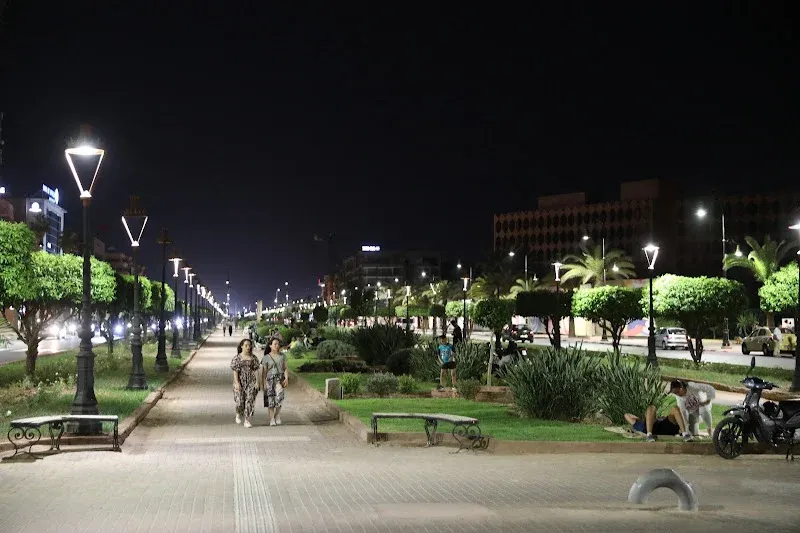

The Significance of Effective Green Space Management
A recent study focusing on the green spaces in Marrakech has revealed that the quality of these areas is not solely determined by their size; it is significantly influenced by management practices, the type of vegetation, land conditions, and the resources allocated for maintenance. This insight is particularly crucial for a city like Marrakech, which is grappling with challenges such as rising temperatures, water scarcity, and urban expansion. The study, published in the journal Land Use Policy, utilized a combination of satellite imagery, geographical data, field measurements, interviews, and surveys, alongside models designed to assess the environmental functions provided by urban green spaces.
The research tracked how these green areas contribute to mitigating heat, managing water, sequestering carbon dioxide, filtering certain air pollutants, and producing oxygen. Moreover, it addressed the social and economic benefits associated with their presence in urban settings. The researchers classified the studied locations into five ecological patterns, comparing them in terms of tree and plant types, density, and their capacity to deliver various environmental services.
Quality Beyond Size
The findings indicated that expansive tree-covered areas possess a greater capacity for carbon storage and water regulation. Conversely, smaller parks can play a vital local role in reducing heat and filtering certain air pollutants. This highlights that mere size does not suffice to evaluate the quality of a green space; the environmental value varies between locations based on plant types, tree density, water requirements, and the park's placement within the urban fabric.
Some smaller areas can provide direct benefits to surrounding neighborhoods, particularly in terms of cooling and alleviating heat effects, while larger spaces serve broader functions in carbon storage and water management. The researchers relied on the i-Tree Eco model to estimate the environmental benefits of trees in urban settings, supplemented by remote sensing data and geographic information systems.
Statistical analysis revealed that governance and management indicators account for approximately 64.6% of the variance in the environmental quality of the green spaces studied. The researchers linked performance to several factors, including the strength of institutional management, stakeholder participation, resource provision, continuous monitoring and evaluation, and the stability of land tenure for these spaces. The results showed that inadequate maintenance, limited resources, or ambiguous land tenure could diminish the environmental efficiency of a green space, even when it boasts substantial vegetation cover.
Furthermore, the sustainability of green spaces hinges on the ability of responsible authorities to secure long-term management and maintenance resources, especially in a city facing increasing pressure on water resources. The study also noted a disparity in the quality of services provided by green spaces across Marrakech, with variations in their capacity to cool, purify air, store carbon, and manage water, which are influenced by their plant composition, location, size, and management practices.
While the study did not directly measure social disparities in the benefits derived from green spaces among different neighborhoods in Marrakech, it clearly identified significant differences in the performance and environmental quality of these areas.
As reported by hespress.com.