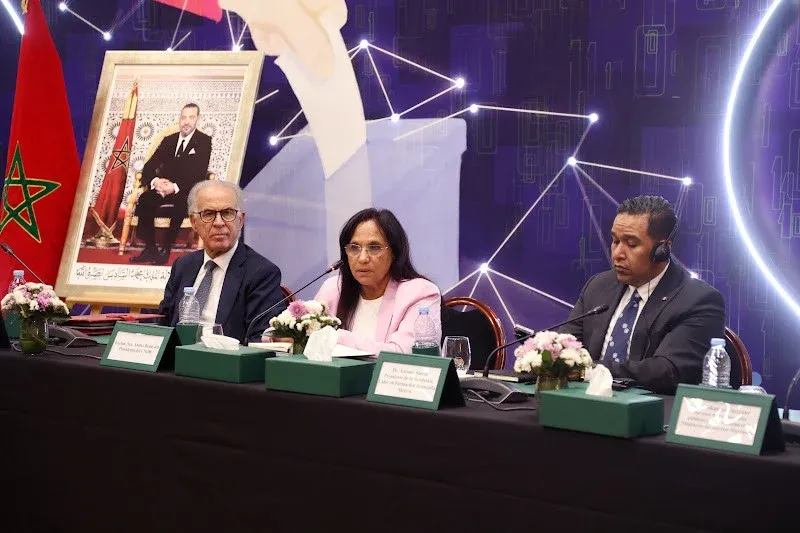

The Significance of Elections in Upholding Human Rights
Amine Bouayach, the President of the National Human Rights Council, emphasized the pivotal role of elections, stating that they are not merely procedural mechanisms for the transfer of power and public affairs management. Instead, at their core, elections constitute a constitutional and universal right intrinsically linked to various fundamental human rights, including the individual rights to vote and stand for election, absolute freedom of opinion and choice, expression, participation in public affairs management, and equality in accessing public spaces and information.
During her opening address at the tenth conference on human rights and electoral laws held in Marrakech, Bouayach noted that any transformation affecting the conditions of public discourse, or that ambiguously or deceitfully influences the formation of public opinion, or reshapes the relationship between citizens and information, inevitably impacts the legal structure of democratic practice itself. This raises critical questions about how to protect fundamental rights and freedoms while safeguarding democratic electoral processes in an era where digital technology is reshaping the public sphere, both positively and negatively.
Challenges and Opportunities in the Age of Digital Transformation
Reflecting on the theme of this tenth session focusing on elections and human rights in the age of digitization and artificial intelligence, Bouayach pointed out that we are at a crucial juncture characterized by an unprecedented wave of emerging technologies and advanced AI systems. These developments hold immense potential for transforming societies and reshaping the contours of the future. Digital technology and artificial intelligence have become integral to our daily lives, significantly influencing how we engage in public life and participate in public discourse.
However, she cautioned that these transformations pose profound and complex challenges, particularly regarding the protection of freedom of choice, ensuring the integrity of public discourse, and maintaining trust within democratic societies. Digital spaces have evolved beyond mere communication platforms; they now represent a genuine extension of the public sphere, shaping collective attitudes, perceptions, and choices. Consequently, Bouayach highlighted the critical issue of misinformation and misleading information that threatens the essence and philosophy of electoral processes and the freedom of choice, undermining public discourse and the trust necessary for democratic institutions, especially when collective consciousness is manipulated with transnational effects. These challenges are real threats to contemporary democracies.
Bouayach further remarked that while the digital revolution has redefined the conditions of public discourse, artificial intelligence today represents a more profound qualitative shift, providing unprecedented capabilities for content generation, direction, and amplification. This has made it increasingly difficult to distinguish between genuine and fabricated information. The rapid dissemination of misinformation often surpasses the ability of communities and institutions to verify and correct it, particularly given the ongoing weakness in the culture of information verification before sharing.
She underscored the importance of these transformations, which present unprecedented opportunities to enhance rights and freedoms effectively by expanding access to information, improving public services, facilitating participation, and creating new avenues for civic and institutional interaction. Bouayach noted that these digital spaces and systems could generate significant tools for enhancing transparency in general, and electoral transparency specifically, as well as developing monitoring and evaluation mechanisms that enhance the efficiency of public policies more rapidly, with less cost and greater effectiveness.
According to Bouayach, the focus should not be on demonizing technology but on collectively contemplating the conditions for democratic governance of these transformations. It is essential to ensure that human rights and freedoms remain central to these new dynamics, from design to formation, use, and impact assessment. The real challenge lies in framing these systems within a clear rights-based perspective that guarantees transparency, accountability, and non-discrimination while protecting individual freedom of choice and independence.
As the head of the National Human Rights Council, which oversees the accreditation of observers and monitors elections, Bouayach stated that the council has been working to understand these transformations and integrate them within a clear and balanced human rights and institutional vision. The 2021 elections marked a significant milestone in this journey, incorporating digital discourse analysis and tracking information dissemination dynamics, as well as understanding influence patterns within digital spaces and monitoring engagement on social media. She reaffirmed the council's commitment to enhancing election observation efforts for the legislative elections in 2026 by developing auditing mechanisms and strengthening observers' capabilities, including early risk indicator monitoring and systematic data analysis to improve the effectiveness of interventions and monitoring.
Bouayach proposed that the conference conclude with a final document that serves as a reference for establishing a regular space for dialogue, experience exchange, and collective thinking among actors, researchers, and institutions from various countries in the Global South. This space should foster discussion, collaboration, and the development of shared approaches capable of keeping pace with these rapid transformations from a human rights perspective, while also being an instrument for enhancing participation, freedom, and justice. She concluded by stating that our shared responsibility is to work towards building democratic digital and technological governance that places human beings at the center of technological transformation while preserving the values of freedom, transparency, accountability, and rights within the public sphere, regardless of how its tools, forms, and spaces may evolve.
The conference features participation from judges from multiple countries, along with experts from Latin America, Europe, and Morocco, as well as officials and representatives from national institutions, electoral bodies, and international and regional organizations. Academics, researchers, and actors in human rights, digitization, artificial intelligence, and elections will discuss several key topics, including the impacts of artificial intelligence and digital technologies on electoral processes, online election observation: challenges and opportunities, electoral disputes and legal recourse in the digital age, internet-based election campaigns, and AI-driven communication, as well as issues surrounding algorithmic transparency, cybersecurity, and the protection of privacy and personal data in the electoral context.
Sessions during this event will showcase comparative experiences and best practices related to the use of technology and artificial intelligence in managing electoral processes, highlighting the roles of national human rights institutions, electoral bodies, and digital actors in accompanying these transformations and ensuring respect for fundamental rights and freedoms.
As reported by hespress.com.