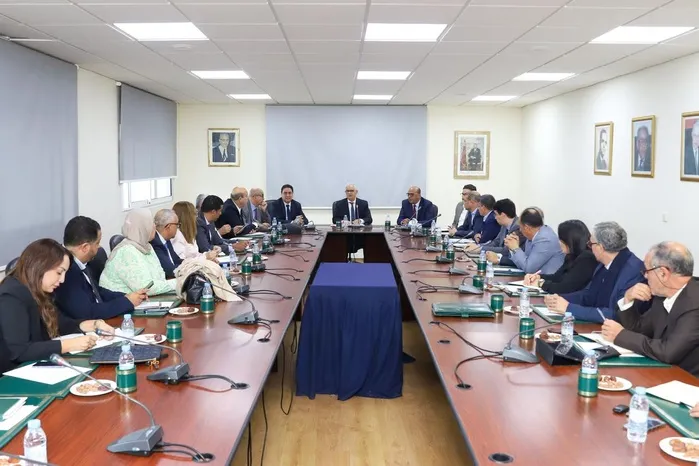

The Independence Party is entering a more advanced phase in its preparations for the upcoming legislative elections scheduled for September 23, 2026. This transition marks a significant shift as the party leadership moves from managing internal nominations to redefining its candidate map across various electoral districts. This strategic maneuver not only indicates an early glimpse into the competitive landscape of the forthcoming elections but also highlights the party's proactive approach in solidifying its presence.
Following a meeting of the party's executive committee on August 3, the party announced a new batch of endorsements after thoroughly reviewing the submitted applications through an ethics and conduct committee. This step reflects the party leadership's commitment to aligning candidate nominations with the provisions of its statutes and internal code of conduct. The recent endorsements span from the northern to the southern regions of the country, signaling the party's desire to expedite the formation of its local lists rather than waiting until the election date to finalize its candidates.
In the Tangier-Tetouan-Al Hoceima region, the party has appointed Mohamed Hammoudani to lead its list in the Al Hoceima district, while in the eastern region, it has selected Touhatouh Mohamadi for the Nador district, a candidate who previously belonged to the National Rally of Independents, one of the parties in the current governing coalition. The pattern of decisive choices continues in the Fez-Meknes region, where the party has endorsed Hassan Selghoua for the northern Fez district, Hassan Yamani for the Meknes district, and Mohamed Soufan for the Taounate-Tissa district. Meanwhile, in the Marrakesh-Safi region, Abdelaziz Darwish has been chosen for the city of Sidi Youssef Ben Ali, and Idriss Sentisi, a former parliamentary leader from the Popular Movement Party, has been selected for the Sale city district.
In the Beni Mellal-Khenifra region, the party finalized its nomination of Abdel Ali Barouki for the Azilal-Demnat district, while in Marrakesh-Safi, Abdelaziz Darwish was again chosen for the city of Sidi Youssef Ben Ali, along with Shadi Bouloon for the Tan-Tan district. However, the significance of this batch of endorsements lies not merely in the number of names announced but in the political choices that underpin them. The recruitment of candidates with prior experience in other parties, especially those from the governing coalition, reveals that the electoral competition is beginning to assert itself within the governmental alliance even before the ballots are cast.
This aspect is particularly crucial as the parties forming the governmental majority prepare for the same elections, suggesting that several local districts may become battlegrounds for candidates from political entities that are theoretically united within the government but will enter the elections with a different mindset dictated by seat calculations, local influence, and the ability to mobilize voters. From this perspective, the Independence Party's actions appear more akin to a reengineering of its local electoral presence, blending the retention of established party names with the introduction of figures possessing electoral networks and grassroots presence outside the traditional organizational structure. This strategy enables the party to expand its maneuvering margin in districts that require candidates capable of strong electoral competition, rather than limiting itself to an internal organizational nomination logic.
This dynamic unfolds within a political context where parties are gradually transitioning from internal preparation to testing their strength on the ground. With the September 23 date approaching, the candidate selection process shifts from a mere organizational decision to a significant factor influencing local alliances, attracting influential figures, and redistributing centers of power within various districts. Additionally, the party's recourse to the ethics and conduct committee to vet nominations adds an organizational dimension to this process, as the leadership aims to present endorsements as outcomes of internal institutional pathways rather than mere responses to local electoral pressures. This approach grants the leadership greater control over choices, particularly during a phase where competition within the party itself may intensify regarding who has the right to run and who possesses the greatest electoral prospects.
Simultaneously, this second batch of endorsements indicates that the Independence Party's battle will not solely be waged within its ranks but will also hinge on the leadership's ability to reconstruct its local map and attract personalities capable of altering the competitive dynamics in specific districts. The forthcoming batches of endorsements are expected to carry clearer indicators regarding the party's electoral vision, especially in districts where the electoral aspirations of candidates from the governing parties intersect. As the election date approaches, the distribution of nominations within these districts will become increasingly sensitive, potentially placing the governmental coalition parties before a challenging test of how to balance governmental coexistence with electoral competition.
Thus, the endorsement process appears not just as an organizational procedure to cover electoral districts but also as one of the first battlegrounds of actual electoral conflict. Parties that succeed in finalizing their candidates early will have more time to develop local campaigns, organize their networks, attract influential actors, and gauge voter trends before entering the official campaign phase. The Independence Party presents this process as part of a pathway aimed at selecting candidates who embody competence, integrity, and merit, capable of representing citizens and advocating for their issues, with a strong emphasis on accountability principles. However, what the upcoming endorsements will reveal will be of greater importance than the organizational data itself: Will the party succeed in transforming these endorsements into actual electoral power? Will the recruitment of figures from the governing parties strengthen its position within the coalition, or will it instead broaden the competitive landscape among its components before the election day? These questions will gradually find answers as the electoral map of the parties completes its formation, shifting competition from the realms of political organizations to the districts that will ultimately determine the balance of power within the next parliament.
As reported by kechpresse.com.