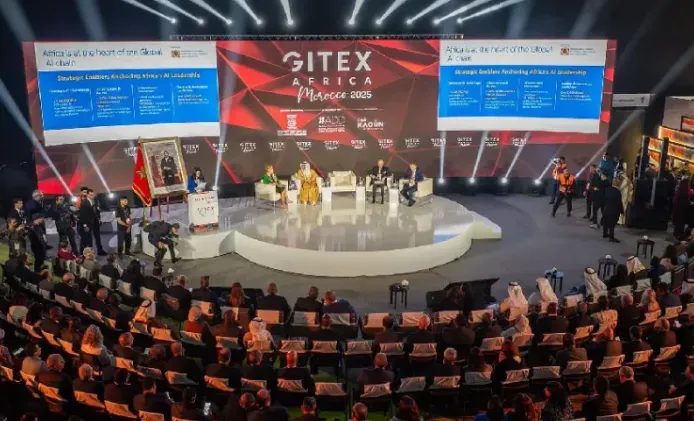

The Impact of GITEX Africa Morocco 2026 on Digital Transformation
GITEX Africa Morocco 2026 has transcended its role as a mere technology exhibition to emerge as a significant indicator of the digital transformation underway in Africa, illustrating Morocco's ambition to become a regional digital hub. The record figures reported during this fourth edition highlight the extent of this transformation and reveal an unprecedented dynamism in innovation and technology.
The event witnessed remarkable participation, setting new records that affirm its status as a pivotal technology fair in Africa. The statistics are telling: over 55,000 visitors from around the globe, with some reports suggesting attendance could reach 70,000, compared to 45,000 in 2025 and 40,000 in 2024. Additionally, more than 1,500 exhibiting companies, with over 400 international investors, representatives from 130 countries, and around 700 international speakers and experts contributed to this event's success. This growth underscores GITEX Africa's annual expansion, both in participant numbers and company representation, solidifying its position as the largest technology exhibition on the continent.
However, amidst these impressive figures, it is essential to address the organizational challenges faced on the first day, which presented clear disruptions in facilitating smooth access to the exhibition for both company representatives and visitors. The initial day served as the only notable setback in an otherwise well-executed three-day event. It is perplexing that advanced digital tools designed to streamline entry—such as QR codes that trigger badge printing—became less effective due to cumbersome access routes through congested areas, where overwhelmed organizers struggled to manage the influx of attendees. This scenario highlights a reliance on partial digital solutions while still grappling with bureaucratic mindsets that hinder a fully realized digital transformation.
Organizational Insights for Future Events
To elevate the welcoming experience to match the high standards of artificial intelligence technology, the organizers could have considered two key factors. Firstly, the presence of a ministerial delegation led by the Prime Minister should have been more coordinated. The sight of each minister arriving in personal vehicles surrounded by multiple cars carrying only one or two aides resulted in significant congestion in a venue expected to accommodate over 55,000 participants. A simple solution would involve using a single bus to transport the official delegation, thereby reducing traffic and easing access to the exhibition.
Secondly, a shift away from bureaucratic mentalities is crucial. Instead of forcing visitors to traverse lengthy distances in heavy traffic to access advanced scanning equipment, organizers could allow direct entry to designated pathways equipped with numerous scanning devices, facilitating entry in under two minutes, as successfully implemented on the second and third days. This exemplifies the true power of digitalization and its most substantial benefits.
These observations are intended to inform future iterations of the event, ensuring a level of organization befitting a premier digital exhibition. Apart from these challenges, the exhibition achieved significant success, and Morocco is in dire need of continuing to host future editions. GITEX provides substantial advantages across various sectors, with studies indicating that Africa's digital economy is projected to reach approximately $2.9 trillion by 2030. Meanwhile, the artificial intelligence market on the continent is expected to surge from $4.5 billion to $16.5 billion, with the communications sector anticipated to exceed $66 billion. Such figures position GITEX as a strategic platform linking investors with startups and emerging markets.
Hosting this event in Marrakech carries implications for Morocco's investment strategy in Africa, aligning with a broader vision aimed at establishing Morocco as a digital hub in Africa, attracting global technological investments, supporting over 300 participating Moroccan startups, and fostering partnerships between governments and the private sector. While these numbers are significant, they do not solely encapsulate the event's value; the exchange of ideas, the number of partnerships formed, and the funding opportunities opened for African youth are equally critical. Ultimately, this reflects Africa's shift from being a technology consumer to becoming a producer and innovator.
The fourth edition of GITEX showcased the capabilities and competencies of African youth, indicating that they are poised to enter the realms of digitalization and artificial intelligence, transforming the continent from a consumer to a producer of AI and digital knowledge. GITEX 2026 has demonstrated that Africa is advancing with its talents and strengths, as it has yet to fully articulate its potential in the field of artificial intelligence.
In conclusion, the figures from GITEX Africa Morocco 2026 affirm that the continent has genuinely entered the era of digital revolution, with Morocco strategically positioned at the heart of this transformation. It is not merely an exhibition; it serves as a strategic platform that outlines the future of the digital economy in Africa, where numbers translate into strength and aspirations evolve into tangible projects.
As reported by pjd.ma.